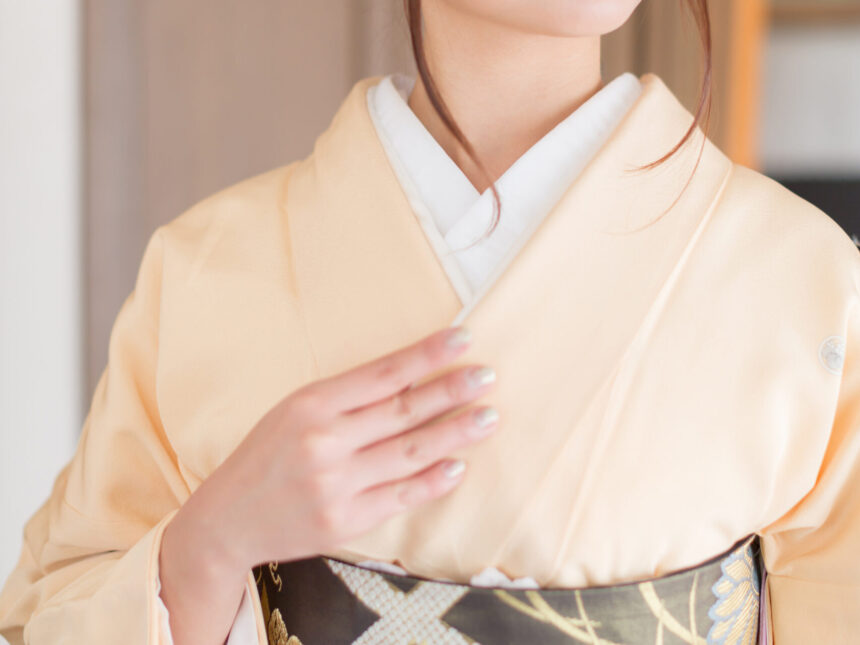
neckpiece (on a kimono)

Japanese clothing

neckpiece (on a kimono)(haneri)

Japanese clothesclothing

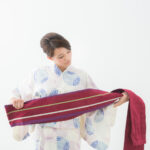
A collar about 1 meter long and 15 centimeters wide that is sewn over the collar of a long underwear. Since it is about half the length of the original collar, it is called a “half collar. The basic color is white. Since the Meiji era (1868-1912), some half collars were created to coordinate with kimonos for the purpose of being fashionable. The materials used are ro or hemp for summer kimonos and crepe or shiose for winter kimonos. For winter, crepe de chirimen and shiose (thick habutae) are used. Some are embroidered or laced, making it fun to choose according to TPO.

新着・おすすめ情報

  1. Was Kimuraya Fuhonten’s Anpan Created by “Painful Measures”? 150 years of history of trial and error

  2. geese alighting

  3. The soul of the craftsman resides in the old-fashioned production method. The long-established comb shop “Juso Yakushi Ten” that produces the one and only boxwood comb.

  4. Ruins of Ooka Echizenmamori Tadasada’s villa

  5. Responding to customer requests leads to innovation. Leading dairy products company “Nakazawa Dairy Co.

  6. Manners for the Mid-Summer Gift Giving Year 2023 Edition: When to Give, Who to Give it to, How to Give it to Someone, and How to Hang a Wrapper.

  7. The characteristics of “koshu” (old sake) explained [Words related to sake].

  8. Honshiba Park (Tamachi, Tokyo)

  9. Kimuraya Sohonten, a long-established bakery that has inherited the beliefs of its predecessors and predecessors and continues to preserve its taste.

  10. Former Main Building of the Ministry of Justice (Kasumigaseki, Tokyo)

  11. Nitta Shrine (Musashishinden, Tokyo)

  12. Changing flavors and characteristics from generation to generation: the management strategy of the long-established “Tokiwando Thunder Stirrers’ Okoshi Honpo,” founded in 1816.

  13. Hoonji Temple (Kinshicho, Tokyo)

  14. 【第27回】粋な江戸蕎麦の食べ方とは

  15. method of patterning traditional Japanese clothing (the tops of all of patterns being pointed downwards)