Bank of Japan

historic sitefield affiliated with a shrine (the tax-exempt proceeds of its harvest going to pay for shrine operations)

Bank of Japan(Bank of Japan)

important cultural property

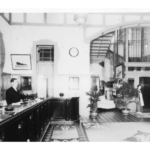
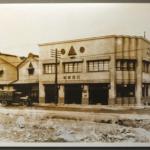
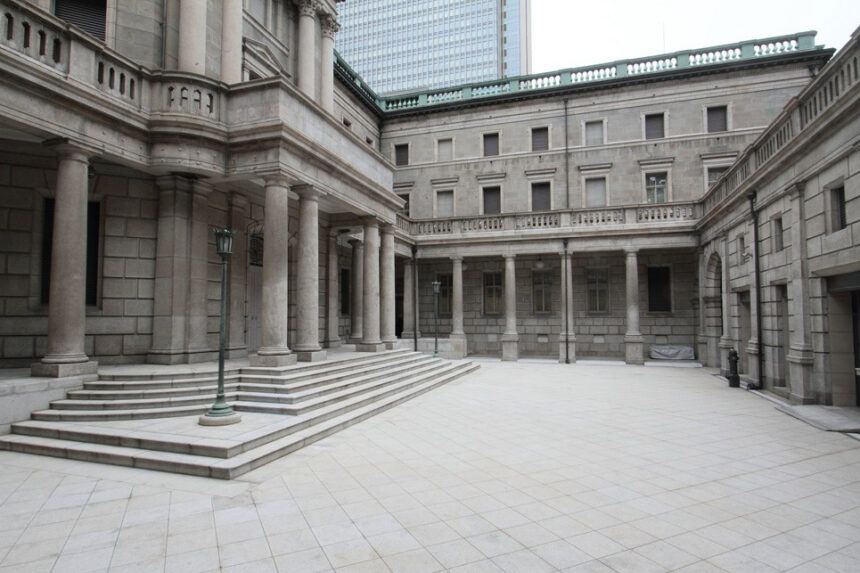
The Bank of Japan Head Office consists of an old building, a new building, and an annex. The main building of the old building was built on the site where the “Kinza” was located, which was contracted by the Edo shogunate to manufacture gold coins such as koban during the Edo period (1603-1868). Designed by architect Kingo Tatsuno, it was completed in 1896. It was the first national modern Western building designed by a Japanese architect. The building, built of stone in the classicist style, withstood the Great Kanto Earthquake, and after some renovations, the exterior and interior still retain the appearance of the building as it was when it was first built. The main office is open for tours, and visitors can see the courtyard, the underground vault, the old sales floor, and the dome of the exhibition room. Together with the adjacent Currency Museum, visitors can learn about the history of Japanese finance.

Spot OutlineOutline

address (e.g. of house) 2-1-1 Nihonbashi Hongokucho, Chuo-ku, Tokyo
Access 1 min. from Subway Mitsukoshimae Station, 6 min. from Subway Nihonbashi Station, 8 min. from JR Tokyo/Kanda Station

phone 03-3277-2815 (every Monday through Friday from 9:30 to 16:30)
Business Hours Reservation tour: every Monday through Friday (advance reservation required), reservations can be made through a dedicated online site (https://www5.revn.jp/bojtour/)
regular closing day National holidays, year-end and New Year holidays (December 29-January 4)
External Links

Official Web Site

Founding and opening of business 1882 (the 15th year of Meiji)

新着・おすすめ情報

  1. 8220;Sake Samurai”s Tour of Tokyo’s Long-established Sake Breweries with Yuki Aoi

  2. What is “Katahira”? What kind of process is it? Words related to Sake

  3. Japanese yam (Dioscorea japonica)

  4. What are the characteristics of Edomae Sushi?

  5. Zuijin” is a male doll that serves as an escort for O’naira-sama [Hina Dolls].

  6. Developing original materials with attention to detail, starting from the fabric. Shukusen, a long-established manufacturer of yukata loved by kabuki actors in the Edo period [Part 1

  7. Ruins of Kirishitan residence (Myogadani, Tokyo)

  8. How to read “strong snacks”? Kaiseki and Kaiseki Cuisine

  9. Kasai Shrine (Kanamachi, Tokyo)

  10. Ginza Suze Jizo Son (Ginza, Tokyo)

  11. Before the Edo period, “Dedication confectionery” was a top-quality confectionery made with white sugar.

  12. What kind of brewing method is “Yamahai-brewing”? Words related to Sake

  13. 【老舗ご当主・識者と歩く】日本推しラトビア人アルトゥルさんと虎ノ門−新橋の老舗をめぐる

  14. Hanazono Shrine

  15. Nezu Shrine (Nezu, Tokyo)