kimono wrapping paper

Japanese clothing

kimono wrapping paper(tatoushi)

Japanese clothesclothing

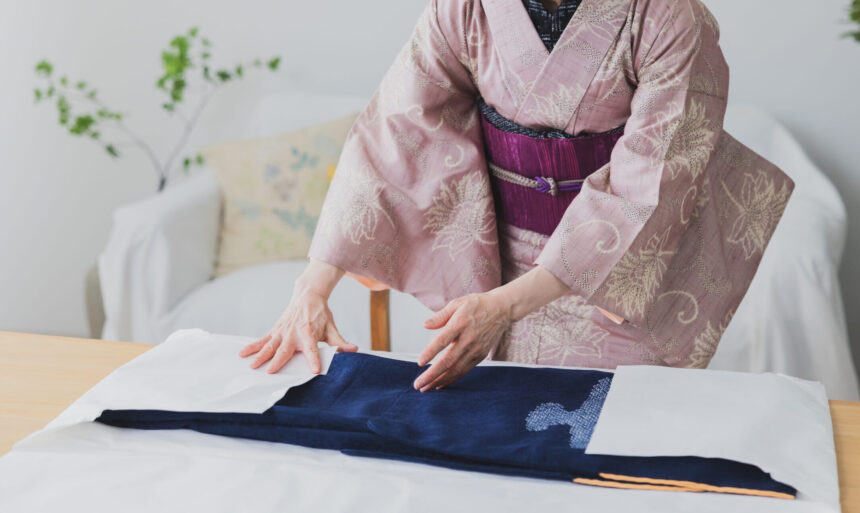
Wrapping paper for storing kimonos. It is made of thick Japanese paper coated with astringent or lacquer and folded to make it strong so that it can be folded into four pieces. Also read “tatagami. Originally read as “tatagami,” it was changed from “tataugami” to “tatogami” by the Japanese language’s “u” phonetic system (a way of saying something in a way that makes it easier to pronounce).

新着・おすすめ情報

  1. Metropolitan Takiyama Park, Ruins of Takiyama Castle

  2. sake brewed without addition of saccharides and no more than 120 litres of seed alcohol per tonne

  3. To make Japanese “tea culture” widely known. Flexibility of “Gyokuho-Do” to change with the times.

  4. 【第5回】東京から静岡へ 蕎麦店の系譜と受け継がれる蕎麦作りの伝統

  5. Yamamoto Nori Store, a long-established business with 170 years of history. The birthplace of “seasoned laver” talks about its commitment to flavor.

  6. Tobifudo Shohoin Temple (Minowa, Tokyo)

  7. Odai-ningyo” is a doll made of paulownia wood with a Gosho doll on top.

  8. oldest surviving traditional style of sake making

  9. Inheriting the craftsmanship of making each toothpick one by one. Commitment to “Nihonbashi Saruya,” the only toothpick specialty store in Japan

  10. 【第14回】江戸蕎麦の流儀〜道具立て編〜

  11. Improving operations is the only way to face customers. What Ginza Mikawaya, a long-established Western-style restaurant in Ginza, values

  12. 京都でも最古の歴史を持つ「松井酒造」。日本酒づくりを軸に展開する、革新的な取り組み

  13. The first “in-house work of a samurai”. Yoshinoya Shoten” has been lighting up the nights of Japan with Edo lanterns for 168 years.

  14. A Walk in Edo with Old Maps] No.3: Once the Best Shopping Zone in Edo. Tracing the Traces of a Fish Market in Nihonbashi

  15. Shirokiya Denbei, a long-established shop of all-natural, 99% handmade Edo-style brooms. Why has the tradition been preserved for nearly 200 years?