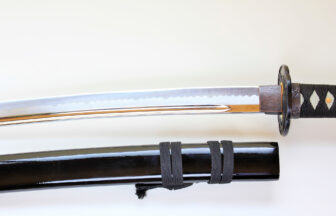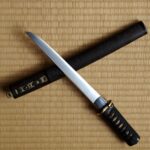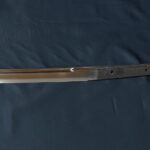
short sword

armour

short sword(wakizashi)

Japanese sword

The term “small” refers to swords with a blade length of 1 shaku (approx. 30 cm) or more but less than 2 shaku (approx. 60 cm). Generally speaking, it is the “small” of the “large and small arrangements” (a combination of two swords, one large and one small, made to a predetermined size). The term “wakizashi no kenya” (“sword of wakizashi”) and “wakizashi no tachi” (“sword of wakizashi”) are used to describe this type of sword, which is thought to have been attached to a tachi sword. There are various theories on the origin of the word, but the most popular theory is that it came from the fact that the sword was inserted by the side of the waist.

新着・おすすめ情報

  1. Tsutanoya” was established in 1937 and supports Japan’s fish-eating culture with its delicious taste. What is “Kyoka-zuke”, an evolution of Saikyo-zuke?

  2. Sohonke Sarashina Horii, a soba restaurant with a long line. The taste that they have arrived at in pursuit of the possibility of buckwheat noodle

  3. Musashi Fuchu Kumano Shrine Tomb (Fuchu, Tokyo)

  4. soba cup

  5. Kansai-style sushi (esp. pressed sushi, such as battera)

  6. 吉原神社(東京・三ノ輪)

  7. Bon Festival gifts

  8. Habutae mochi

  9. Manju, Monaka, Daifuku, etc.: Manners for Eating Wagashi without Worrying about Public Appearances Anymore

  10. To make Japanese “tea culture” widely known. Flexibility of “Gyokuho-Do” to change with the times.

  11. He started helping out in the family business as a child and went on to become a part of it. Kimuraya Honten, Asakusa’s oldest doll-shaped yaki store

  12. Where did okame soba originate? Ingredients used are also explained.

  13. black formal kimono with designs along the bottom of the skirt worn by married women on ceremonial occasions

  14. Ryu Kobo in Nihonbashi has been innovating braided cord culture for more than 130 years.

  15. Kurume Kasuri