Musashi Fuchu Kumano Shrine Tomb (Fuchu, Tokyo)

historic siteHachioji, Machida, Fuchu

Musashi Fuchu Kumano Shrine Tomb (Fuchu, Tokyo)(Musashi Fuchu Kumano Shrine Tumulus)

ancient (mound) tombNational Historic Site

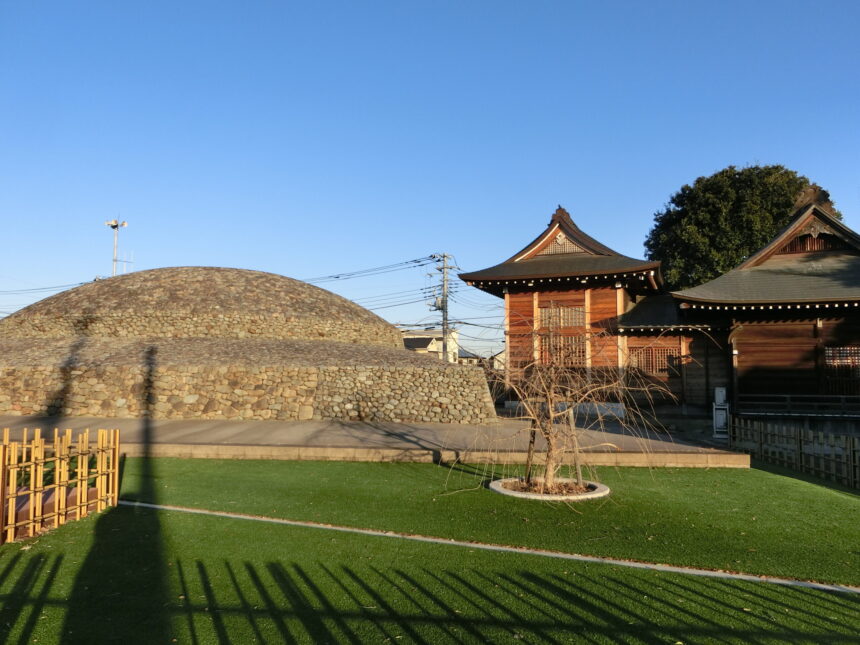
It is the largest and oldest mound in Japan with a mound covered with stones, and is a three-tiered burial mound with the first stage being a square mound of about 32 m, the second stage being a square mound of about 24 m, and the third stage being a circular mound of about 16 m in diameter, with a reconstructed height of about 6 m. The entire surface of the mound was covered with stones on the second and third stages, and hewn stones were arranged around the perimeter of the first stage. The mound surface was covered with stones on the entire surface of the second and third tiers, and hewn stones were placed around the perimeter of the first tier. In the center of the mound, there was a compound stone chamber consisting of three chambers, each with hewn stones. The burial site was designated as a national historic site in 2005.

Spot OutlineOutline

address (e.g. of house) 2-9 Nishi-fu-cho, Fuchu-shi, Tokyo
Access 8-minute walk from Seifu Station on the JR Nambu Line, 4-minute walk from Seifu-cho 2-chome bus stop on the bus (bound for Kunitachi Station via Yaho) from Fuchu Station on the Keio Line.

External Links

Official Web Site

Founding and opening of business Mid-7th century

新着・おすすめ情報

  1. What is “Gyoku (sushi)”?

  2. 大塚天祖神社(東京・大塚)

  3. Ginza Suze Jizo Son (Ginza, Tokyo)

  4. They also restore ancient musical instruments used in traditional performing arts. Okadaya Fuse’s Struggle to Preserve Traditional Japanese Culture

  5. Kawaramachi Inari Shrine (Kitasenju, Tokyo)

  6. Long-established Tabi Shoes supported by all generations. Ohnoya Fuso-Honten” continues to make Tabi Shoes with all our hearts.

  7. Innovation by “Shinseido”, creator of the unconventional and popular “Seppuku Monaka” product

  8. double-woven obi

  9. Akatsuka Fudo Falls (Takashimadaira, Tokyo)

  10. Gansenen Park (Waseda, Tokyo)

  11. Zoshigaya Kishimojin Hall

  12. soba water

  13. Japanese dessert consisting of two slices of kasutera (sponge cake) with red bean jam in between

  14. What is the difference between kaiseki ryori and kaiseki cuisine? Explanation of the origin and manners you should know!

  15. Ruins of Katsunuma Castle (Ome, Tokyo)