long-sleeved kimono

Japanese clothing

long-sleeved kimono(Furisode)

Japanese clothesclothing

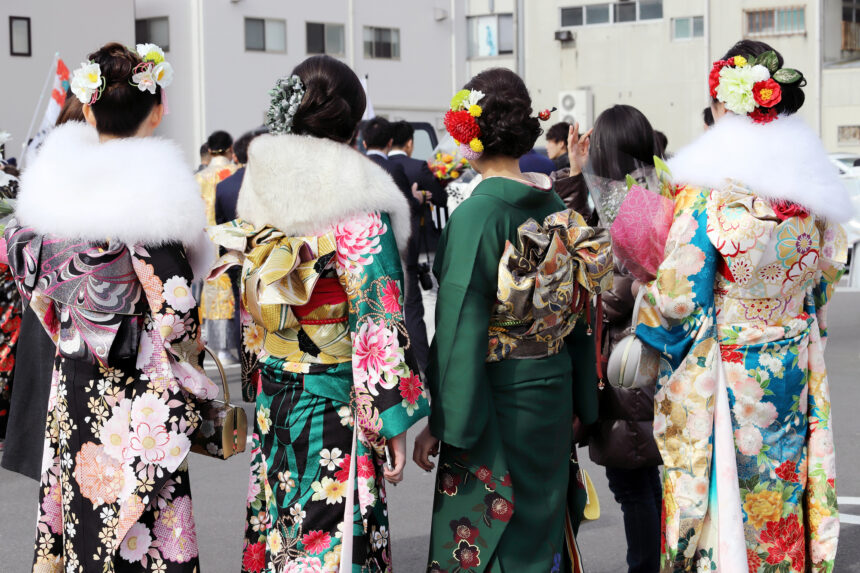
A gorgeous kimono with long sleeves that is the first formal wear for unmarried women. The pattern is from the shoulders to the chest, sleeves, waist, and hem. It has an eba pattern in which the patterns are all connected, and is appropriate for occasions of celebration such as coming-of-age ceremonies, bridal gowns, and attendance at weddings. The length of the sleeves determines the prestige of the dress, with the most prestigious being the large furisode, which reaches the ankles and is between 3 shaku and 3 shaku 3 sun (approximately 90 to 100 cm) in length. Waving long sleeves is associated with ceremonies to drive away evil spirits and purify the body, and thus has come to have the meaning of purifying the body on a special day.

新着・おすすめ情報

  1. 【第5回】東京から静岡へ 蕎麦店の系譜と受け継がれる蕎麦作りの伝統

  2. Ruins of Hachioji Castle

  3. 【第13回】江戸で蕎麦が流行って定着した理由

  4. Shimotani Shrine

  5. 【第23回】蕎麦屋店主が考える真の蕎麦「通」の定義

  6. Yagiri no Ferry (Shibamata ferry terminal)

  7. A parting gift for someone who is retiring or moving on. What is the market price, how to choose, and what is the etiquette for giving gifts?

  8. soup served at the end of a traditional Japanese dinner

  9. Anyone can do it by themselves! Basic yukata dressing – men’s version

  10. Imado Shrine (Asakusa, Tokyo)

  11. Zoshigaya Old Mission Building (Zoshigaya, Tokyo)

  12. Shimbashi Tamaki-ya has been in business for 240 years, and serves everything from tsukudani (food boiled in soy sauce) to glaces to add color to Japanese and Western dining tables with its “Hikiku, Gentle, and Warm” service.

  13. What does “Sarashina (soba)” mean and where did it originate?

  14. What is the origin of the word “toji” in sake brewing? Words related to sake

  15. sweet dumpling made with mochi flour and (sometimes) millet flour (famous product of Okayama)