marks indicating the Japanese meaning of the texts of Chinese classics

armour

marks indicating the Japanese meaning of the texts of Chinese classics(SORI)

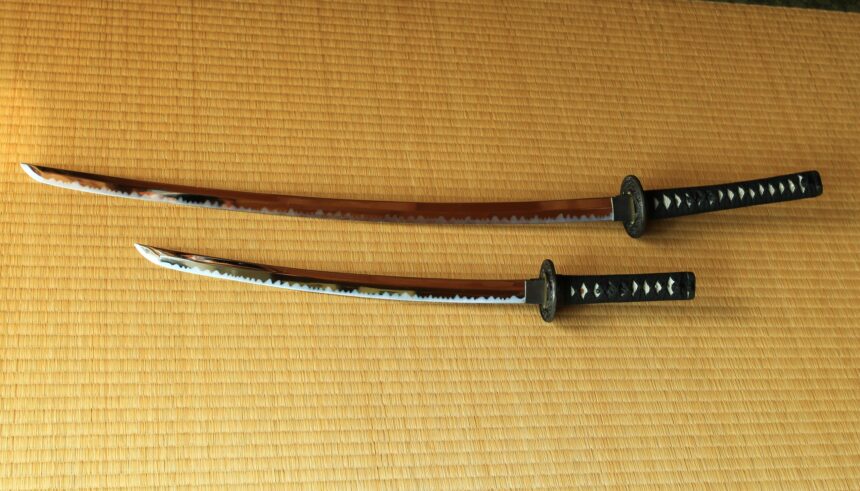
Japanese sword

Kisaki. The sword’s tip to the sword’s mune. The back of the sword opposite the blade. It is the part of the back opposite the blade that is hollowed out in a key shape from the tip to the stem. The distance between the stem and the mune is called the “wari” (the length of the blade). This is one of the unique beauties of the Japanese sword, which is not found in Western swords, which are mainly straight swords.
The warp makes it easy to pull the blade out of the scabbard, and allows for smooth cutting when the sword is swung down. It also softens the impact of a cut.

新着・おすすめ情報

  1. Manju, Monaka, Daifuku, etc.: Manners for Eating Wagashi without Worrying about Public Appearances Anymore

  2. geese alighting

  3. You can do it by yourself! How to tie a yukata obi – Butterfly knot

  4. method of patterning traditional Japanese clothing (the tops of all of patterns being pointed downwards)

  5. 【第17回】「田舎蕎麦」と「更科蕎麦」の違いとは

  6. What nutrients are contained in “buckwheat tea” that are good for the body?

  7. condition of health

  8. A Walk in Edo with Old Maps] No.5: Traces of Edo Remain Strong in “Differences in Elevation” and “Town Names” in Ushigome and Ichigaya

  9. What innovations have been made at Nimben, a 321-year-old dried bonito flakes business?

  10. sand pit

  11. Hanamaki soba

  12. Otomeyama Park (Takadanobaba, Tokyo)

  13. guard on sword, polearms, etc.

  14. Yigyoin Temple / Sukeroku and Agemaki Hiezuka (Takenotsuka, Tokyo)

  15. Shoin Shrine (Setagaya, Tokyo)