What does “Oyako” mean? Hina Dolls

puppet

What does “Oyako” mean? Hina Dolls(shinno)

dollDolls’ Festivalspringpeach festival

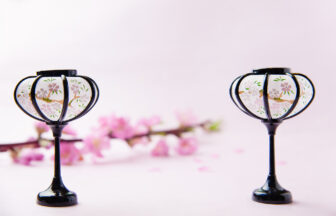
Among the Hina dolls, only a pair of Uchiuri-hina (male and female) is displayed. The male and female dolls are also called uchiuri-asama or shinao-hina, and are said to resemble the emperor and empress. The male dolls are dressed in formal kimono and scepter (formal dress for court nobles). The male dolls wear a kikan sokutai (formal dress for court nobles) and a scepter. They hold a scepter (a thin, long, thin board held in the right hand). The female dolls are dressed in juni-hitoe, the formal attire for women, and hold a hinoki fan (a wooden fan used at court) in their hands. The hi-ougi (wooden fan used at court) is held in the hand. In the past, the male hina were arranged on the right and the female hina on the left, but since the early Showa period (1926-1989), the male hina have been arranged on the left and the female hina on the right outside Kyoto.

新着・おすすめ情報

  1. Shiba Daimon Sarashina Nunoya

  2. Developing original materials with attention to detail, starting from the fabric. Shukusen, a long-established manufacturer of yukata loved by kabuki actors in the Edo period [Part 1

  3. 【第7回】蕎麦に欠かせない薬味「葱」と「唐辛子」について

  4. Inheriting the craftsmanship of making each toothpick one by one. Commitment to “Nihonbashi Saruya,” the only toothpick specialty store in Japan

  5. Seppuku monaka” and “Keikyuu monaka” …… “Shinshodou” produces wagashi that are both humorous and delicious.

  6. What is the origin of the name “Yamato Doll”? What kinds of dolls are there?

  7. Inari Onio Shrine (Shinjuku, Tokyo)

  8. Aoyama Cemetery (Minami Aoyama, Tokyo)

  9. Kameido Tenjinja Shrine (Kameido, Tokyo)

  10. straight sword

  11. Ubukeya is a knife store specializing in kitchen knives, scissors, and hairpins. The ultimate “sharpening” that even makes a paper-cutting artist say, “It’s so sharp, I’m in trouble!

  12. A Walk in Edo with Old Maps] No. 2: Kyobashi and Ginza from the Edo Period to the Heisei Era Traced by Rivers

  13. Tokyo Resurrection Cathedral (Nikolaidō Hall)

  14. 【第28回】蕎麦のつなぎに小麦粉を使用する理由

  15. Musashino Central Park (Musashino, Tokyo)