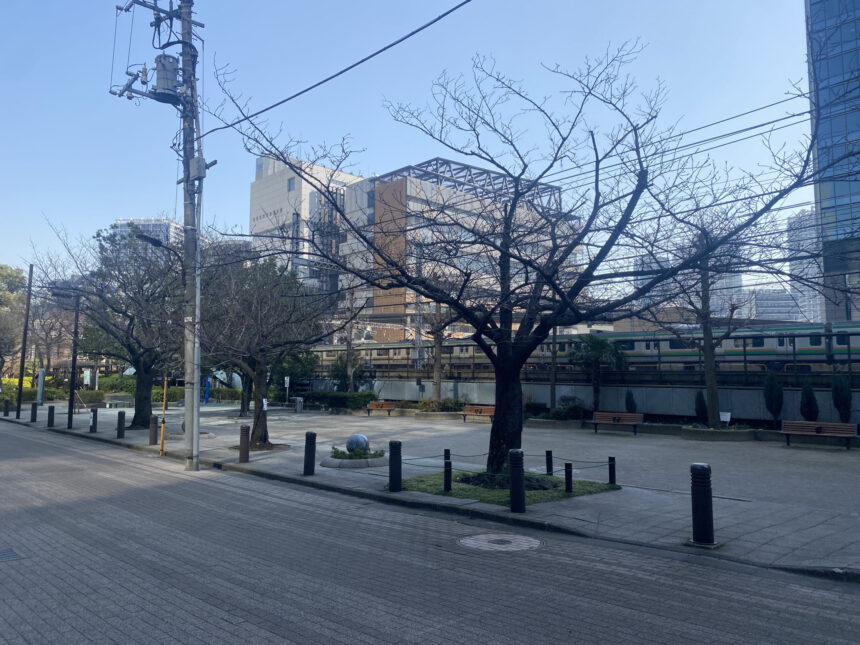
Honshiba Park (Tamachi, Tokyo)

Parks & GardensOK with childrenShinbashi, Shinagawa, Odaiba

Honshiba Park (Tamachi, Tokyo)(Honshiba Park)

(public) parktaking one’s children along (to an event, into a new marriage, etc.)Chinese plumrakugorailroad

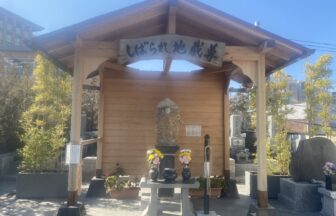
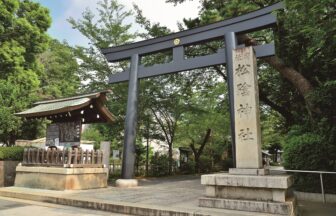
Honshiba Park was created in 1970 by reclaiming a canal. This area was a beach in the Edo period (1603-1867) and was called Zogyo-ba. It is said that fish unloaded here were presented to the Shogun’s family. This area is also famous as the setting of Sanyutei Encho’s famous rakugo story “Shibahama,” and is very popular among children as a “train-viewing park” because it is located along the JR tracks, where they can see the JR Yamanote Line, Keihin Tohoku Line, Tokaido Line, Shinkansen Line, and monorail trains up close. With camphor trees, a fountain, playground equipment, and a jabu-jabu pond, the park is always crowded with families. A monument to the Shibahama music has been erected at the nearby Miho Kashima Shrine.

Spot OutlineOutline

address (e.g. of house) 15-1, Shiba 4-chome, Minato-ku
Access 5 minutes walk from JR Tamachi Station

phone 03-3578-2032 (in charge of civil engineering for Minato-ku city planning)
Business Hours always open

新着・おすすめ情報

  1. Tsukiji Catholic Church (Tsukiji, Tokyo)

  2. sweet burdock and miso-bean paste covered with a thin layer of mochi

  3. Shukusen, a dyed kimono store for yukata and Edo komon. What is the pride and confidence in the words “Shukusen Kansei”?

  4. Meishu no Taki Park (Oji, Tokyo)

  5. Tsutanoya” was established in 1937 and supports Japan’s fish-eating culture with its delicious taste. What is “Kyoka-zuke”, an evolution of Saikyo-zuke?

  6. Anyone can do it by themselves! Basic yukata dressing – men’s version

  7. Long-established souvenirs to buy in Asakusa! 6 recommendations including famous Japanese sweets [Food].

  8. When is “new sake” made? Words related to sake

  9. Tokyo Literature Walk] No. 2: From Hongo to Sendagi via Slopes and Alleys, Touring the Former Residences of Modern Literary Greats

  10. What is “Nishiki-Tamago”? What is the origin of its name?

  11. Shimotani Shrine

  12. A Walk in Edo with Old Maps] No. 2: Kyobashi and Ginza from the Edo Period to the Heisei Era Traced by Rivers

  13. Shiba Daimon Sarashina Nunoya

  14. Meiji Shrine

  15. Abiru Shrine (Akiruno, Tokyo)