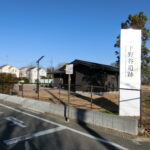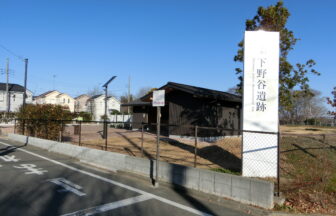
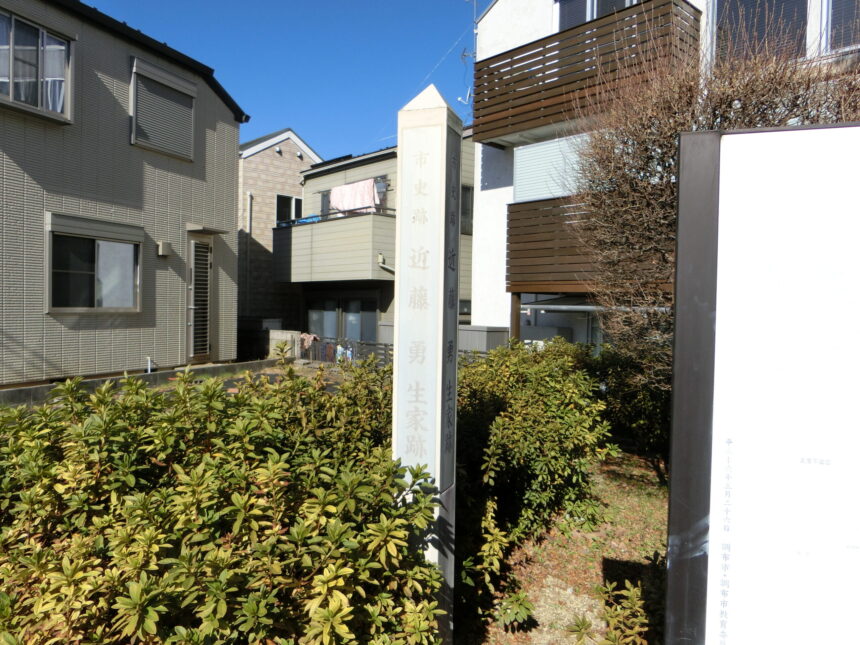
Ruins of Isamu Kondo’s birthplace (Chofu, Tokyo)

historic siteHachioji, Machida, Fuchu

Ruins of Isamu Kondo’s birthplace (Chofu, Tokyo)(Kondo Isami’s Birthplace)

Shinsengumi(parents’) homeKondo Iyamu

Isamu Kondo, the Shinsengumi bureau chief, was born in 1834 as the third son of Kyujiro Miyagawa (childhood name: Katsugoro Miyagawa) in Tsuji, Kamiishihara Village, Tama County (present-day Nomizu, Chofu City). 15 years old, he was introduced to Shusuke Kondo of the Natural Rishin School, and the following year he was granted a Rishin School inventory and adopted by Shusuke, taking the family name of Kondo. In 1943, during the war, the house was torn down as it was adjacent to the Chofu Airfield, and today, a well used by Isamu Kondo remains in the southeast corner of the house. The only thing that remains of the house is a well used by Isamu to bathe the baby, but it has been preserved as the site of his birthplace (municipal historic site). There is also Isamu’s grave at the nearby Ryugenji Temple.

Spot OutlineOutline

address (e.g. of house) 1-6-8 Nomizu, Chofu-shi, Tokyo
Access
Business Hours From Mitaka Station on the JR Chuo Line, take a bus bound for Sakakibara Memorial Hospital, Asahi-machi 3-chome, or Kurumayakari Danchi, and get off at Nogawa Koen Iriguchi Bus Stop. 2 minutes walk.
External Links

Official Web Site

Founding and opening of business Edo period (1603-1868 CE)

新着・おすすめ情報

  1. Manju, Monaka, Daifuku, etc.: Manners for Eating Wagashi without Worrying about Public Appearances Anymore

  2. Tozenji Temple (Shinagawa, Tokyo)

  3. Hotel New Otani, Tokyo, Japan

  4. What is the difference between a congratulatory gift and a wedding gift? When to give, the market price, how to choose, etc.

  5. type of buckwheat noodles

  6. Kurume Kasuri

  7. Ome Shinmachi Oido (Ome, Tokyo)

  8. 吉原神社(東京・三ノ輪)

  9. eel-liver soup

  10. lined kimono

  11. rice cake with bean paste wrapped in a preserved egg

  12. Tokyo Literature Walk] No. 1: Walking around Asakusa, a treasure house of modern literature

  13. The soul of the craftsman resides in the old-fashioned production method. The long-established comb shop “Juso Yakushi Ten” that produces the one and only boxwood comb.

  14. Seppuku monaka” and “Keikyuu monaka” …… “Shinshodou” produces wagashi that are both humorous and delicious.

  15. What is the origin of the name “Gohyakumangoku,” rice suitable for sake brewing? Words related to Sake