Horikirishobuen (Horikiri Shobuen, Tokyo)

Parks & GardensMukojima, Honjo

Horikirishobuen (Horikiri Shobuen, Tokyo)(Horikiri Iris Garden)

Hiroshige Utagawacalamus

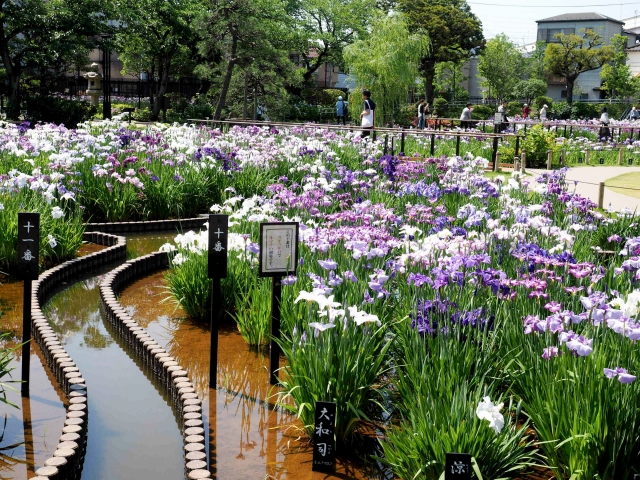
Horikiri no Hanashobuen was established in the late Edo period (1603-1867) as the first tourist iris garden in Japan, and later became a favorite strolling spot for Tokugawa shoguns. Hiroshige Utagawa’s ukiyoe “Horikiri no Hanashobu” (The Iris of Horikiri) is still one of the most famous paintings. The Tokyo Metropolitan Government purchased the park during the Showa period (1926-1989), and it is now under the management of Katsushika Ward. The vast site is planted with 6,000 irises of about 200 varieties, including rare varieties; the first flowers bloom around mid-May, and the best time to view them is from late May to mid-June. The “Katsushika Iris Festival” is held every year around the same time, featuring a lively fair and entertainment. In addition to irises, plum blossoms, wisteria, jugatsu cherry blossoms, and peonies can also be seen, making the garden enjoyable to visit at any time of the year.

Spot OutlineOutline

address (e.g. of house) 2-19-1 Horikiri, Katsushika-ku, Tokyo
Access 10 minutes from Horikirishobuen Station on the Keisei Electric Railway line

phone 03-3697-5237
Business Hours 9:00-17:00 (8:00-18:00 from June 1 to June 25)
regular closing day Open all year (except New Year’s holidays)
External Links

Official Web Site

Founding and opening of business 1975 (Showa 50)

新着・おすすめ情報

  1. What is “Arabashiri”? Words related to Sake

  2. stalk (of a mushroom, leaf, etc.)

  3. 【第6回】9月に当店で「生姜切りそば」を出す理由

  4. mixture of boiled beans, jelly cubes, fruit pieces and molasses

  5. A Walk in Edo with Old Maps] No. 1: Traces of Ieyasu’s Urban Development and Precious Buildings in Marunouchi

  6. stem

  7. 日本橋

  8. Former Residence of Soseki Natsume (Cat’s House)

  9. Bank of Japan

  10. glutinous rice steamed with red beans or some other ingredient

  11. Oshima tsumugi weave

  12. Daenji Temple (Meguro, Tokyo)

  13. 大塚天祖神社(東京・大塚)

  14. They also restore ancient musical instruments used in traditional performing arts. Okadaya Fuse’s Struggle to Preserve Traditional Japanese Culture

  15. What are the roles of the “three courtesans”? What do each of them bring with them?