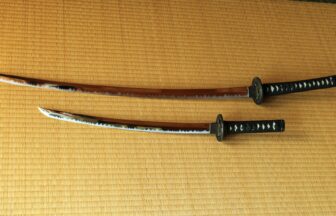
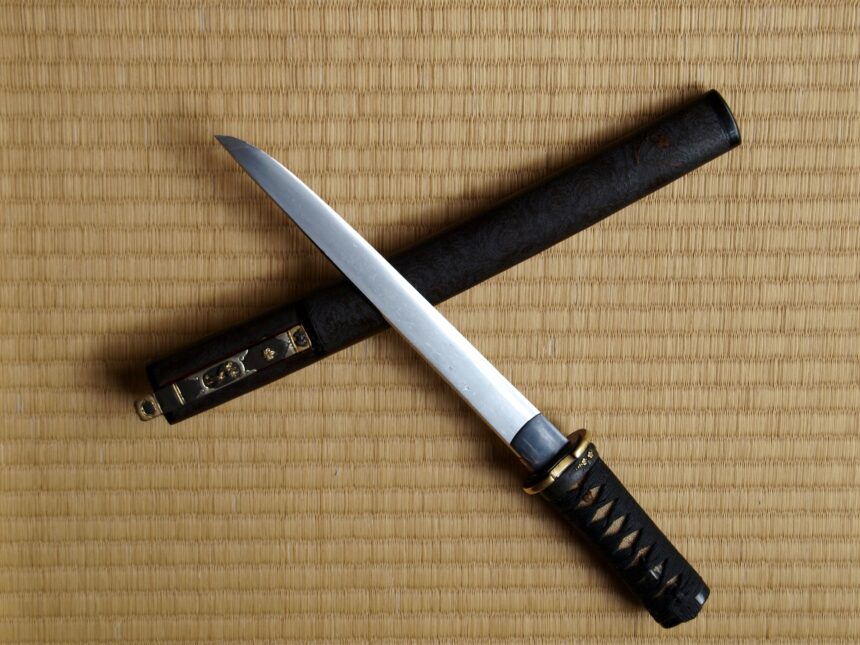
short sword

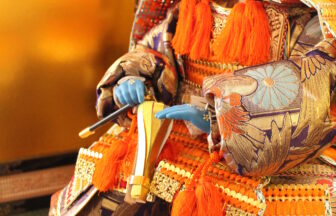
armour

short sword(Tantou)

Japanese sword

A general term for short swords with little or no warp and less than 1 shaku (about 30 cm) in length. During the Kamakura to Muromachi periods, swords were used in kumiai (fighting with the enemy) and for seizing the enemy’s head. After the Azuchi-Momoyama period (1568-1600), it is said that its use on the battlefield decreased, but since the Edo period (1603-1867), it has been valued as a sword for self-defense that even women and children could easily handle. It is also called “futokoro ga nana” or “koshi-gatana” (meaning “waist sword”) because it was carried at the waist with the blade facing upward. It is also called koshigatana (腰刀) or koshirae (こしらえ). The name “koshirae” also refers to the sword’s exterior, such as the scabbard and handle.

新着・おすすめ情報

  1. The lineup of the “five musicians” also has a meaning.

  2. Hibiya Park

  3. Interview with Kotaro Ishikawa of Ishikawa Tortoiseshell Works, a company that connects traditional Edo tortoiseshell techniques and further promotes the Edo Tokyo brand .

  4. Japanese yam (Dioscorea japonica)

  5. An arrow wheel is a windmill attached to the pole of a carp streamer. What is the meaning of the sound of its spinning?

  6. Why is “Koinobori” carp? The reason is said to be based on Chinese folklore.

  7. malted rice

  8. sweet dumpling made with mochi flour and (sometimes) millet flour (famous product of Okayama)

  9. What is the origin of the word “toji” in sake brewing? Words related to sake

  10. Matsui Sake Brewery once closed. A closer look at the creative sake brewing process at the revived brewery.

  11. Umezono, a long-established sweet shop in Asakusa: From awa-zenzai to dora-soft (soft rice cake), “80% on the defensive, 20% on the offensive” wins the hearts of young people.

  12. long sword

  13. Daiba Park (Odaiba, Tokyo)

  14. lay or stretch out to dry

  15. chopped kabayaki eel on rice