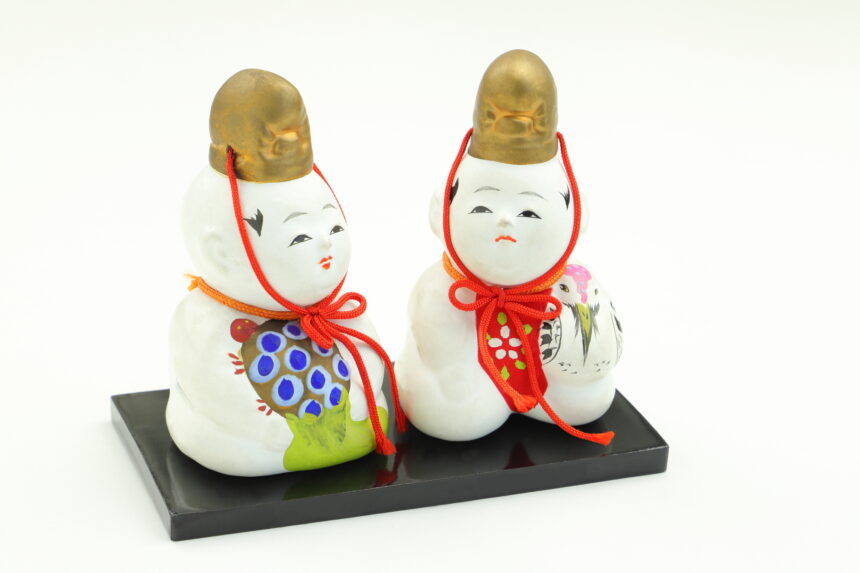
Gosho Ningyo” was a gift to the Imperial Palace. Also known as “Hai Hai” and “White Meat Dolls.

puppet

The “Gosho doll” was a gift to the Imperial Palace. Also known as “Hai Hai” and “White Meat Dolls.(Goshoningyo)

traditional craft

The dolls were produced in Kyoto in the mid-Edo period as ornamental dolls, and are characterized by their white skin, large heads, and rounded bodies. They are characterized by their white skin, large heads, and rounded bodies. They are usually dressed naked, and wear a belly girdle or a straw robe (warawa-no-shi, a garment usually worn by underage court nobles). They often wear a belly girdle, a straw robe, or an eboshi (a hat worn by underage boys of the nobility). The name “hiragana” comes from the fact that hiragana were used as gifts for courtly celebrations, as gifts from the imperial family or court nobles to feudal lords, or as offerings to the imperial palace. They are also known as “hai hai,” “souvenir dolls,” “Ouchi dolls,” “white meat dolls,” “Izukura dolls,” and so on.

新着・おすすめ情報

  1. Kurume Kasuri

  2. Rintsushinomori Park (Musashikoyama, Tokyo)

  3. rolled sushi with rice and other ingredients

  4. Zojoji Temple

  5. Koyasan Tokyo Betsuin (Takanawa, Tokyo)

  6. sweet dumpling made with mochi flour and (sometimes) millet flour (famous product of Okayama)

  7. oldest surviving traditional style of sake making

  8. Japanese doll” is a generic term for dolls traditionally made in Japan. What types are there?

  9. Anyone can do it by themselves! How to Tie a Yukata Obi – Kai no Kuchi

  10. Shinobazunoike Pond Oratory, Kan-eiji Temple

  11. Zoshigaya Kishimojin Hall

  12. Nezu Shrine (Nezu, Tokyo)

  13. 【第27回】粋な江戸蕎麦の食べ方とは

  14. sake brewed without addition of saccharides and no more than 120 litres of seed alcohol per tonne

  15. Toyokawa Inari Tokyo Betsuin (Akasaka, Tokyo)