Types of “Hina Dolls.” What are the characteristics of their costumes?

puppet

Types of “Hina Dolls.” What are the characteristics of their costumes?(hinaningyo)

Dolls’ Festivalspringpeach festival

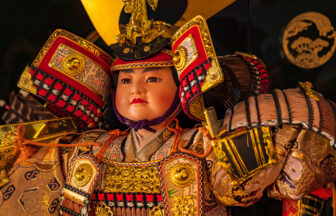
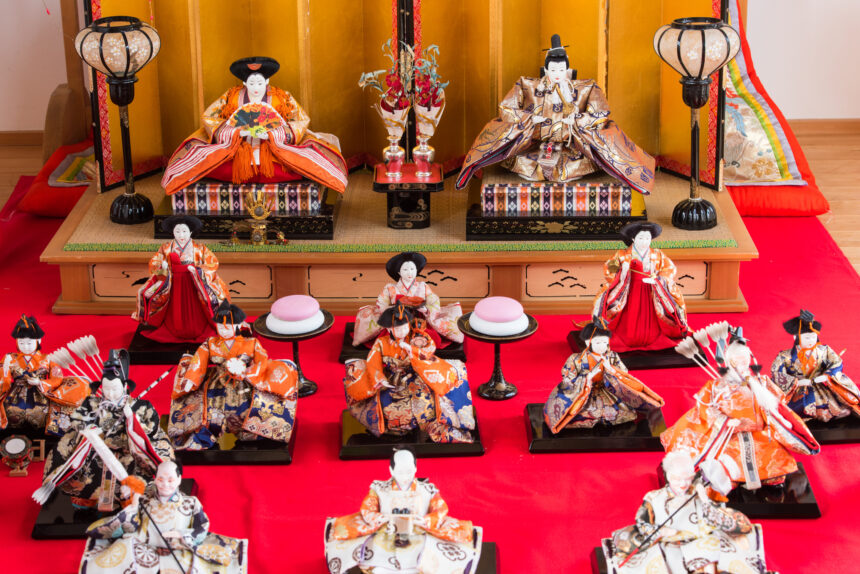
Setsubuku dolls are displayed on Hina Matsuri (Girls’ Festival) on March 3. There are various theories about the origin of Hinamatsuri, but it is believed to be a fusion of the custom of entrusting misfortunes to “hitokata” (dolls) and throwing them into rivers, and the Heian-period “Hiina-asobi” (a play with small paper dolls, a pair for each gender) and the Joushi-no-Sekku festival on March 3. In the Edo period (1603-1867), the event became a festival to pray for the healthy growth of girls. There are various types of Hina dolls, such as paper dolls, costume dolls, and clay dolls. The costumes of the costume hina dolls are based on the formal wear of the Emperor, Empress, and court nobles at court, with the male dolls dressed in korokan sokutai and the female dolls in juni-hitoe. In the Edo period (1603-1867), Hina festivals became more popular, and as a result, dolls as exquisite and elegant as works of art began to appear. The dolls are faithfully reproduced down to the smallest detail, and are works of art that convey the prestige of the Heian period to the present day.

新着・おすすめ情報

  1. Tanashi Shrine (Tanashi, Tokyo)

  2. Suka Shrine (the outer shrine of Ise Shrine)

  3. Zojoji Temple

  4. mixture of boiled beans, jelly cubes, fruit pieces and molasses

  5. type of buckwheat noodles

  6. Can you guess what are the five colors of the “fukiage” that is attached to the top of the carp streamer?

  7. Former Kusuo Yasuda Residence Garden (Sendagi, Tokyo)

  8. When did “taru-shu” begin to be made? Words related to sake

  9. Koyasan Tokyo Betsuin (Takanawa, Tokyo)

  10. How is doburoku made? Words related to sake

  11. Selecting the best materials for each application and finishing them with craftsmanship: the pride of the long-established “Edoya”, which has been in business for 300 years, in the creation of brushes and bristle brushes.

  12. Walking with the owner of a long-established restaurant and an expert] Part 1: Tracing the history of Shibadaimon with the 7th generation owner of “Shibadaimon Sarashina Nunoya

  13. Yagenbori Fudoin (Nihonbashi, Tokyo)

  14. New Year’s gift (usu. money given to a child by relatives and visitors)

  15. Otakanomichi and Masashino-ike Spring Group