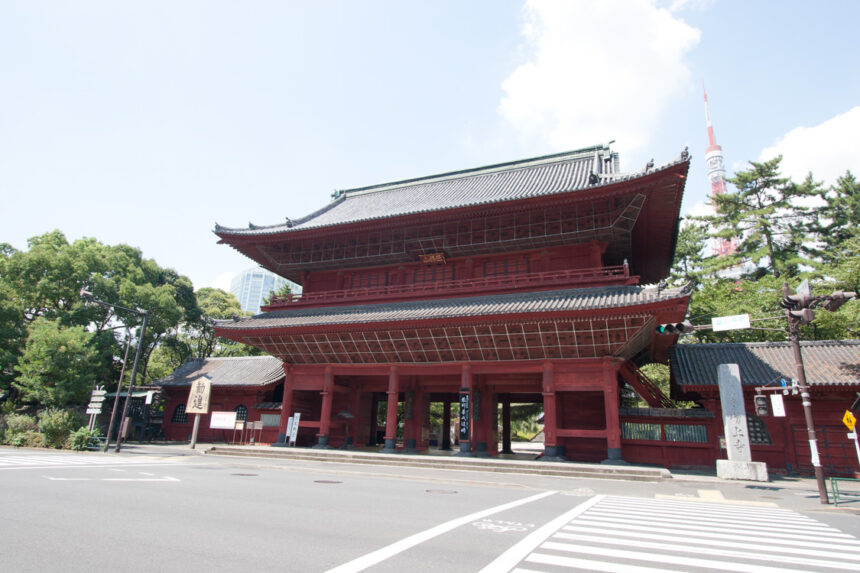
Zojoji Temple

temple (Buddhist)turf

Zojoji Temple(Zojoji- Temple)

cherry blossom viewinglocation thought to be flowing with mystical energy

One of the seven head temples of the Jodo sect, it was founded in the Muromachi period (1336-1573) by Priest Yuho Shoso as a fundamental center of nenbutsu (the recitation of the Lotus Sutra). Originally located in Hirakawacho, Chiyoda-ku, Tokyo, the temple became a family temple of the Tokugawa family when Ieyasu Tokugawa entered Edo in 1590, and was moved to its current location in 1598. During the Edo period (1603-1868), a large temple building was constructed and the temple prospered repeatedly. Although the valuable hall was lost in a great fire during the Meiji period (1868-1912) and war damage during the Showa period (1926-1989), it was restored after the Showa period (1926-1989) and the magnificent main hall was reconstructed. Recently, the temple has become popular as a power spot for improving one’s luck in winning.

Spot OutlineOutline

address (e.g. of house) 4-7-35 Shiba-Koen, Minato-ku, Tokyo
Access 10 minutes from JR/Tokyo Monorail Hamamatsucho Station, 3 minutes from Onarimon Subway Station, 3 minutes from Shibakoen Subway Station, 5 minutes from Daimon Subway Station, 7 minutes from Akabanebashi Subway Station, 10 minutes from Kamiyacho Subway Station

phone 03-3432-1431
Business Hours 9:00~17:00
regular closing day nashi (Pyrus pyrifolia, esp. var. culta)
External Links

Official Web Site

Founding and opening of business 1393 (4th year of Meitoku)

新着・おすすめ情報

  1. Zoshigaya Kishimojin Hall

  2. What is the origin of the name “Yamato Doll”? What kinds of dolls are there?

  3. 大塚天祖神社(東京・大塚)

  4. Four long-established restaurants specializing in nabe cuisine! 4 long-established restaurants specializing in hot pot dishes Let’s enjoy the taste of that famous restaurant by order!

  5. What are the characteristics of Edomae Sushi?

  6. Suzuki Ruins Museum

  7. Meaning of “Unaju” and “Unadon”. What’s the difference?

  8. Ome Shinmachi Oido (Ome, Tokyo)

  9. Koami Shrine (Ningyocho, Tokyo)

  10. Ruins of Kira Residence (Honjo Matsuzaka-cho Park)

  11. What is Gunkanmaki? Origin of the name, store of origin

  12. Tokyo Resurrection Cathedral (Nikolaidō Hall)

  13. What is “moromi”? Words related to sake

  14. Tomioka Hachimangu Shrine

  15. black formal kimono with designs along the bottom of the skirt worn by married women on ceremonial occasions