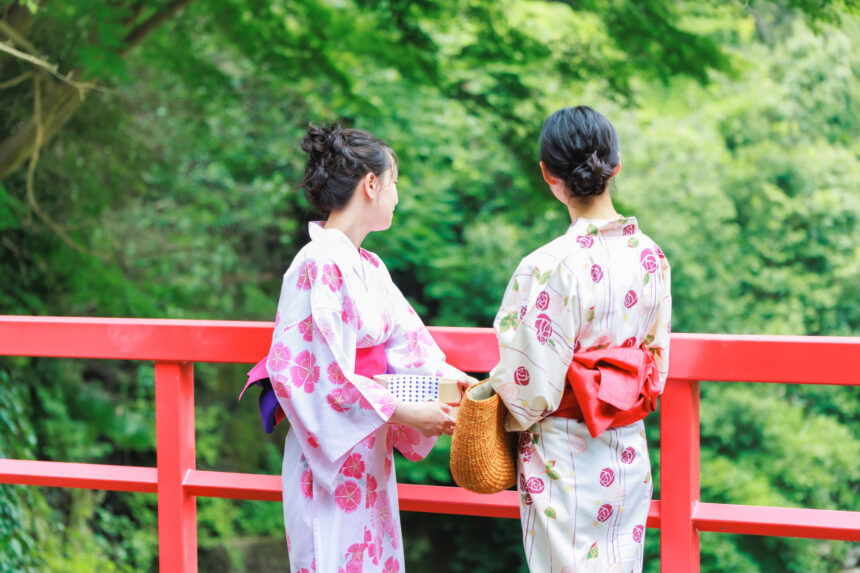
yukata (light cotton kimono worn in the summer or used as a bathrobe)

Japanese clothing

yukata (light cotton kimono worn in the summer or used as a bathrobe)(Yukata)

festivalclothingfireworks

Originally, it was an abbreviation of “yukatabira,” a single linen garment worn by aristocrats during the Heian period (794-1185) when taking a bath. In the Edo period (1603-1867), it came to refer to a cotton kimono worn after bathing. It has been used for bathing, loungewear, and nightwear, and is now also worn at summer festivals and Bon dances. Until recently, most yukata were white and indigo-dyed or navy blue, but today they are enjoyed by the younger generation as casual summer kimonos in a variety of colors, patterns, and dress styles.

新着・おすすめ情報

  1. Ginza Suze Jizo Son (Ginza, Tokyo)

  2. Ichigaya Kameoka Hachiman Shrine (Ichigaya, Tokyo)

  3. The soul of the craftsman resides in the old-fashioned production method. The long-established comb shop “Juso Yakushi Ten” that produces the one and only boxwood comb.

  4. Mukozuke” is served at the beginning of kaiseki cuisine. What is the origin of its name?

  5. mixture of boiled beans, jelly cubes, fruit pieces and molasses

  6. Japanese yam (Dioscorea japonica)

  7. You can do it yourself! How to Tie a Yukata Obi – Bunko Knot

  8. What is the origin of the word “toji” in sake brewing? Words related to sake

  9. Definitions of “Daiginjo-shu” and “Junmai Daiginjo-shu” [Words Related to Sake].

  10. 【第7回】蕎麦に欠かせない薬味「葱」と「唐辛子」について

  11. Types of “Hina Dolls.” What are the characteristics of their costumes?

  12. 【第21回】古文書から紐解く江戸につながる「そば切り」の伝承

  13. What does a “Hands and Feet Master” do? The series of craftsmen who make dolls

  14. Tokyo Literature Walk] No. 4: Cultural City of West Tokyo, from Seijo-Gakuen to Roka Koen

  15. 【第28回】蕎麦のつなぎに小麦粉を使用する理由