Myohoji Temple (Higashi Koenji, Tokyo)

temple (Buddhist)Kichijoji, Suginami

Myohoji Temple (Higashi Koenji, Tokyo)(Myouhouji-Temple)

warding off evilwalkdisease curemarriageimportant cultural property

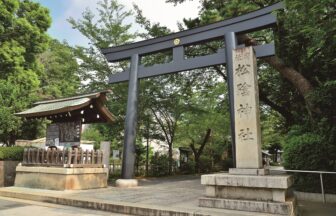
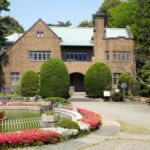
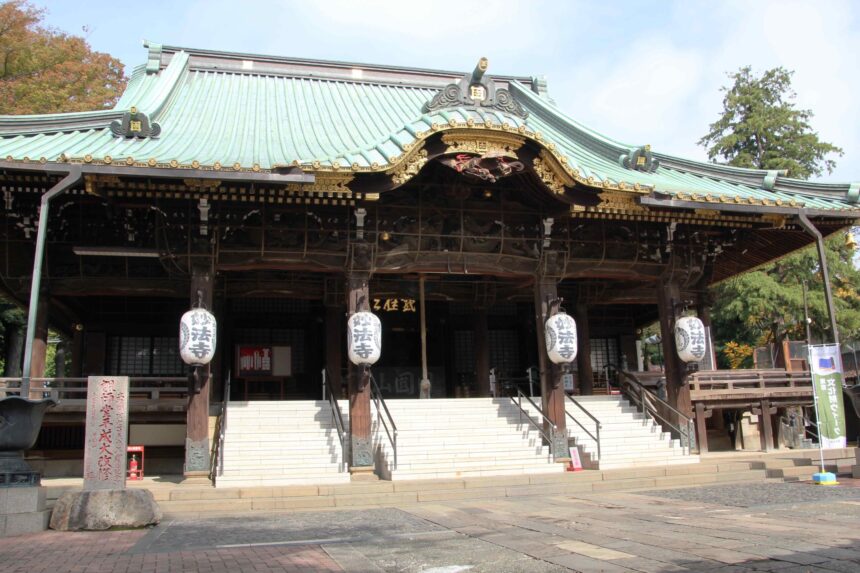
Originally a nunnery of the Shingon sect, the temple was converted to the Nichiren sect by Priest Nichien. The temple has been worshipped since the Edo period as “Yakuyakuwari Soshi” (the ancestor to ward off evil), and is still popularly called “Ososu-sama” today, with many valuable buildings such as the Niomon Gate, which welcomes visitors with a statue of Kongorikishi, donated by the 4th shogun Tokugawa Ietsuna, the gorgeous Soshidoho, which houses a statue of the founder, and the Iron Gate (National Important Cultural Property) designed by Josiah Condor, an architect who established the foundation of modern architecture in Japan. The temple is also home to a number of valuable buildings. Within the spacious precincts of the temple, there is also the Nijusanyado Hall, which is said to bring good luck and fortune, the Nichodo Hall, which is believed to be a guardian of academics and healing of eye diseases, and the Jogyodo Hall, where the statue of Jogyodo is washed to pray for healing from illness.

Spot OutlineOutline

address (e.g. of house) 3-48-8 Horinouchi, Suginami-ku, Tokyo
Access 15 min. walk from Higashi-Koenji Subway Station, 13 min. walk from Shin-Koenji Subway Station

phone 03-3313-6241
Business Hours 6:00 – 16:30 (opening hours from September 23 to March 20)
5:30 – 17:00 (opening hours from March 21 to September 22)
regular closing day nashi (Pyrus pyrifolia, esp. var. culta)
External Links

Official Web Site

Founding and opening of business Genna period (1615-1623)

新着・おすすめ情報

  1. What does a “hair dresser” do? Series of Craftsmen Who Make Dolls

  2. Zoshigaya Kishimojin Hall

  3. Gosho Ningyo” was a gift to the Imperial Palace. Also known as “Hai Hai” and “White Meat Dolls.

  4. The difference between a yukata used as pajamas and a yukata worn to a fireworks display, which only a Japanese person can understand.

  5. Musashino Central Park (Musashino, Tokyo)

  6. glutinous rice steamed with red beans or some other ingredient

  7. The 2nd “Sake Samurai”s Tour of Tokyo’s Long-established Sake Breweries with Yuki Aoi

  8. What is the difference between “Ginjo-shu” and “Junmai Ginjo-shu”? Words related to sake

  9. clothing (e.g. kimono) decorated with one’s family crest

  10. Former Mikawashima sewage disposal pumping facility (Arakawa, Tokyo)

  11. Ruins of Musashi Kokubunji Temple

  12. Fukutoku Shrine Meibuki Inari (Nihonbashi, Tokyo)

  13. Before the Edo period, “Dedication confectionery” was a top-quality confectionery made with white sugar.

  14. double-woven obi

  15. 三島神社(東京・鶯谷)