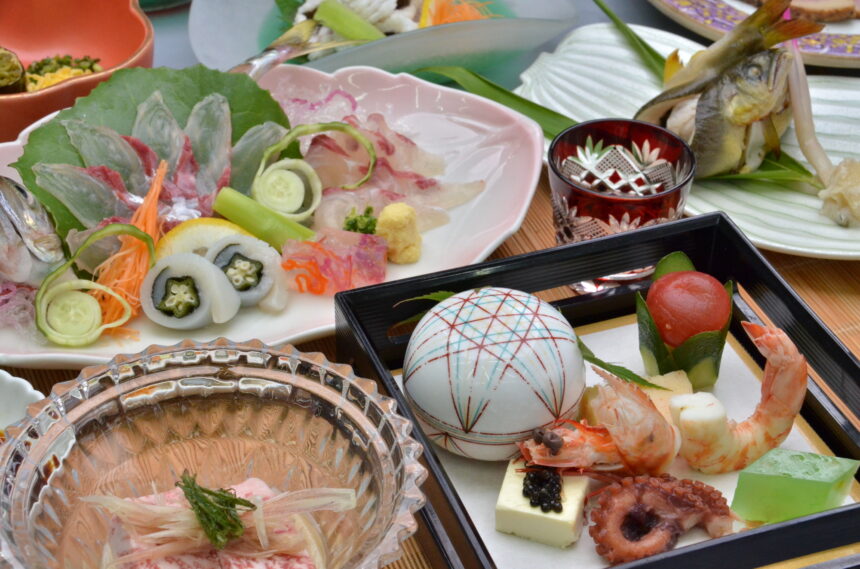
What’s in a Kaiseki meal? Explaining the Difference from Kaiseki Cuisine

Japanese-style meal

What’s in a Kaiseki meal? Explaining the Difference from Kaiseki Cuisine(Kaisekiryouri)

banquet

Kaiseki ryori” is sometimes confused with “kaiseki ryori,” which is read the same way, but they are different.
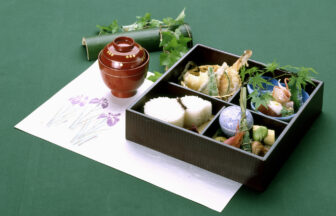
Kaiseki ryori” is a dish served at a tea ceremony before the tea ceremony, while “kaiseki ryori” is a banquet dish enjoyed with alcohol at a restaurant. Kaiseki ryori is a gorgeous dish with a large number of items, and the order in which the dishes are served varies, but basically it consists of “appetizers,” “oshinogi (small sushi or soba noodles),” and “oshinogi (small sushi or soba noodles). The order in which the dishes are served varies. Clear soup. Mukozuke (Sashimi) Sashimi,” “Hachizakana (grilled dishes),” and “Gokozakana (strong appetizers). Hachizakana (grilled dish)”, “Shizakana (side dish). Hachizakana (boiled, dressed, deep-fried, etc.), tomesakana (vinegared, dressed, etc.) Most of them are composed of “rice, pickles, miso soup” and “mizu-gashi or sweet (fruit, sherbet, etc.)”.

新着・おすすめ情報

  1. Anyone can do it by themselves! How to Tie a Yukata Obi – Kai no Kuchi

  2. Metropolitan Takiyama Park, Ruins of Takiyama Castle

  3. Hakata doll

  4. Philosophical Hall Park (Araiyakushi, Tokyo)

  5. very common way of tying a woman’s kimono sash

  6. 【第11回】江戸時代に生まれた「かけそば」の起源

  7. Zuijin” is a male doll that serves as an escort for O’naira-sama [Hina Dolls].

  8. Tsukiji Honganji Temple

  9. Railroad starting point 0 leagues sign (Shinbashi, Tokyo)

  10. Zenjoan (Yanaka, Tokyo)

  11. Ebara Shrine (Shinagawa, Tokyo)

  12. Meaning of “buckwheat cutter

  13. Developing original materials with attention to detail, starting from the fabric. Shukusen, a long-established manufacturer of yukata loved by kabuki actors in the Edo period [Part 1

  14. Ginza Matsuzaki Senmochi, a long-established shop, depicts tradition and innovation with its signature product “kawara senbei” (tile rice cracker).

  15. 【第2回】美味しい蕎麦屋を見分けるコツは、お客様の「姿勢」を見ること