

Tokyo Literature WalkAsakusa (department store)
Part 1: Walking around the Asakusa area, a treasure trove of sacred sites of modern literature
Temples, shrines, and Buddhist templesliteratureShotaro IkenamiSensoji TempleAsakusa Hanayashiki
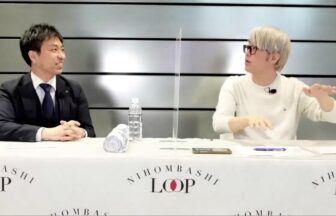
From the classics to poetry and entertainment, there are many places in Tokyo that have been the stage of literature. This corner introduces such “sacred places” selected by Yuma Watanabe (Skezane), a book reviewer, writer, and literary YouTuber.We will be presenting Mr. Skezane’s commentary on literary spots together with a field report on his actual tour of the town. In this first installment, we will take a look at the Asakusa area, which is home to many of the sacred sites of literature, especially modern literature.
Yuma Watanabethree
Book reviewer, book review YouTuber
Narihira Bridge, named after the most famous playboy of the Heian period
This time, our literary stroll started at Higashi-Oyoko River Water Park, near the foot of the Sky Tree across the Sumida River from Asakusa. This park has a very peaceful and tranquil atmosphere. On the grassy plaza, seniors were exercising to the instructor’s movements, and children from a nursery school were passing by the flowerbeds.
The Narihira Bridge (Map 1) spans the northern end of the 1.8-km-long park, which was created by reclaiming the Oyoko River, which was opened in the Edo period and used as a waterway, to create an artificial stream and fishing pond.
Tokyo Skytree Station” was renamed after the construction of the Tokyo Skytree. Before that, the station was called “Narihirabashi Station. The name was changed to “Narihirabashi” because the climax of “Ise Monogatari” (The Tale of Ise), one of the most famous stories of the Heian period, was set in this area, and the main character of the story was Narihira Zaihara. The hero of the tale, Narihira Zaihara, was known as one of the most handsome men and playboys of the Heian period (794-1185). Because of this connection, many places in the area are named after “Gyōhei,” and “Miyakotori” is often used in waka poems composed in the area in reference to his poem, “Nameshi ohabai zakoto inquires about Miyakotori, who thinks of her, whether she is there or not.
This is the “fishing area” in the park. Herabuna and mabuna are released here. It is open every day except during the year-end and New Year holidays, and the fee is free. Even though it was 10:00 in the morning on a weekday, the place was crowded with elderly gentlemen who seemed to be regulars.
None of the gymnasts or fishermen were paying any attention to the Sky Tree.A 10-minute walk along Asakusa-dori, which straddles the top of the park that was once a river, will take you to the Sumida River.
Search for haiku monuments in “Sumida Park” located on both banks of the Sumida River
Passing by the headquarters of Asahi Breweries, which is well-known for its nurty sculpture designed by Philippe Starck, you will pass by the Sumida Ward Office, where a statue of Kaishu Katsu stands. Passing through an area with a forest of skyscrapers, the view of “Sumida Park” (Map #2) suddenly opens up.
Sumida Park is home to a number of haiku monuments. Especially noteworthy are the monument to “Sumida is blue on a snowy day, the birds of the city” by Masaoka Shiki, who established the foundation of haiku, and the monument to “Miyakotori sae yonagatakoro wa uta wo uta shirumemiru” by Noguchi Ujo, one of the three greatest poets of children’s songs.
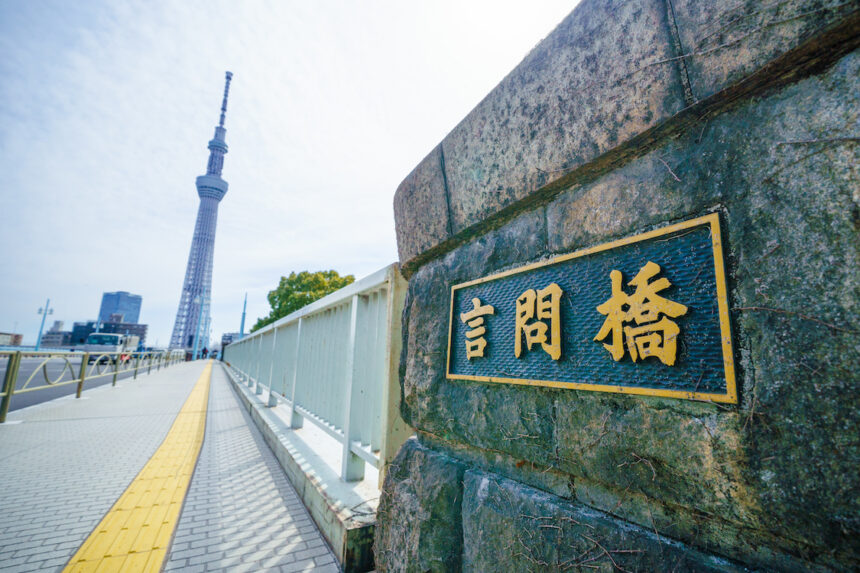
In the Edo period (1603-1867), this was the site of the Mito Tokugawa family’s residence, and the remains of this residence have been turned into a Japanese garden. It is a very beautiful and relaxing place, with long-legged birds resting in the pond. There are many historical and literary attractions in this Sumida Park.However, if you try to take a quick look at the park, you will get hurt. Sumida Park is not only next to Sumida Ward Office. The spacious ruins of the Mito Shimoyashiki are, so to speak, the “entrance” to the park. The park narrows down from here and continues along the river for about 1 km. The good literary monuments are located at the “back” of the park. Not only that, there is also the same Sumida Park on the other side of the Sumida River, which also has a good monument at the “back” of the park. It requires quite a number of steps, so you may need to have enough time to visit the park while strolling.Crossing the Sumida River, you will reach Asakusa. It would be nice to take the “Sumida River Walk” along the Tobu Railway bridge at the entrance of Sumida Park to Asakusa, like the Brooklyn Bridge in New York, but since this is a literary stroll, I will start from Kototoi Bridge, which looks like the Kototoi Bridge of Gyohei Zaihara.
Many stone monuments related to literature and entertainment at Asakusa Shrine and Sensoji Temple
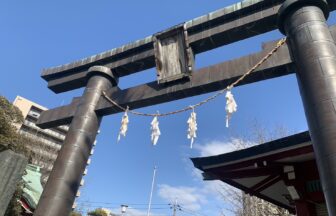
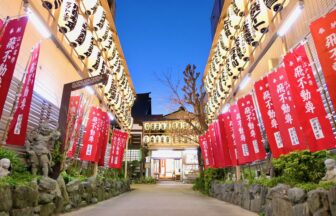
A five-minute walk will take you to Senso-ji Temple. Instead of the familiar Kaminarimon gate through the Nakamise, you enter the temple grounds through the Nitenmon gate, which is the east gate. You will encounter the main hall on your right, and further to the right is the torii gate of the Asakusa Shrine (Map 3). It is as if there is a shrine within the temple grounds.
Sensoji Temple and Asakusa Shrine are deeply intertwined. Asakusa Shrine is popularly known as Sanja-sama, and its annual festival is the Sanja Matsuri, known as one of the three major festivals of Edo. The three Sanja were the brothers Hinokuma Hamanari and Takenari, who were fishermen on the Sumida River, and the Asakusa intellectual Haji-no-Manakachi.It is said that Sensoji Temple was built after the brothers’ nets repeatedly caught the same statue of Kannon (the Goddess of Mercy) and they consulted Doji Manaka-chi. Asakusa Shrine, in other words, is a shrine dedicated to the three men who became the roots of Sensoji Temple as Gongen.The Asakusa Shrine is usually small and cute when the Sanja Festival is not being held. The hand basin, which was filled with colorful flowers for a limited time only, looked like a café.
The contrast of vermilion, yellow, and cold colors of the sacred beasts such as kylin and flying dragons painted on the shrine pavilion is beautiful. It is said to have been donated by Tokugawa Iemitsu and is designated as an important cultural property.
In the cozy precincts of the temple, a number of haiku monuments by theater artists could be seen.
Among the inscriptions at Asakusa Shrine, the most noteworthy is a haiku inscription by Mantaro Kubota. Kubota was born and raised in Asakusa, and was a haiku poet who wrote many works related to Asakusa, including “Asakusa Fudoki. The inscription on the monument reads, “Takemaya iroha ni hohoheto chiriri-jiri ni” (“Takemaba ya iroha ni hohoheto chiri-jiri ni”). In the first haiku, the image of children playing on stilts clearly comes to mind, as in the phrase “friends on stilts. Next, “Iroha ni hohe to chiriri-jiri ni” follows in hiragana. According to haiku poet Onda Yufuko, the meaning can be read in multiple layers, including the children playing, the way they have scattered as adults, their feelings of separation, and the impermanence of the iroha poem on which the poem is based.From this phrase, one might ponder Kubota’s life-long love of Asakusa.
Asakusa Shrine2-3-1 Asakusa, Taito-ku, Tokyo03-3844-1575https://www.asakusajinja.jp
Then we paid a visit to Senso-ji Temple (Map 4). In the main hall, there was a long line for the money-offering box. In front of us were people of all ages and genders, from a senior couple to a couple of high school girls and a college-aged couple.
After praying, I drew a fortune inside the main hall. Senso-ji is famous for its fortune-telling, but the one I got was “sue-kichi”. I was a little disappointed. Later, I found the following data in a June 21, 2016 article in the Nikkei e-zine’s “Travel Selection. Out of 100, 17 were “Daikichi, 35 were good luck, 5 were Hankichi, 4 were Shokichi, 3 were Sue-Kichi, 6 were Sue-Kichi, and 30 were bad luck. As it turns out, in terms of rarity, the “sue-kichi” was not so bad.Walking out of the main hall toward the west, I found a place where various monuments are gathered in a corner of the temple grounds. There was a haiku by Basho, a tribute to a benshi, a silent movie narrator, Gokuro Sogauke, a comedy king of the Taisho era, and Desagu Ishii, a pioneer of modern dance in Japan, among others. The collection includes monuments with a very strong sense of entertainment.This area was apparently called “Okuyama” in the Edo period (1603-1867), a place crowded with street performers and freak shows. The area is called “New Okuyama” after it, and is a bit like a paradise of stone monuments.
Matsuo Basho wrote a famous haiku about the bell of Sensoji Temple, “Hana no Kumo wa Ueno ka Asakusa ka” (The bell is either in Ueno or Asakusa). Senso-ji Temple may be the place where you lose track of whether you are in Asakusa or Ueno, where you feel as if your mind and body are being taken away from you.Another rakugo tale, “Rough-and-Tumble Nagaya,” also takes place at Sensoji Temple. This sense of bewilderment is a trick in this funny and eerie classic rakugo tale. In “Tokyo Ibun” (Tokyo Ibun), a novel by Ono Fuyumi, a flaming fiend with a full body of fireballs causes a mysterious incident in the bell tower of Sensoji Temple.
Sensoji Temple03-3842-0181https://www.senso-ji.jp/As soon as you exit Sensoji Temple toward the west approach, you will see a yellow tower marked “Asakusa Hanayashiki” (Map 5), the oldest amusement park in Japan.
Asakusa Hanayashiki has appeared in numerous literary works and movies, but the most memorable is Keigo Higashino’s “Tokio. The story opens in a tense hospital room. The parents are sinking into gloomy thoughts as their son, a high school student suffering from an incurable disease, becomes critically ill. The husband, the protagonist of the story, tells her that he met their son more than 20 years ago. The husband tells his wife, who questions him back in disbelief, an epic story that began at Asakusa Hanayashiki…. When you read the story to the end, you will want to run out to Asakusa Hanayashiki without thinking.
Asakusa Hanayashiki2-28-1 Asakusa, Taito-ku, Tokyo03-3842-8780https://www.hanayashiki.net/
From the former site of Ryounkaku to Broadway in the Sixth Ward, the center of entertainment
After passing Hana-Yashiki Street, the “Ryounkaku” monument (Map ⑥) can be seen standing unobtrusively. It is now located in front of the “Okay Store” supermarket.
The 12-story, 52-meter observation tower was built in 1890 and was nicknamed “Asakusa Jyuni-Floor,” or the “Twelve Floors of Asakusa.” The tower, which was constructed of brick on the 10th floor and wooden on the upper two floors, was featured in the NHK historical drama “Idaten,” but was partially destroyed by the Great Kanto Earthquake and later demolished.
An iconic building in Tokyo.In recent years, it would be the Tokyo Sky Tree, and in the Showa period, it would be the Tokyo Tower. If one were to look for such a thing in the Meiji and Taisho eras, it would be “Ryounkaku. Many of you may remember the hazy haze in the distance when the main character Sumijiro meets his nemesis Onimai Tsuji Musashira in “Oni no Kane” set in the Taisho era. Ishikawa Takuboku’s “Isshiguri-no-Suna” also has a famous poem, “Asakusa no Ryounkaku kagero kake ni noborinori shite gasukareta shite ni kerikanuki,” in which the height is felt through the physical senses.
Now, this neighborhood is the so-called Asakusa Roku-gu. Asakusa was the center of entertainment in Japan, with rows of playhouses and yose (a type of theater) replacing the bustle of freak shows and street performers that thrived in the “Okuyama” area during the Edo period (1603-1868).Even today, the mood of “Hare” is in the air in the neighborhood. Girls in rented kimonos with lace fluttering in place of half collars and couples on dates stroll about, and there is not a hint of weekday atmosphere. There are many restaurants where you can have a drink in the daytime, and they are emitting delicious smoke and steam. There is no place to sit down! We can show you to a seat with a backrest right now! I was almost sucked in by these invitations.Photographs and profiles of comedians associated with Asakusa were displayed on lampposts along Roku-ku Street, looking down on the city. Kiyoshi Atsumi, Keiko Utsumi, Yoshie Utsumi, and literary giant Kafu Nagai were also displayed.Then, on the corner of Roku-ku Broadway, which leads to Roku-ku Street and Ryounkaku, is the Asakusa Franceza Engeijo Toyokan (Map 7).
Asakusa Franceza Engeijo Toyokan was the setting for “Asakusa Kid,” a film directed by Gekidan Hitori. Writer Kafu Nagai also frequented the theater and even gave it the name “Franceza.Even more closely related was Hisashi Inoue. He began his career as a playwright here. Kiyoshi Atsumi of “Otoko wa Tsuraiyo” fame was also an actor at the same time, and in the conversation between the two recorded in “Asakusa Franceza no Jikan” (Time at the Asakusa Franceza), we learn how these two geniuses were trained at the Franceza, from the muddy but passionate stories of their youth to the techniques they used to attract customers to come see their striptease. The two geniuses were trained at the France Theatre.The young Takeshi Kitano came to Japan the year Inoue won the Naoki Prize, and Inoue fondly recalls, “There was a very grumpy young man.
It opened in 1951 as a strip theater, and in 1959 the Toyo Gekijo was born due to the popularity of its intermission comedy and light entertainment. Star comedy actors such as Kiyoshi Atsumi, Isamu Nagato, Toru Yuri, and Hachiro Higashi attracted attention here. Today, it is the only “iromono yose” in Tokyo, where performances of all kinds of entertainment, including rakugo, are held.Incidentally, the Asakusa Engei Hall is located in the same building, where rakugo performances are held. While I was taking pictures that day, I saw Master Umafu Suzusha being escorted off by his disciples and leaving the theater in a cab.Asakusa Franceza Engeijo Toyokan1-43-12 Asakusa, Taito-ku, Tokyo03-3841-6631https://www.asakusatoyokan.com/
After viewing the stars’ handprints in front of the Asakusa Public Hall, go to “Nakakiyo,” a long-established tempura restaurant.
Another sacred place for the performing arts in Asakusa is the Asakusa Public Hall. The hall hosts a variety of events from traditional performing arts to concerts, but the best part is the “Star Square,” where you can enjoy yourself just by going. The handprints and autographs of celebrities associated with Asakusa fill the eaves of the hall, making it Asakusa’s version of a “Chinese Theater”. Moreover, the palm prints are three-dimensionally displayed. Visitors can enjoy touching and comparing the hands of famous people, such as “Rentaro Mikuni’s hands are huge,” or “Hibari Misora is slender.The handprint on the right side of Hibari-chan is left by Shotaro Ikenami.Across the street from the public hall, a stately storehouse stands in the back of the building, and is the Nakakiyo Edomae Tempura restaurant (Map 8).If you take roughly 30 steps along the cobblestone pavement from “Orange Street” in front of Asakusa Public Hall, you will reach the eaves. It is a small time trip to this long-established shop founded in 1870.
The writer Shotaro Ikenami, who patronized Asakusa, was also a regular customer of Nakakiyo. In “New Year’s Me,” Ikenami recalls how he and his friends always visited the restaurant on New Year’s Eve, and in “Unagi (eel),” he writes of his unsparing patronage, “When my heart is warm, I enjoy the tempura at Nakakiyo in Asakusa.
In Nakakiyo, there is a detached house built in the sukiya style, where you can admire the pond and savor the Edo-mae cuisine that has remained unchanged since the establishment of the restaurant.
It is so cute to see how the carp in the pond, huddled together and frozen in one place, do not move even for a moment. However, when the proprietress shows up with food, their tension seems to rise dramatically.
●Central Qing1-39-13 Asakusa, Taito-ku, Tokyo03-3841-4015http://nakasei.biz/
*For more information about the store, please contactthis way (direction close to the speaker or towards the speaker)
At the end of the literary stroll, immerse yourself in the world of Shotaro Ikenami, a writer associated with Asakusa.
Finally, to visit one more place related to Shotaro Ikenami, we went to the Taito City Central Library at the end of Kappabashi Bridge. There is the “Shotaro Ikenami Memorial Library” (Map ⑨).
While it is fun to wander around Asakusa and see the various literary figures and places associated with their works, here you can immerse yourself in “Ikenami immersion” in a single location.
Shotaro Ikenami is a writer born and raised in Asakusa.He is the author of such historical novels as “Onihei Hankacho” and “Kenkaku Shobai,” loves food and travel, values the aesthetics of dandyism through his many art forms and manners, and even has a side as a painter.He was truly worthy of being called a great writer.As is evident from the fact that he has a memorial hall in Asakusa, he was a great lover of Asakusa and was not only a patron of the many famous restaurants in the area, but often used them as the setting for his works. The restaurant “Fujirou,” which is an important setting for “Kenkaku Shobai,” is located along the river in Hashiba, and the dojo of Daijiro Akiyama, a central character in the work, is set near the Masaki Inari Shrine.
The study is reproduced with a desk, art materials, stereo, and Benny Goodman LP records. The manuscripts are handwritten in red ink, and watercolor paintings are done with a vivid touch of the brush. A huge old map of Edo (present-day Tokyo) shows the places associated with his works.
You could probably take a “Tokyo Ikenami Sanctuary Walk” starting from here. However, photography is not allowed inside the museum. A literary stroll may be more suitable for those who want to take a lot of notes and savor the experience of visiting the museum.Shotaro Ikenami Memorial LibraryTaito City Lifelong Learning Center, 3-25-16 Nishiasakusa, Taito-ku, Tokyo03-5246-5915https://library.city.taito.lg.jp/ikenami/
The Asakusa area is very deep. There are gourmet foods, temples and shrines, tourist attractions, and shopping, so you can enjoy a full day of fun even if you have no plan.When I added the filter of a “literature walk,” I realized anew just how amazing Asakusa is. From classics to haiku, popular literature, theater, entertainment, and comics, there were traces of a great variety of “literature” left behind, so much so that even a “full day” was not enough to fully enjoy the area.Walking around the city with a few of these new perspectives will make the city more interesting. The town you know well may show you a face you have never seen before, even in your hometown.
Interview and text by Atsunori Takeda (steam)Photo: Satoshi OkuboLiterary Commentary: Yuma Watanabe
This time, a city tourOutline
| address (e.g. of house) | 1-39-13 Asakusa, Taito-ku, Tokyo |
|---|---|
| Access | 5 minutes from Asakusa Station on Tokyo Metro Ginza Line, Toei Subway Asakusa Line and Tobu Skytree Line |
| phone | |
| External Links |