

The Five Secret Secrets of Long-established Businessesturftype of high quality sobasoba
Bringing the best of Japan to the world, and the best of the world to Japan, agatajapan.Japan is one of the few countries in the world where there are more than 33,000 long-established shops that have been in business for a hundred years. In this series of articles, we ask the owner of a long-established business about the “five secrets” that make it a long-established business.Soba is one of the most familiar Japanese dishes for Japanese people. Founded in 1791, Sarashina Nunoya places the utmost importance on preserving the taste of soba sauce. How does “Sarashina Nunoya” continue to produce its particular taste in an environment that varies with the weather and the seasons?Eiichi Kaneko, the seventh generation owner of Sarashina Nunoya, will introduce the five secrets of Sarashina Nunoya, along with the actual process of making soba.
More than 230 years of history began with a peddler of “Shinano cloth.
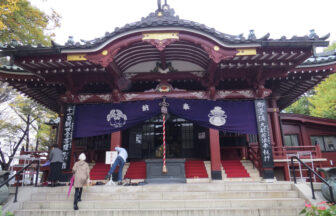
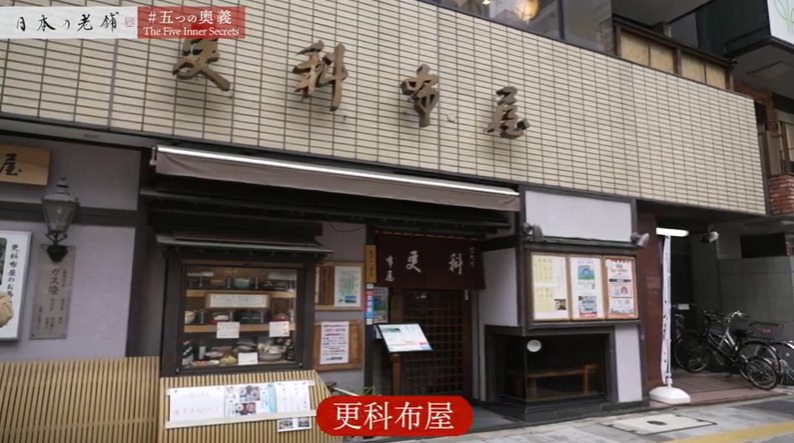
No matter what they say, I will never change it.Sarashina Nunoya” has maintained its commitment to the taste of soba, a representative Japanese food culture, for more than 230 years. These are words that simply describe its philosophy. Sarashina Nunoya is located in the historic area of Shiba Daimon, Minato-ku, Tokyo, where Zojoji Temple, one of the seven head temples of the Jodo sect, is located, just up the A6 exit of Daimon Station on the Toei Oedo Line.Eiichi Kaneko, a.k.a. Mankichi Nunoya, the seventh-generation owner of Sarashina Nunoya, greets you with a welcoming “Welcome! The history of Sarashina Nunoya began in Yagenbori, which is now Higashi-Nihonbashi.
After repeatedly relocating to Ginza Owari-cho and Sukiyabashi due to a fire in the store, the store settled in its current location in 1914. As its name suggests, Sarashina Nunoya was initially founded as “Nunoya” in Shinshu, in the area around present-day Koshoku City. The founder was a peddler who sold “Shinano-cloth,” a local specialty made by breaking the bark of linden trees into thin threads and weaving them into fabric. However, his skill at making soba was recognized, and he opened a soba shop. Since then, he has continued to preserve the taste of his specialties for more than 230 years.
Five secrets of long-established soba shops Part 1: Soba’s firmness is taught by the buckwheat itself
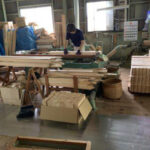
The aroma of soba can be felt most by the maker himself, who kneads the buckwheat flour with all his heart. The process of moistening the flour is called “mizukurin”. In order to ensure that the water is evenly distributed, the ingredients are carefully stirred and kneaded little by little.
Once you feel with all five senses when it is time to proceed to the “hardening” process of buckwheat flour, the buckwheat is kneaded with all your might to create the firmness of the buckwheat. Just looking at the buckwheat flour makes one’s back ache. Kaneko-san also says, “This is the hardest part of the process. However, he patiently continues to work with the soba, believing that if he does the work improperly, the final product will not taste as good as it should.Then, interestingly, at some point, the side will tell you, ‘That’s enough,'” Kaneko says.Once the slippery surface has been flattened to the touch, the next step is to use a machine to stretch and cut the noodles. After all this hard work, the soba is ready, and Mr. Kaneko is pleased with the result, saying, “I think it is a very good mien-sen.
The Five Secret Secrets of Long-established Soba No. 2: Aiming for Soba with a Sense of the Four Seasons
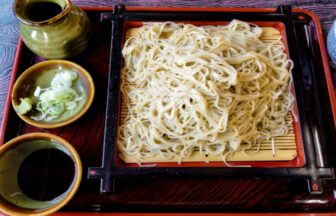
Sarashina-Nunoya’s representative product is the pure white Sarashina-soba, which is made from only the core of the buckwheat. Along with this, “Sanshoku-soba” is also a popular menu item. The “Seasonal Soba” changes every month, such as “January: Chario-kiri”, “May: Sansho-kiri”, and “December: Yuzu-kiri”, and “Sanshoku-soba” allows customers to enjoy familiar, common soba all at once.
To their surprise, the twelve varieties of odd soba noodles were carefully selected from more than 80 different varieties that were tried and tested. Many customers come back every month to try all the varieties.Soba is something you can eat every day and never get tired of it,” says Kaneko.That is why a variety of soba and menu items have been created with the idea of entrusting the colors and thoughts of the four seasons to soba as a representative Japanese food culture.
Five secrets of long-established soba shops Part 3: Check the taste of the soba sauce with your eyes
There are two pillars of the soba shop,” says Mr. Kaneko.One is the noodles, and the other is the soba sauce. The sweetness of the soba sauce determines the flavor of the soba. In order to get a good soup stock, “Sarashina Nunoya” adds dried bonito flakes to boiling water “to the point of exploding” and quickly makes them swim around in the pot so that the water touches each piece of flakes. The first minute or two of the process is crucial, as it determines whether the dashi will come out well or not.
In addition, in order to ensure that the soba sauce has a uniform taste, Sarashina Nunoya changes the time it takes to boil down the broth depending on the weather, and they take great care to make sure that the broth has the same consistency. After tasting the broth and giving a small nod, Mr. Kaneko proceeded to mix the remaining ingredients: soy sauce, sugar, and mirin (sweet cooking rice wine).The simplicity of using only four ingredients is a characteristic of soba-tsuyu, the taste of which can change drastically depending on the combination of the ingredients. Kaneko-san’s artisanal technique involves visually checking the proportion of dark and light-colored areas on the surface of the soba-tsuyu and making subtle adjustments.
The Five Secret Secrets of Long-established Businesses No. 4: “Taste” is something that must never be changed.
There are some things that must never be changed in a long-established business, and some things that must be changed.
The one thing a soba restaurant must never change is the taste. Kaneko-san says that this is because the taste of the tsuyu (broth) is the restaurant’s own identity. That is why “Sarashina Nunoya” continues to hone its craftsmen’s intuition and skills without relinquishing their commitment to uniformity of taste.
The Five Secret Secrets of Long-established Restaurants No. 5: The Taste of Childhood Leads to the Present
After graduating from college, Mr. Kaneko worked in sales and marketing for a food manufacturer before taking over the family business. Until then, he had never actually made soba noodles.But I could taste it,” Kaneko said.
The taste of soba, which had been ingrained in his body since he was a child, had seeped into Kaneko-san’s sense of taste. While sometimes arguing with his predecessor, Kaneko-san’s training period was spent translating his senses into techniques.
Emphasis on protecting taste is “loving your grandchildren”.
Mr. Kaneko has a memory that his grandfather, who was the grandfather before him, took very good care of him. That is why he emphasizes “loving his grandchildren” in order to preserve the flavor.I think that’s the key point.For a moment, the expression on Mr. Kaneko’s face changed from that of the seventh-generation head of a long-established restaurant that preserves the taste of its products to the smile of a grandfather who is worried about his grandchildren.
Starmark CorporationGood things of Japan to the world Good things of the world to Japan Good things of tradition to the present day Good things of the present day to tradition.The video of “The Five Secret Secrets: Sarashina Nunoya Edition” can be viewed athere (place close to the speaker or where the speaker is)from (e.g. time, place, numerical quantity)