A Walk in Edo with Old Maps] No. 1: Traces of Ieyasu’s Urban Development and Precious Buildings in Marunouchi

Walking around Edo with old mapsMarunouchi/Yaesu

Part 1: Traces of Ieyasu’s urban development and valuable buildings in Marunouchi

old mapOta Do-shuhou era (1260.4.13-1261.2.19)Tokugawa Ieyasu (lords of the Tokugawa shogunate)Edo Castle (residence of the Shogun during the Edo period, now the site of the Tokyo Imperial Palace)

Tokyo is a “city” with a long history. When Ota Dokan built Edo Castle in the mid-15th century, it was a marshy fishing village facing an inlet. He reclaimed the inlet in front of the castle and built city blocks, surrounded the castle with a long moat, created the Tamagawa water supply to secure water for daily use, and built waterways throughout the town to establish a distribution network. By the 18th century, the city had become a city of one million people.A quick search can tell you this much, and you can even vaguely think that Edo is an amazing place, but it is even more interesting to actually walk around and see it. There are many old maps of Tokyo from the Edo period onward, and you can be quietly impressed by the same plots, streets, and buildings, and you can be surprised by such things as, “Didn’t that street exist⁉” or “The old mansions are huge! or “That street didn’t exist⁉” or “The old mansion is huge!The idea of this page is to walk around and see the city of Edo and Tokyo with old maps in such a way. We will be led around Tokyo by a guide from the “Walking Trip Ouensha,” a pioneer in walking tours of Tokyo with old maps.

Edo, a “fortified city” living inside the moat of a castle

In this first installment, we will visit Marunouchi, the very birthplace of Edo (present-day Tokyo) and the up-close and personal neighborhood of Edo Castle. Our guide this time was Tae Hoshino, a tour guide. After working as a bus guide, he has been guiding tours with the Walking Travel Support House for about three years.

Here is an old map of the Marunouchi area we walked through this time, dating from the late Edo period. The “castle” is Edo Castle, now the Imperial Palace. The moat to the right of the castle still remains, but the moat running north to south on the right side of the map has been reclaimed, and the avenue along it by the Yaesu exit of Tokyo Station has been renamed “Sotobori Dori. The moat is called “Sotobori”.

Marunouchi means “inside the moat. The word “moat” may conjure up images of a moat dug to separate the castle from the town, but the outer moat of Edo Castle was dug 15 km long through the city, and samurai and merchants lived inside the moat as well. Old European towns are surrounded by castle walls, and the town and castle are inside the walls, aren’t they? That castle wall became a moat in the city of Edo.

Ready to go to work at any time, Marunouchi is close to work and residence in Edo Castle.

This area was close to the main citadel of Edo Castle, and there was a concentration of the residences of powerful daimyo (feudal lords) in the area. Kamiyashiki are the “nearest residences” to the castle of the feudal lords. It is said that the working generation who commuted to the castle every day lived in this area. The more powerful feudal lords also had their middle and lower residences, where their retired predecessors lived and their retainers lived, and the officialdom became less official as they moved away from the castle.

The first place we visited was Dosanbori. From the Marunouchi North Exit of Tokyo Station, we passed through the Marunouchi Oazo, which, according to an old map, is a part of the residence of Hakki-Mamoru Matsudaira, passing through the grounds of the Hosokawa Koshinaka family. When you exit the building, you will find yourself on Eitai-dori Avenue. The “Dosanbori” was once located here and connected to the area around the Wadakura Gate.It was the first waterway built by Ieyasu when he entered Edo Castle. It was built as a waterway to transport materials for the construction of Edo Castle. The map shows ‘Dosan Kawagishi,’ but a riverside is a place for loading and unloading cargo.”Today there is no moat, and Eitai-dori leads straight to the Otemon Gate of the Imperial Palace (Map 1).

It was the main gate of Edo Castle, so to speak, and the official entrance and exit connecting the castle and the castle town. It is now the entrance to the East Gardens of the Imperial Palace.

Wadakura Fountain Park is an urban oasis with Wi-Fi

Proceeding along Eitai-dori toward the Imperial Palace, we headed south on Hibiya-dori. It feels as if we were heading to the castle from Dosanbori by boat. We arrived at the Wadakura Bridge (Map 2), which leads to the Wadakura Gate of the Edo Castle.In the Edo period (1603-1867), the inlet of Hibiya came to this area, hence the name “Watakura”. This Wadakura Bridge is a reproduction of a wooden bridge from the Edo period, and there are only two such wooden bridges in Japan today: Hirakawa Bridge, which serves as the entrance to the East Gardens of the Imperial Palace, and this bridge.

The Wadagura Gate is said to be a “Masugatamon,” a gate with two entrances and two exits, surrounded by a “Masu” when viewed from above. Since foreign enemies could not pass through the gate at once, they were stopped here and targeted with arrows from inside the gate. The old map also shows “Masugata” in an easy-to-understand manner.After passing through this gate and entering the “castle grounds,” I found myself in the “Wadakura Fountain Park. There was a beautiful fountain, Starbucks was open, and Wi-Fi was available. It was an urban oasis where I could get a lot of work done.

Marunouchi after the Meiji Restoration, which was a wasteland

Now, crossing the Wadakura Bridge again from Wadakura Fountain Park, we see in front of us the modern Marunouchi …… with its skyscrapers, but there are traces of history’s past here as well. The shiny building in the photo is the “Mizuho Marunouchi Tower, Bank Kaikan, Marunouchi Terrace(Map 3).

Its predecessor was the Bank of Tokyo Assembly Hall, completed in 1916. It was a two-story brick building with a tower building, and was reconstructed into a high-rise building in 1993, leaving the exterior walls on two sides of the building.It was further rebuilt in 2016 and calledMizuho Marunouchi Tower, Bank Kaikan, and Marunouchi Terrace” (new construction to begin in January 2018 and completed by the end of September 2020).The former outer girder wall has been demolished, and now a model of the brick exterior of the old building and an explanation of the building can be seen at the foot of the building.If the Edo Castle area was the pioneer of urban development in Edo, Marunouchi is the pioneer of urban development in Tokyo.With the Meiji Restoration, the area was confiscated by the new government and used as military training camps and quarters. According to Mr. Hoshino, some plots of land were torn down and new facilities built, while others were abandoned, and the area was rather more desolate than it was at the end of the Edo period. The naturalist literary scholar Hanabukuro Tayama even described Marunouchi at the time as “gloomy, dreary, desolate, and in a rather declining mood.

Tracing Marunouchi’s Revitalization through Mitsubishi’s Dramatic Development

In 1890 (Meiji 23), Mitsubishi was granted a lease on this area and began development. The area was called “Mitsubishi Gahara,” a wasteland of weeds and grass where military facilities had been relocated one after another, and was rebuilt to become a new business base for Japan.For example, the earlier “Mizuho Marunouchi Tower, Bank Kaikan, Marunouchi Terraces side to the east, crossing a street that did not exist during the Edo period or after the Meiji Restoration.Marunouchi Nakadori Avenue.

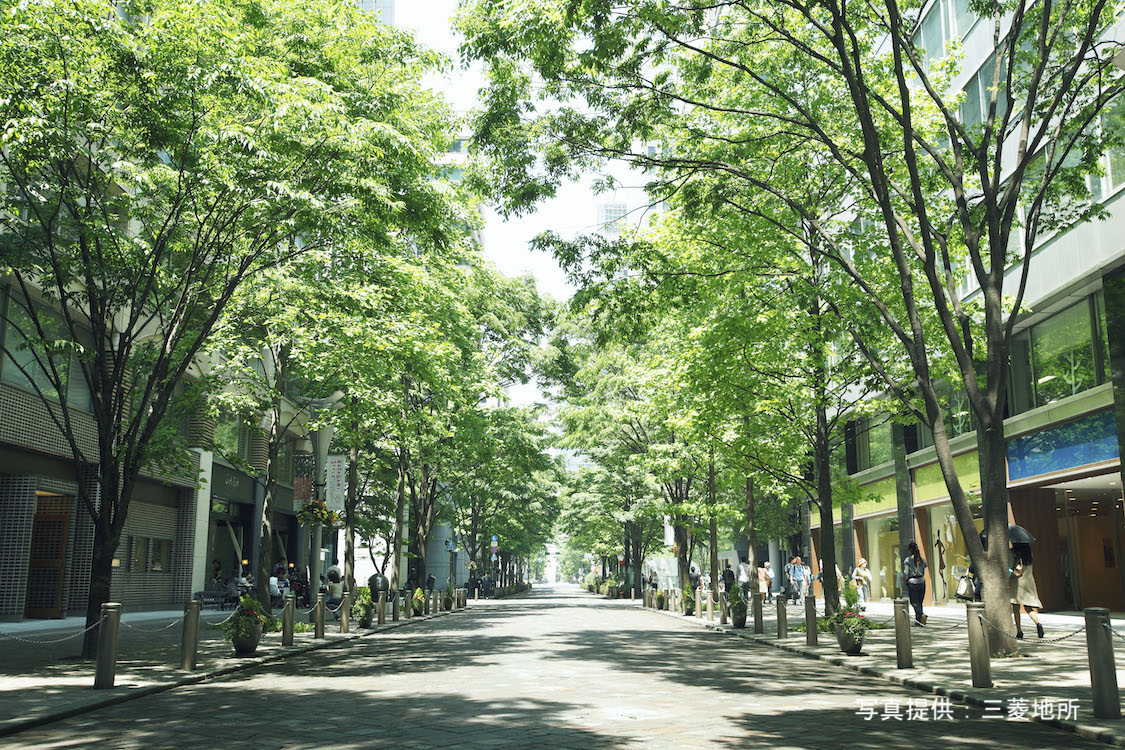
When you say the word “Marunouchi,” this is probably the place that comes to mind for most people. With its rows of stores selling high-brand goods from Japan and abroad, stylish restaurants with open terraces, art decorations, and illuminated cobblestone streets, Marunouchi is a place where people can enjoy the city’s many attractions.The development of the area, which had been a daimyo’s mansion until the end of the Edo period and military land until the mid-Meiji period, has brought a new street through the area. Since this street is so well-known that Marunouchi is often referred to as “Marunouchi,” it is a new surprise to compare it with an old map.And as you continue down the street, now named “Marunouchi 1st,” you will see the “Industrial Club of Japan Hall” (Map 4) on your left.

It is the base of an organization founded by industrialists to develop Japanese industry. This building was rebuilt in 2003, but was originally constructed in 1920.The classic architectural style is one thing, but notice the statues above the main entrance. The man is holding a hammer and the woman is holding a spool of thread. They symbolize the workers at the coal mines and spinning sites, which were the main industries of the time.”

Pine piles that supported the old Marunouchi Building for more than 70 years

And standing between Marunouchi Naka-dori Avenue and Daimyo Koji Avenue along Marunouchi 2nd Street is the Marunouchi Building (Map 5). Many of you may have visited this building for dining or shopping, but Mr. Hoshino led us to an unfamiliar entrance.Along Gyoko-dori AvenueDoor on the side of the building on the side.Beyond that was a hall-like space in an unpopular atrium, where the “piles” were displayed.

The pine piles that formed the foundation of the old Marunouchi Building (top photo),Stable ground to support the buildingThey were hammered to reach the Tokyo rubble layer. There were 5443 of them. The construction of the old Marunouchi Building was completed in February 1923, the same year the Great Kanto Earthquake struck in September, but the Marunouchi Building was unaffected.I have been to the Marunouchi Building many times, but I had no idea about this place. Another thing I didn’t know was this. A bronze statue of a ship (?) quietly installed on the south side of the building.

Jan Joosten, a Dutch navigator, comes to Japan aboard the sailing ship Liefde. However, the ship ran aground and he and William Adams (Anjin Miura) drifted ashore.Jan Joosten gained the trust of Tokugawa Ieyasu, lived in the castle, and engaged in the red seal trade with Southeast Asia.His Japanese name was Ya-Yosu, after whom the area around today’s Hibiya Street was called Yayosugashi at the end of the Edo period, which is said to be the origin of the word Yaesu.In today’s place names, Yaesu is on the opposite side of Tokyo Station from Marunouchi, but Yaesu was originally located on the Marunouchi side of the station as well.

Serious Restoration, Mitsubishi Ichigokan and Iccho-London

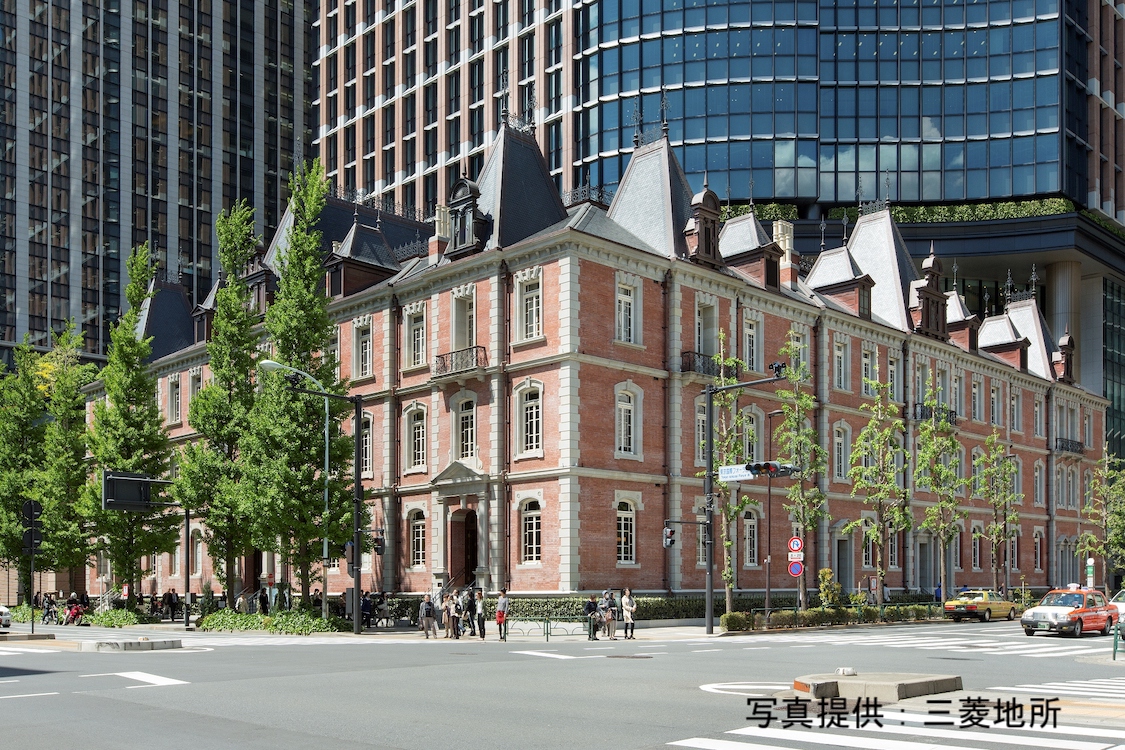
Since purchasing Marunouchi, Mitsubishi has built up the city exactly like it and constructed various buildings, the first of which was the “Mitsubishi Ichigokan” (Map ⑥). The first of these was the “Mitsubishi Ichigokan” (Mitsubishi Ichigokan) (Map 6), designed by Josiah Conder, who was invited from England by the Japanese government, and completed in 1894.

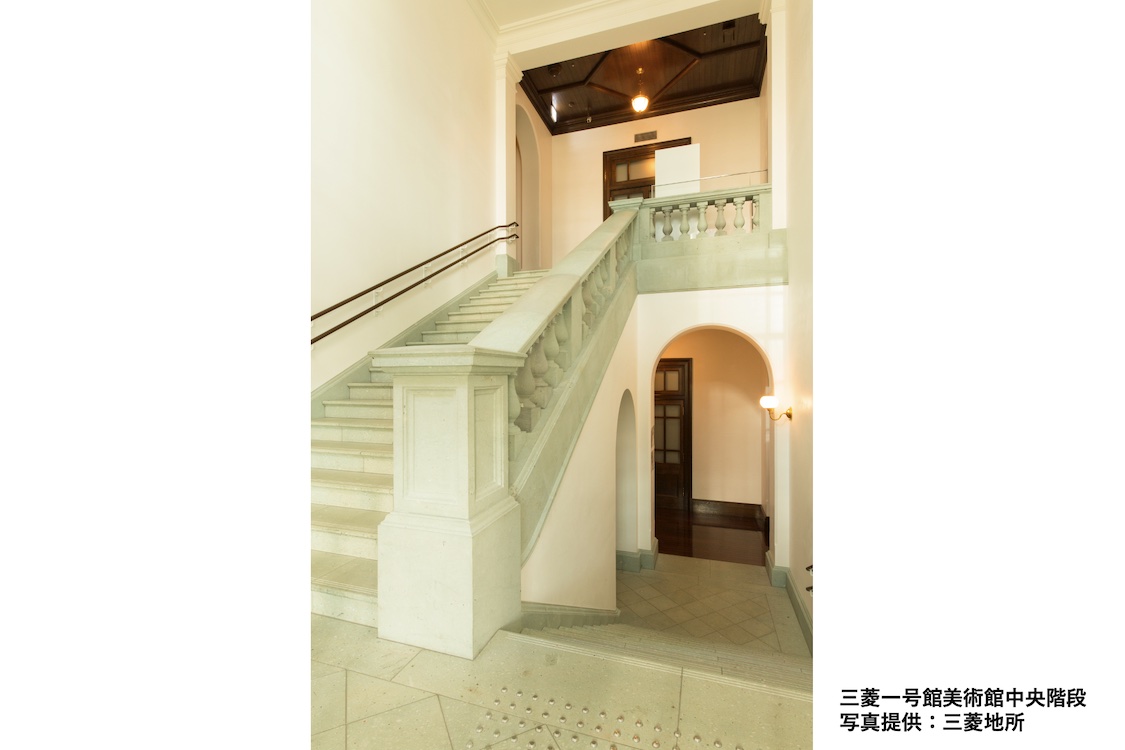
It was a pioneer of office buildings in Japan. Instead of entering the building and going from the lobby to each office, as is the case in today’s office buildings, each office had its own separate entrance on the outside. You go directly from the street up a short flight of stairs into each office.”The original building was demolished in 1968, but its restoration was completed in 200910. In 2010, the building was reopened as the current Mitsubishi Ichigokan Museum.Based on actual blueprints and various documents from the Meiji era, we have reused parts that were saved from demolition and used materials made using the same manufacturing methods as in the past, making the building as faithful to the original as possible. The building is also filled with attractions inside.

Mitsubishi Ichigokan No. 1 was built on Babasaki-dori Street, which leads to Babasaki-mon Gate in the outer gardens of the Imperial Palace. Along the same street, Mitsubishi No. 2 Building (Mitsubishi No. 2 Building), Mitsubishi No. 3 Building (Mitsubishi No. 3 Building), and the Tokyo Chamber of Commerce, founded by Eiichi Shibusawa, were built within 10 years, and this neighborhood came to be known as “Itcho London” because of the rows of Western buildings of uniform height on the spacious street.

Although the buildings from those days no longer remain, the Meiji Seimei Kan (see map 7) now stands on the site where the “No. 2 Building (Mitsubishi Nigo-kan)” once stood.

Although it is a “site”, it is a historic building completed in 1934, and was seized by the U.S. for 11 years from September 1945 and used as the Far Eastern Air Force headquarters.It is the first building from the Showa period to be designated an Important Cultural Property. The columns in the front are magnificent, but the details are also fun. The metal grills on the windows, the flowers called rosettes, and the dolphin design make this building a must-see.”

Where the Tokyo Metropolitan Government Office once stood. Ota Doban at the Tokyo International Forum

At the opposite end of Babasaki-dori Avenue, which begins at Babasaki-mon Gate in the outer gardens of the Imperial Palace, stands the Tokyo International Forum (Map 8). This is the former Tokyo Metropolitan Government Building. This is the former Tokyo Metropolitan Government Building, which was originally the “Tokyo Prefectural Office Building.

The two-story red brick Tokyo Prefectural Office Building was completed in 1894. After being destroyed by fire in the war, the first government building, designed by Kenzo Tange, was completed. In 1991, the Tokyo Metropolitan Government moved to its current location in Nishi-Shinjuku.Although I have visited live concerts, events, and the underground Mitsuo Aida Museum, and I knew that this was the site of the Tokyo Metropolitan Government Office, I was unaware of the existence of this monument.And even though I have probably been there many times, and saw a video of an idol group singing on New Year’s Eve in 2021, there is no such thing (person?) “out there”. I had no idea that such a thing (person?) existed there. The statue of Ota Dokan in the glass building facing the four halls.It was built in the former Tokyo Metropolitan Government Building to commemorate the 500th anniversary of the construction of Edo Castle.

A model of the Edo Castle keep during the reign of Tokugawa Iemitsu and statues of Doukan from around the country were displayed in the Doukan Corner.When the old Tokyo Metropolitan Government Office was built, it was set up outdoors, and I thought it would be taken to Nishi-Shinjuku when it was relocated, but it was left behind (laughs). But maybe Mr. Doukan would prefer to be near the Edo Castle he built himself.”So, from the Marunouchi North Exit of Tokyo Station to the Tokyo International Forum via the Marunouchi area. It took us about three hours to walk the route, which would probably take about 20 minutes if we walked normally. In fact, there are still some places I haven’t fully introduced, but I’ll leave it at that, and let you walk around and see for yourselves.Interview and text by Atsunori Takeda (steam)Photo/Satoshi OkuboInterview supported by Walking Journey Support House
 

This time, a city tourOutline

新着・おすすめ情報

  1. Former Main Building of the Ministry of Justice (Kasumigaseki, Tokyo)

  2. Inokashira Onshi Park

  3. 【第24回】海苔と海苔を使った蕎麦メニューの歴史

  4. Tomioka Hachimangu Shrine

  5. Former Kusuo Yasuda Residence Garden (Sendagi, Tokyo)

  6. 【第22回】お寺とお蕎麦の切っても切れぬ関係

  7. lay or stretch out to dry

  8. Ginza Suze Jizo Son (Ginza, Tokyo)

  9. Japanese yam (Dioscorea japonica)

  10. Nihonbashi Kuroeya deals in lacquerware from all over Japan. Protecting the goodwill through innovation, not single-mindedness.

  11. Omori Shell Mound Site Garden

  12. Shinagawa Shrine (Kita-Shinagawa, Tokyo)

  13. Railroad starting point 0 leagues sign (Shinbashi, Tokyo)

  14. Former Asakura Residence

  15. silk gauze