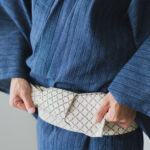
undershirt

Japanese clothing

undershirt(zyuban)

Japanese clothesclothing

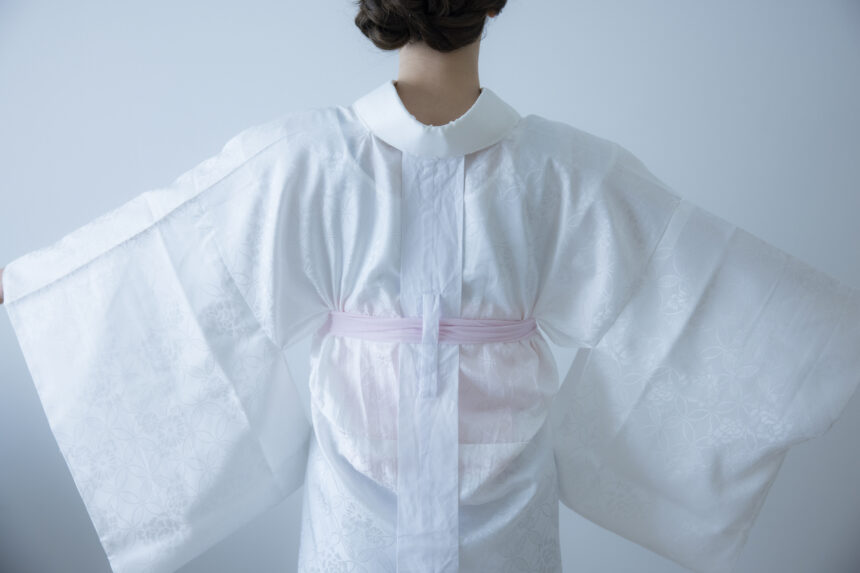
Underwear for kimono. It prevents the kimono from becoming soiled with sweat and dust. There are three types of underwear: hada-juban, nagajuban, and han-juban. Hada-juban is the lowest type of underwear and is made of white cotton to absorb perspiration easily. A hanjuban is an undergarment similar to a kimono that is worn over the hanjuban, and can be worn with a half collar to give the effect of wearing a kimono over the undergarment. Since it may be slightly visible through the sleeves and hem, it can be more interesting if you pay attention to the color and pattern of the kimono. A hanjirubin is a short underwear with a half collar attached, and is usually worn together with a hemmodukake because of its short length. When wearing a han-riban, the long lintel is not worn.

新着・おすすめ情報

  1. kneaded dough

  2. Inheriting the craftsmanship of making each toothpick one by one. Commitment to “Nihonbashi Saruya,” the only toothpick specialty store in Japan

  3. Seiro soba (buckwheat noodles)

  4. Long-established Tabi Shoes supported by all generations. Ohnoya Fuso-Honten” continues to make Tabi Shoes with all our hearts.

  5. Akasaka Imperial Villa

  6. well-established

  7. Akatsuka Fudo Falls (Takashimadaira, Tokyo)

  8. The company has 25,000 followers on social networking sites! Nihonbashi Benshitsu Sohonten, Japan’s oldest bento shop that delivers the taste of a long-established shop while using modern tools.

  9. Preserving Kimono Culture through Tabi Shoes. What is the goal of the long-established Tabi Shoes shop “Ohnoya Fuso-Honten”?

  10. Ebara Shrine (Shinagawa, Tokyo)

  11. What does a “Hands and Feet Master” do? The series of craftsmen who make dolls

  12. Former Main Building of the Ministry of Justice (Kasumigaseki, Tokyo)

  13. pongee (soft thin cloth woven from raw silk)

  14. Tomioka Hachimangu Shrine

  15. Where did okame soba originate? Ingredients used are also explained.