

Founded in the An’ei era (1772–1780)
A traditional Japanese clothing goods store that has always insisted on “creating by hand” through every era.
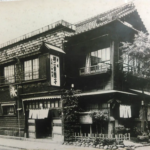
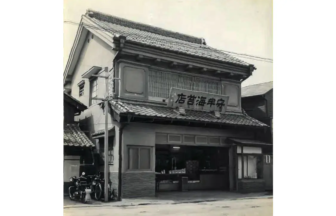
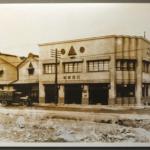
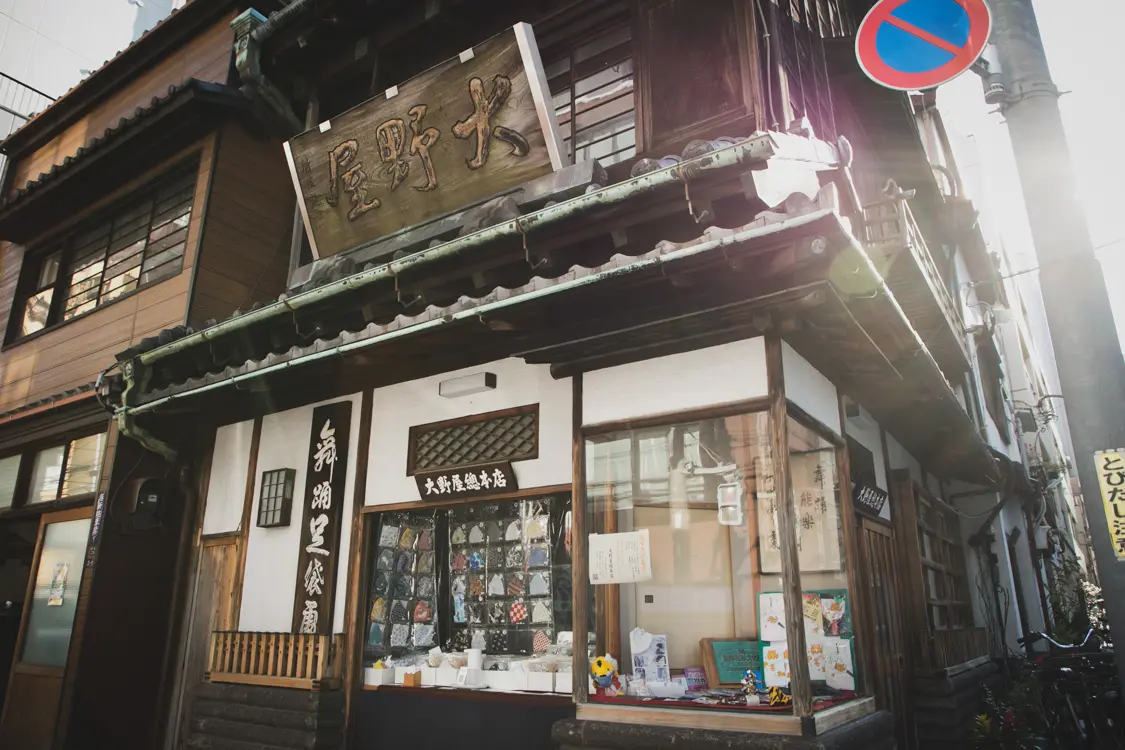
Located in Shintomicho, not far from Ginza and Nihonbashi—areas rich with cinemas, theaters, and cultural history—is “Ōnoya Sohonten,” a Japanese clothing goods store housed in a distinctive wooden building registered as a National Tangible Cultural Property. The current owner is the 7th-generation Shigeo Fukushima.
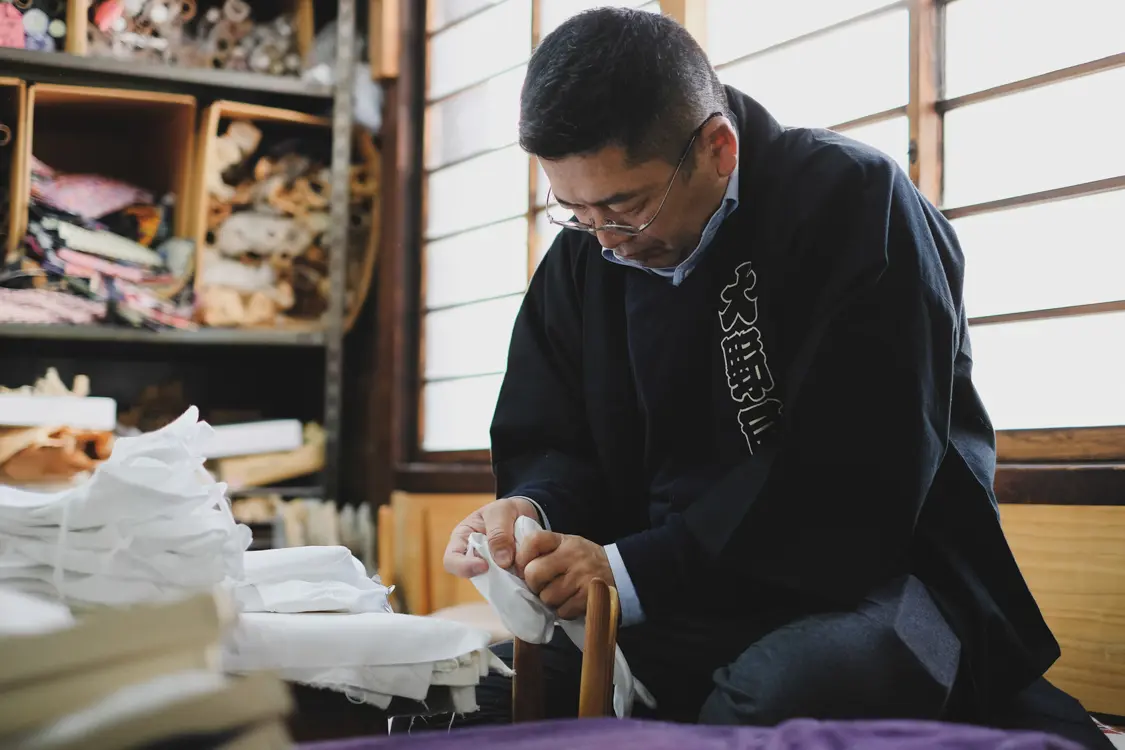
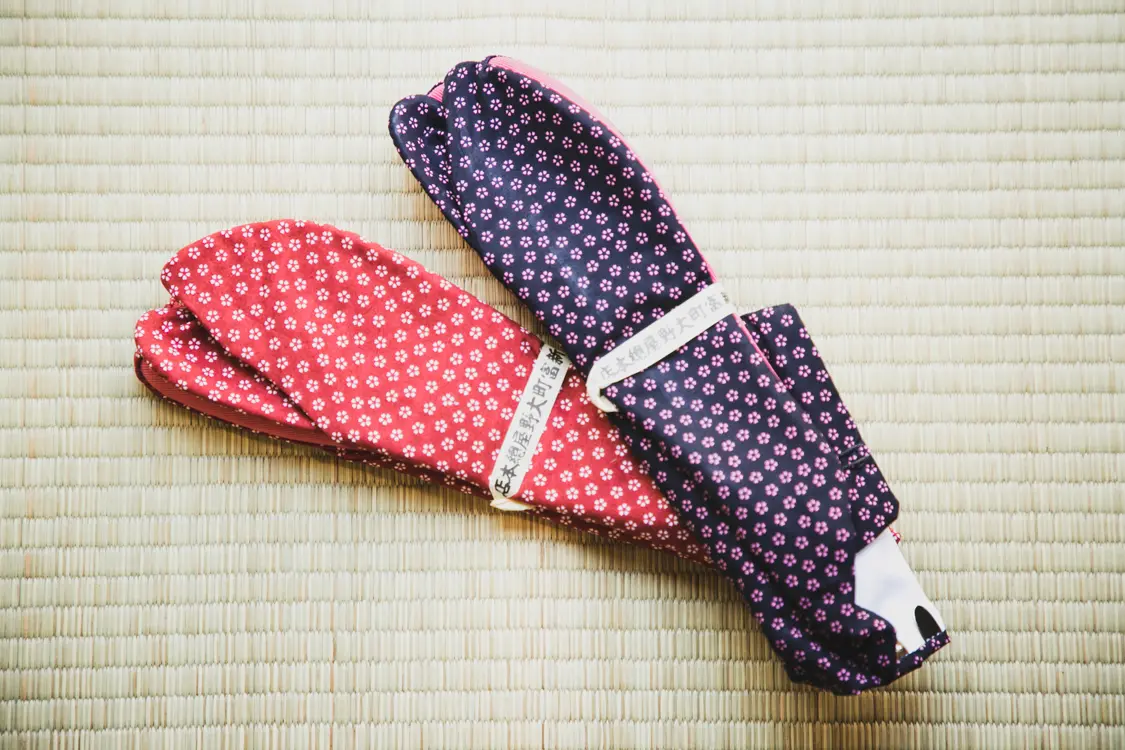
One of the products long produced at Ōnoya Sohonten is the “Shintomi-style tabi.” Although most products today are mass-produced by machine, every pair of tabi here is handmade by craftsmen. From cutting the fabric to the finishing process, everything is done in the workshop upstairs at the back of the store.
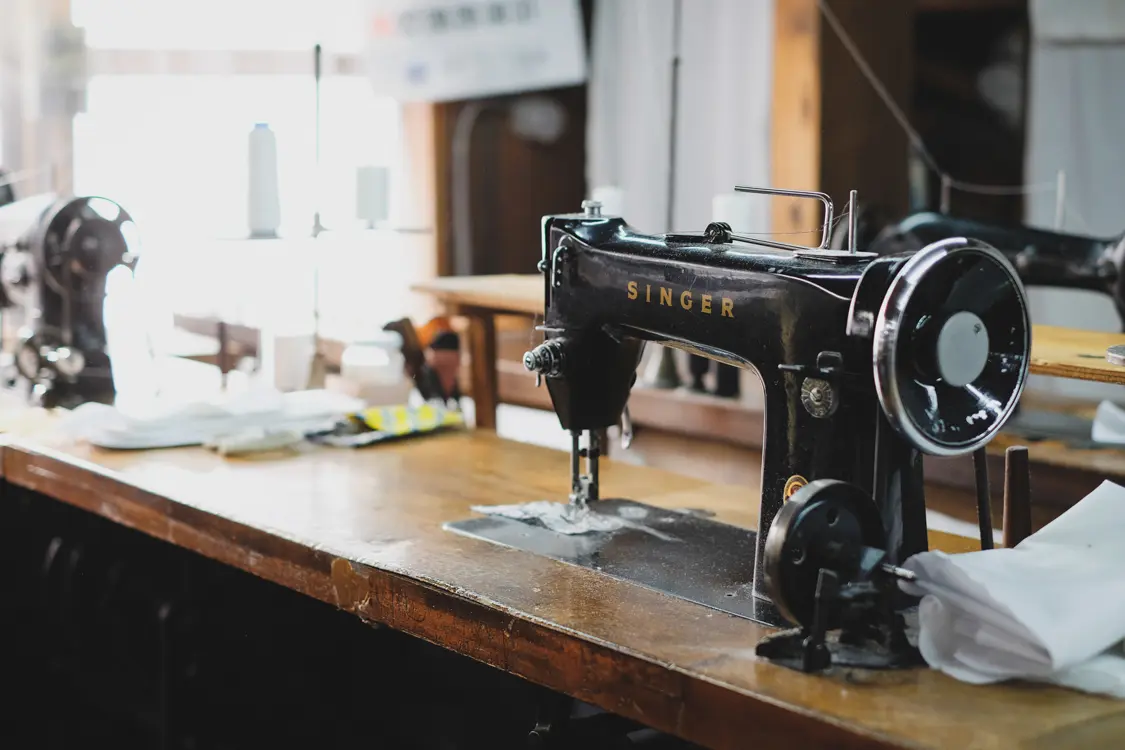
The first step in making tabi is cutting ten pieces of fabric—left and right combined—for the inside, outside, and sole. The technique used is called “three-dimensional cutting,” in which fabric is cut to match the customer’s foot shape measured beforehand. Next, using a large treadle sewing machine that stands out in the workshop, the craftsmen sew the pieces together while changing thread thickness depending on the section. The most delicate part at this stage is the toe, which must be shaped while adding a rounded finish that follows the curve of the foot. After sewing, the tabi is placed on a wooden last modeled on the foot, and the seams are hammered with a mallet so they won’t rub and cause pain while walking.
“With the many steps and the craftsmen’s delicate, highly refined skills, only then does the perfect tabi—tailored to each customer’s feet—come to life,” says Fukushima. Ōnoya Sohonten’s carefully crafted tabi are loved not only by the general public but also by kabuki actors, dancers, and Noh performers. At the storefront, handkerchiefs, tenugui towels, and kappogi aprons are also sold, and the uniquely colored and patterned masks created during the COVID-19 pandemic have become very popular.
History
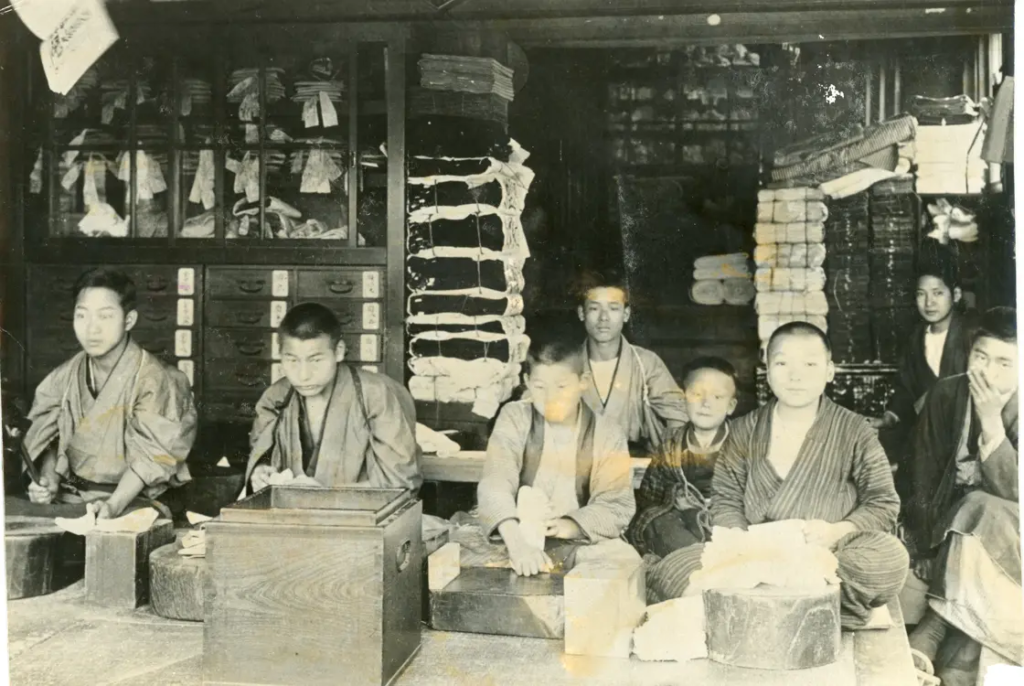
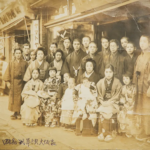
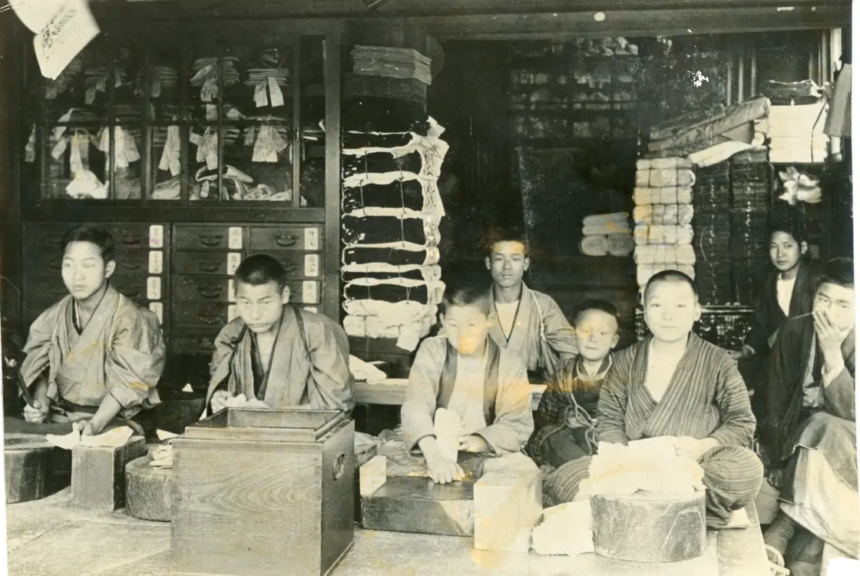
Ōnoya Sohonten began in the An’ei era (1772–1780), when the first-generation Miyokichi Fukushima—said to have had skilled hands since childhood—opened a costume tailoring shop in Mita. His craftsmanship was so renowned that he received orders from the Satsuma domain residences.
The shop moved from Mita to Shintomicho in Kaei 2 (1849). During the early to mid-Meiji era, when theaters such as Shintomi-za (formerly Morita-za) and Kabuki-za were built and the area flourished with geisha, the 5th-generation Fukutarō created the “Shintomi-style tabi.” As these tabi became loved by many actors and geisha, the name Ōnoya became widely known.
We always want to create products that meet our customers’ expectations.

Mr. Shigeo Fukushima
7th-generation proprietor of Ōnoya Sohonten
Our tabi are not only made to order but also available for purchase in the store. When purchasing, we select and offer the most suitable ones possible for each customer’s foot shape and needs. It is all driven by our desire to “respond to customer expectations with care.” We hope you will visit Ōnoya Sohonten someday.
This Notable Item
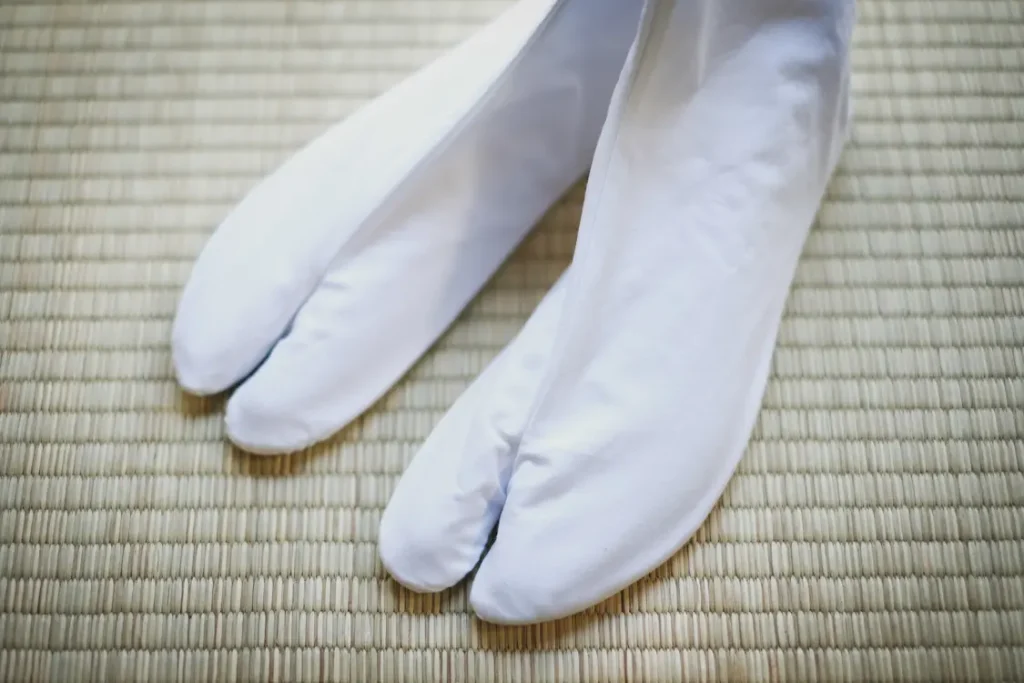
Shintomi-style Tabi
White tabi with 4 clasps — 3,960 yen
The appeal of Shintomi-style tabi is that the sole is designed narrower than standard tabi and wraps the foot from above, making the foot look slim and elegant. Comfort is also prioritized, with the toe finished rounded and soft so that even long wear causes no tightness or pain. Made of durable cotton calico, they are known to last for many years.
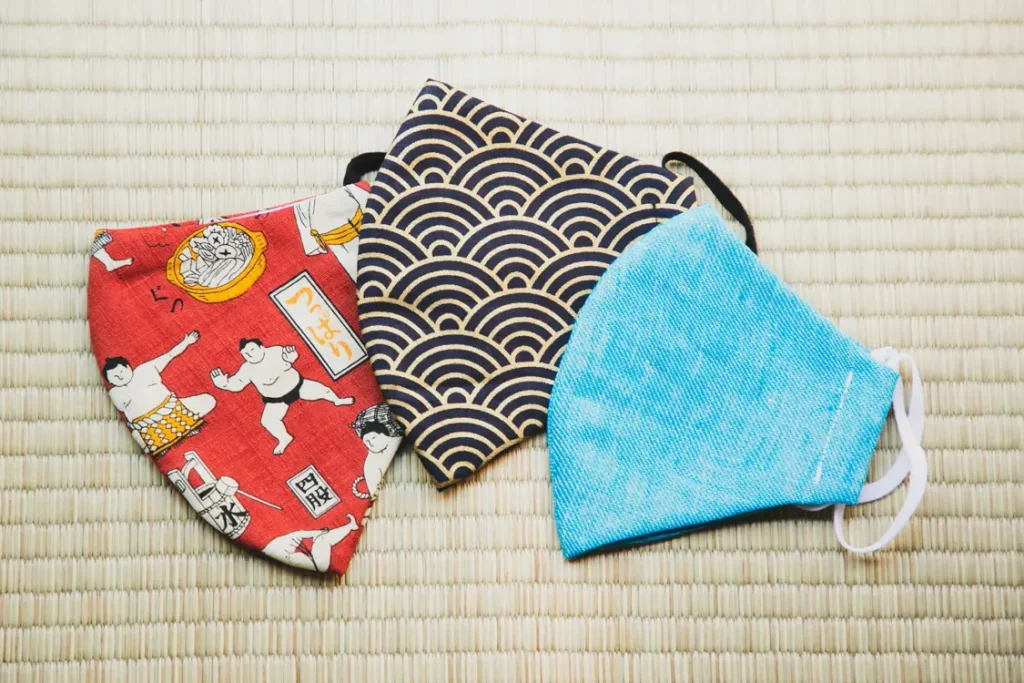
Handmade Masks
From 770 yen
They began producing masks during the COVID pandemic after customers asked, “Could you make masks?” Currently, two types are available: one made of six layers of 100% cotton gauze for moisture retention, and another made of linen that is comfortable even in summer. In addition to plain white, many unique patterns—mainly floral and checkered—are available, making mask-wearing enjoyable.
Spot Overview
| address (e.g. of house) | |
|---|---|
| phone | |
| Business Hours | |
| regular closing day | |
| Payment Method | |
| External Links |