

Founded in the first year of the Taisho era (1912)
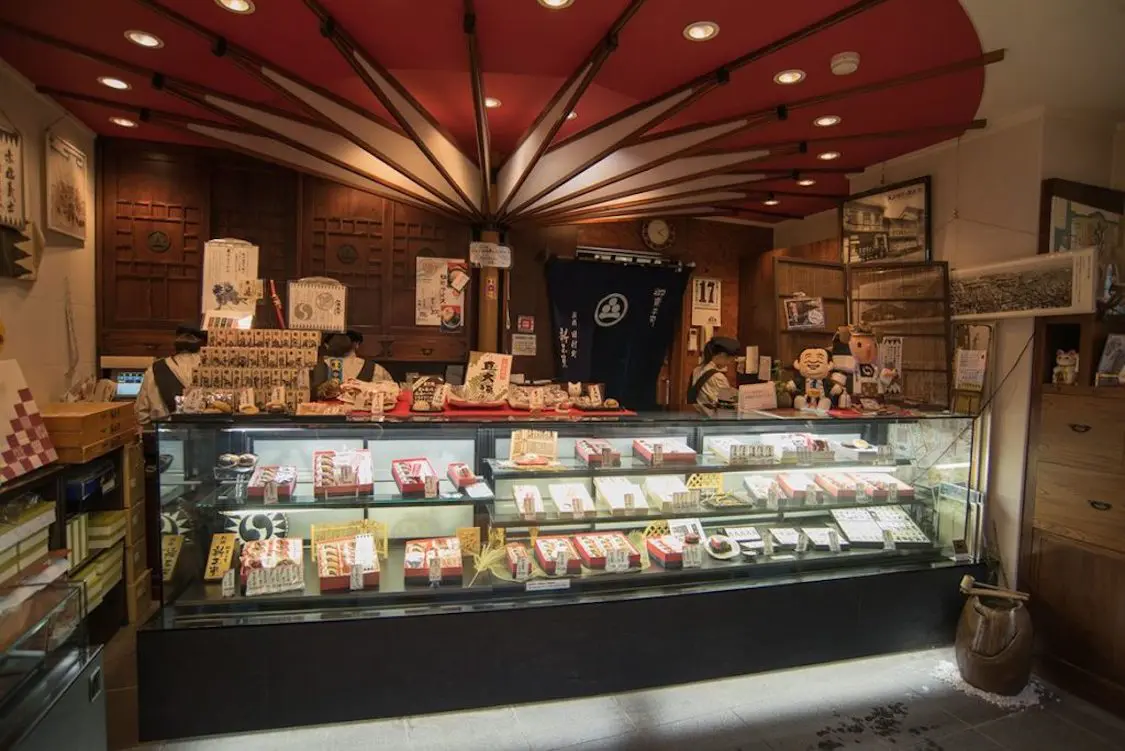
A long-established Japanese sweets shop offering items connected to the Chūshingura story.
While Japanese sweets shops usually have many female customers, this long-established shop in Shimbashi is known for lines of male customers, especially office workers in suits.
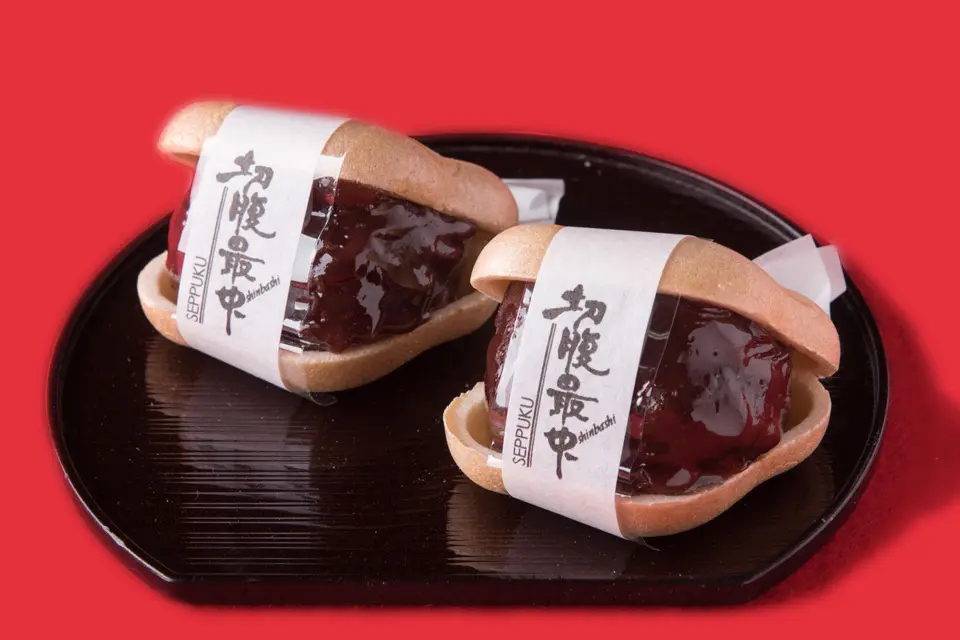
What they are after is the “Seppuku Monaka.” When the third owner, Yoshihisa Watanabe, took over from the second generation, the most popular item was “Mame Daifuku,” which had a shelf life of just one day. This product was created in response to regular customers asking for a Japanese sweet that would last a bit longer.Its appearance, with the monaka split open in the middle and plenty of bean paste spilling out, along with its unique Chūshingura-themed name, attracted much attention. Today, it has become Shinshōdō’s signature item, also known as a gift to bring when making an apology.
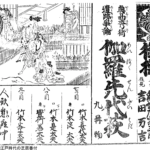
In addition, because the shop’s former location was connected to Chūshingura and the owner himself is a big fan, there are many items that appeal to history lovers, such as “Gishi Yōkan” depicting the Forty-seven Rōnin in warrior-style illustrations, and “Jindaiko Dorayaki.”The illustration of the Forty-seven Rōnin that appears on the roll screen at the storefront after closing is also worth seeing.
While cherishing the traditions passed down since its founding, the shop continues to pursue even greater taste through new ideas.With the spirit of “changing tradition to carry it forward,” Shinshōdō’s Japanese sweets will continue to evolve.
History
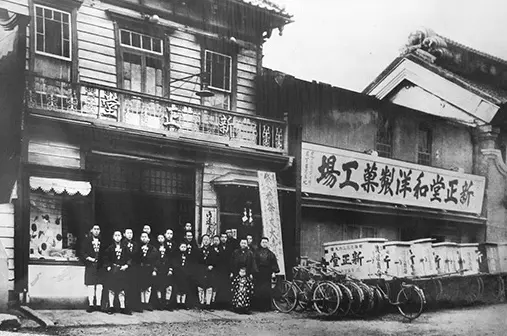
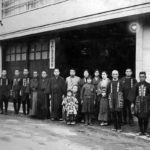
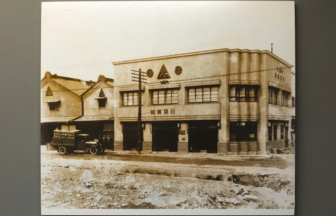
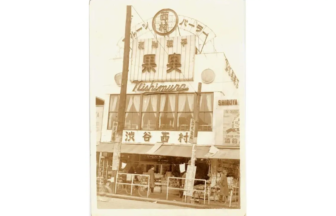
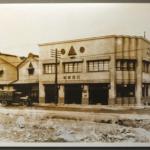
The shop was named “Shinshōdō” because the founder, Shinjiro Watanabe, who trained in Osaka, opened it in “Shin”bashi in the first year of the Taishō era (1912).The original shop stood on the former site of the Tamura clan’s upper residence of the Ichinoseki Domain in Oshu (commonly known as the Tamura Residence). After three relocations due to the Great Kanto Earthquake, air raids during World War II, and the construction of Ring Road No. 2, the shop has been operating at its current location in Shimbashi 4-chome since 2005.
This Notable Item
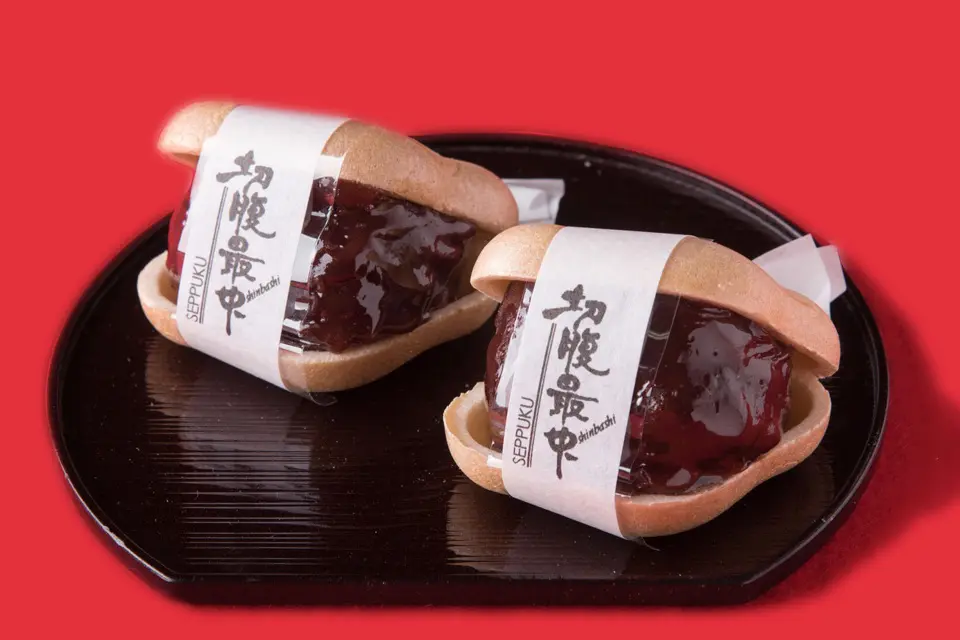
Seppuku Monaka
Box of 5: 1,600 yen
Shinshōdō’s signature product, featuring a unique appearance that looks like the monaka has performed seppuku.The crispy monaka pairs perfectly with overflowing bean paste made with high-purity sugar and a large piece of chewy gyuhi.It is also popular as a gift to bring when offering an apology.
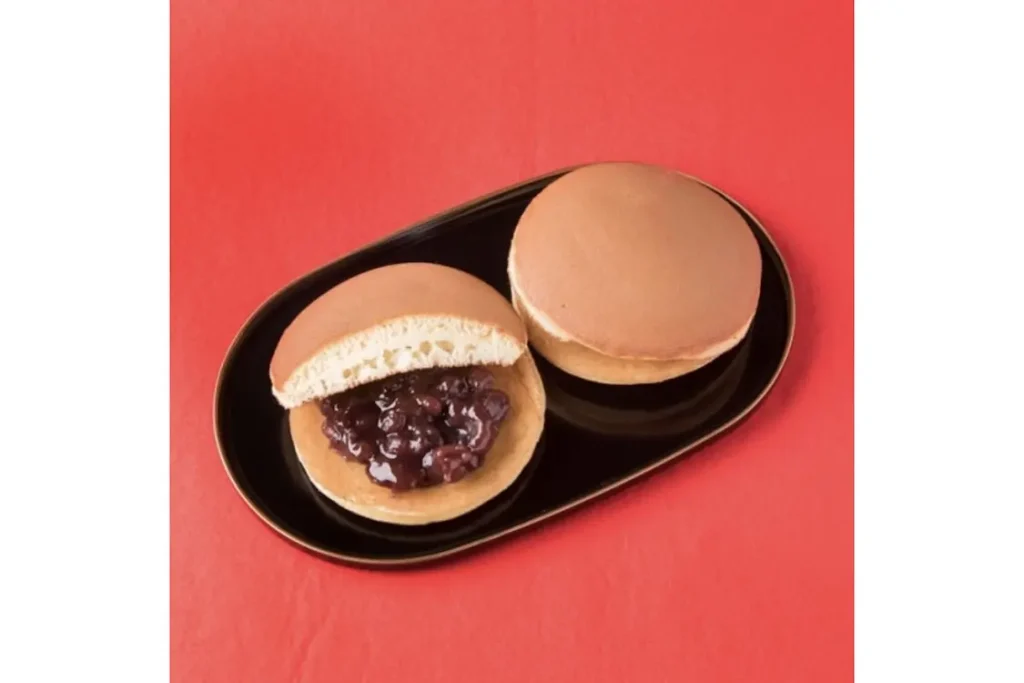
Jindaiko Dorayaki
1 piece: 250 yen (in-store only) / Box of 5: 1,550 yen
These dorayaki are made by skilled craftsmen who have inherited tradition, from carefully selecting ingredients to cooking the bean paste and baking the pancakes.Many people buy them together with the Seppuku Monaka and enjoy them while reflecting on the Chūshingura story.
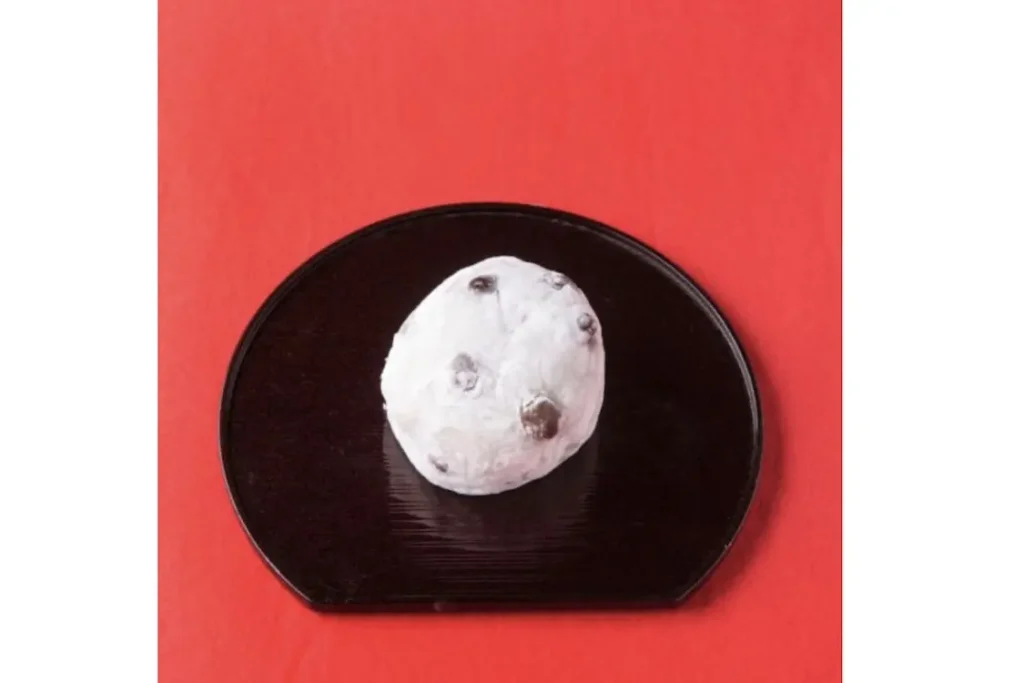
Mame Daifuku
1 piece: 250 yen (in-store only)
A refined mame daifuku made with a generous amount of red peas lightly seasoned with salt, and mildly sweet bean paste.This is a fine piece that brings out the full flavor of the ingredients, finished by adding new ideas to traditional techniques.
Spot Overview
| address (e.g. of house) | |
|---|---|
| phone | |
| Business Hours | |
| regular closing day | |
| Payment Method | |
| External Links |