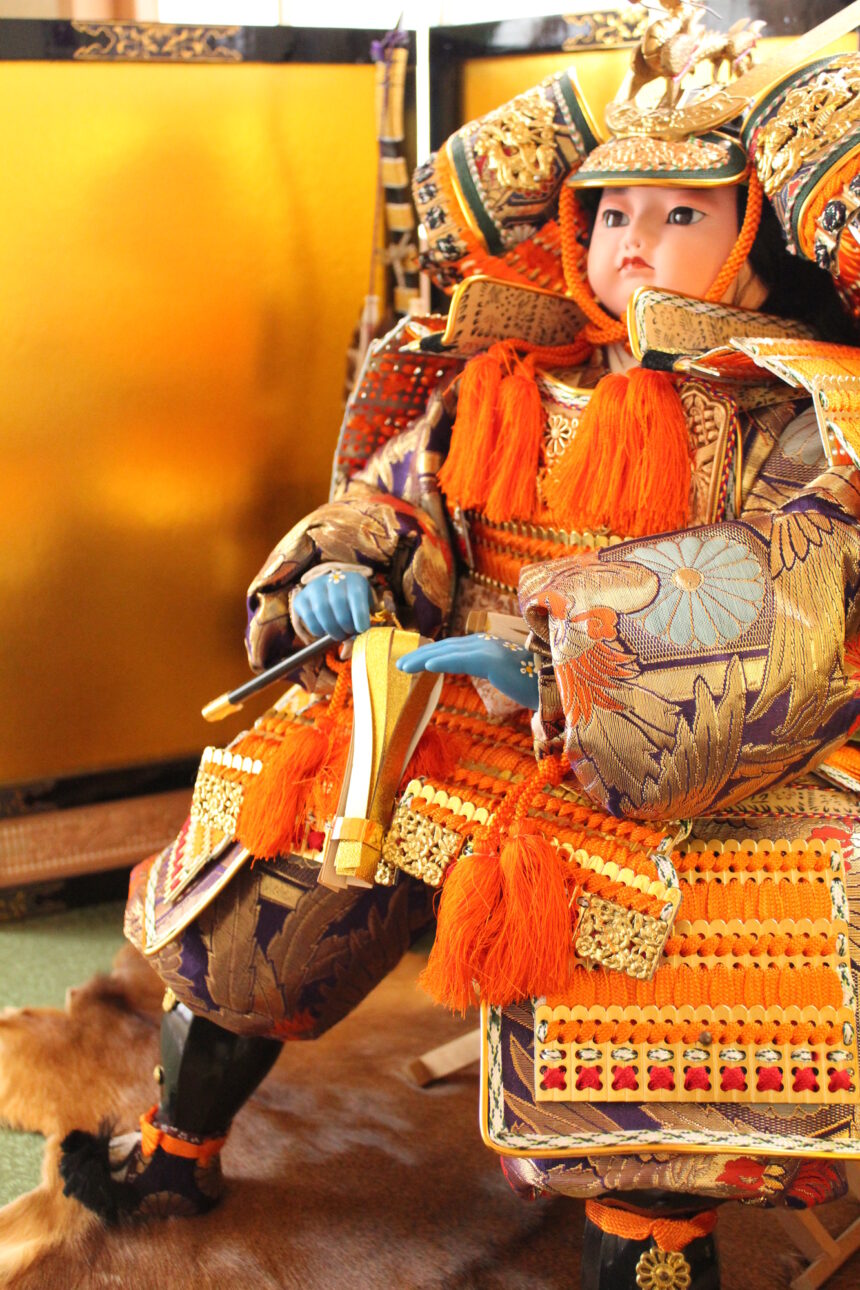
Samurai dolls” for Dragon Boat Festival. When did they come to be displayed?

puppet

Samurai dolls” for Dragon Boat Festival. When did they come to be displayed?(Musyaningyo)

Children’s Day (national holiday; May 5th)Boy’s Day celebration (May 5th)

A generic name for dolls with heroic figures displayed on Dragon Boat Festival. The custom of decorating dolls took root in the mid-Edo period, when doll making began to flourish. The dolls are modeled after Emperor Jinmu, the first emperor of Japan; Ushiwakamaru and Benkei, two military commanders dressed as generals; the heroes of old tales such as Kintaro and Momotaro; and Shoki, a Chinese god of war who protects children from plague and disease. The dolls were decorated with the hope that the heroes and heroic figures known to everyone would protect the children and that they would become such strong people. Before the Meiji period, dolls with adult faces were the norm, but recently the number of warrior dolls with cute children’s faces has been increasing.


新着・おすすめ情報

  1. 京都でも最古の歴史を持つ「松井酒造」。日本酒づくりを軸に展開する、革新的な取り組み

  2. The name “Mokumegome doll” comes from the fact that the fabric is pressed into the shape of a doll.

  3. Continuing to exist is a brand. What “Nihonbashi Saruya,” a toothpick specialty store, thinks a brand should be.

  4. light broth made of jellied sweet bean paste

  5. To preserve traditional culture, we also consider the treatment of craftsmen. What does the long-established “Edoya” think of “succession”?

  6. marks indicating the Japanese meaning of the texts of Chinese classics

  7. stalk (of a mushroom, leaf, etc.)

  8. 【第12回】「手打ち」というだけで蕎麦は美味しいわけではない

  9. Tobifudo Shohoin Temple (Minowa, Tokyo)

  10. How do you read “shicho”? What do the different expressions mean? Hina Dolls

  11. 【第1回】蕎麦の実の殻を完全に取り除いて作る「江戸蕎麦」

  12. Sugamo Koshinzuka (Sugamo, Tokyo)

  13. Bank of Japan

  14. Hoonji Temple (Kinshicho, Tokyo)

  15. 【第18回】古くから食べられてきた「そばがき」の作り方