

Explanation of the origin of Chirashi-zushi, ingredients used, etc.(Chirashizushi)
festivaldollDolls’ Festivallocal cuisine
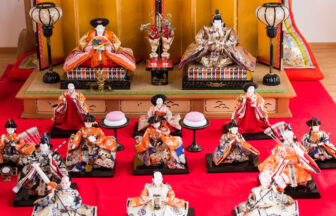
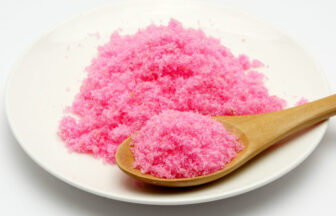
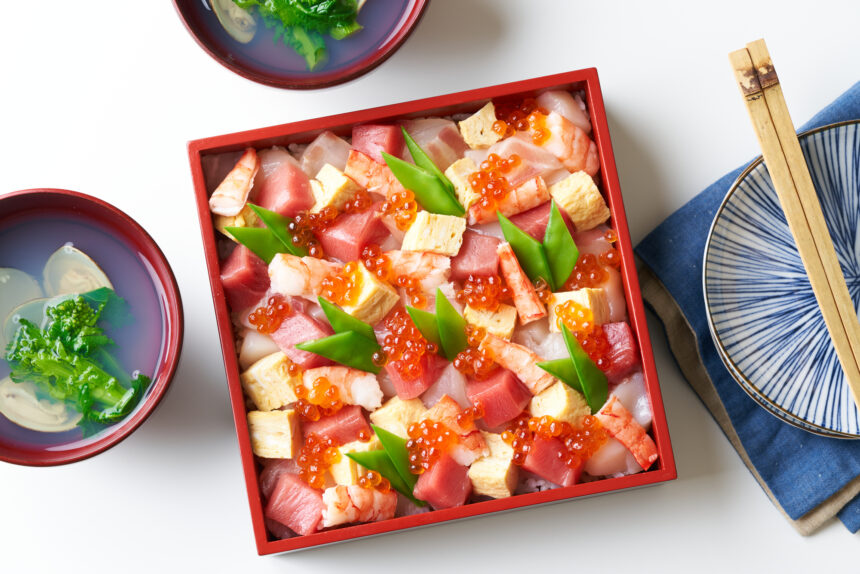
As the name implies, it is a dish of sushi rice placed in a bowl and “scattered” with ingredients, and is a popular dish for the Dolls’ Festival and celebrations. It is decorated with a variety of ingredients such as shrimp, sakuradenbu, egg, green vegetables such as peas and mitsuba, raw fish such as tuna, flatfish, and sea bream, vinegared horse mackerel, mackerel, saury, and yellowfin bream, lotus root, and shiitake mushrooms. In Kansai, it is common to mix some of the ingredients with sushi rice, as in gomoku-zushi. The predecessor of chirashi-zushi is said to be “hako zushi,” a type of pressed sushi in which a variety of ingredients are arranged on top of sushi rice packed in a wooden box. There are also local dishes such as “Okayama sushi” and “Iyo sushi,” which are prototypes of chirashi-zushi. There are various theories about the origin of chirashi-zushi. In the early Edo period (1603-1867), Ikeda Mitsumasa, the feudal lord of the Okayama domain, ordered “one soup and one vegetable” except for festivals in order to be frugal. However, the popular theory is that the common people, in protest, mixed fish and vegetables into the rice and changed the appearance of the dish to “one vegetable.” Today, June 27, the anniversary of Ikeda Mitsumasa’s death, is designated as “Chirashi-zushi Day.