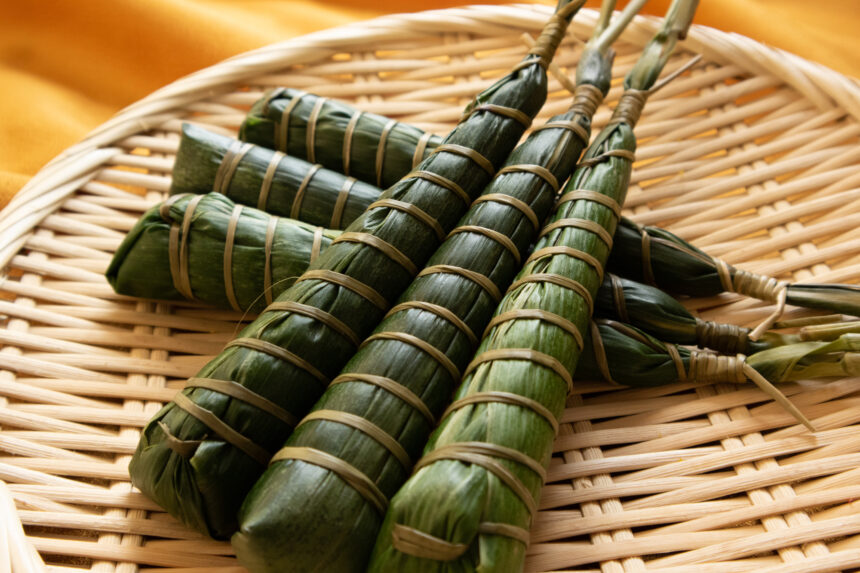
Chimaki” eaten on Dragon Boat Festival. What is the origin of the name?

Japanese confectionery

Chimaki” eaten on Dragon Boat Festival. What is the origin of the name?(chimaki)

springBoy’s Day celebration (May 5th)

A confectionery made from glutinous or Uruchi rice flour or kuzu (kudzu) flour, wrapped in bamboo or reed leaves in a long, thin conical or triangular shape, and steamed. It is called “chigayamaki” (meaning “rolled in thatched grass”) in ancient times because the rice cake was wrapped with leaves of thatch, a grass of the Poaceae family.
It is customary to eat chimaki on the Dragon Boat Festival on May 5. It is said that this custom began when chimaki was offered to Kuzugen, a politician and poet from Chuxian, China, who died on May 5, on the anniversary of his death.
新着・おすすめ情報

  1. Asukayama Park

  2. Gansenen Park (Waseda, Tokyo)

  3. grilled eel

  4. 三島神社(東京・鶯谷)

  5. A Walk in Edo with Old Maps] No. 6: Kagurazaka is full of historical attractions. From alleys where you can feel the Edo period to wooden buildings of the Showa period

  6. paper knot

  7. Tama Cemetery (Fuchu, Tokyo)

  8. Shinjuku Gyoen

  9. Edo-Tokyo Open-Air Architectural Museum (Koganei, Tokyo)

  10. broiled eel

  11. The ninth generation of a long-established soba restaurant teaches how to boil and taste truly delicious soba noodles

  12. 【第20回】家庭でも美味しく生麺の蕎麦を茹でる方法

  13. Meiji Shrine

  14. 【第13回】江戸で蕎麦が流行って定着した理由

  15. A Walk in Edo with Old Maps] No.5: Traces of Edo Remain Strong in “Differences in Elevation” and “Town Names” in Ushigome and Ichigaya