Festival ReportRyogoku/Kameido
Shinko Matsuri (torch festival) is held at Kameido Tenjinja Shrine! A solemn spring fire festival in memory of Sugawara no Michizane
Kameido Tenjin Shrinetraditional eventTemples, shrines, and Buddhist templesspringceremony honouring the spirits of ancestors (esp. the Bon festival)Sugawara no Michizane
Article courtesy of Omatsuri Japan
Omatsuri Japan is one of the largest festival media in Japan. It provides information on over 300,000 festivals in Japan, how to enjoy and participate in festivals. In addition to information on festivals held throughout Japan, this website provides information on festival history and knowledge, how to enjoy festivals, and how to actually participate in festivals.https://omatsurijapan.com/
Spring Festival at Kameido Tenjinja Shrine
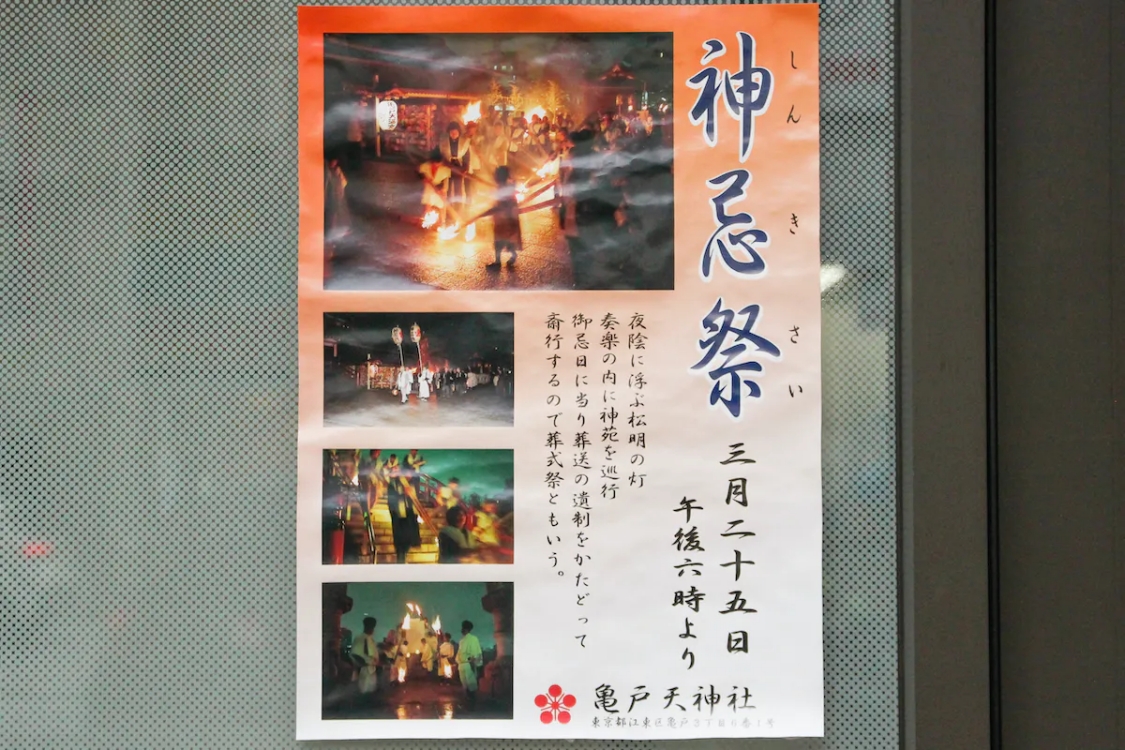
It is located in Kameido, Koto-ku, Tokyo. This shrine enshrines the lord, known as the god of learning, as Tenma-taijin. In memory of this Lord Michizane Sugawara, there is a festival held every year on March 25. It is called “Shinkisai!
The Jingmyo Festival is also known as “New Year’s ritual at Izumo ShrineThis festival is also called “Sacred Fire Festival” and is characterized by a procession with torches that moves through the temple grounds after sunset. The procession is said to resemble a funeral procession, and is also known asfuneral serviceThe festival is also called the “Sugawara no Michizane Festival”. March 25, the day of the festival, is also the anniversary of the death of Sugawara Michizane.
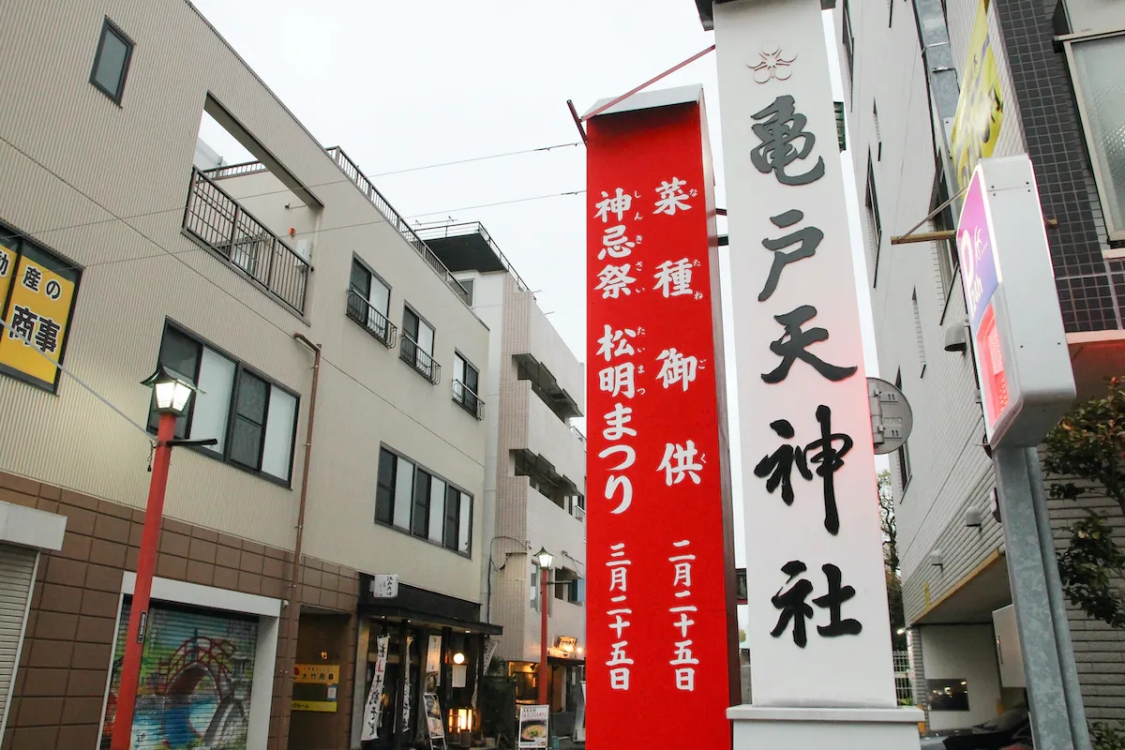
As I walked along the approach to Kameido Tenjinja, I saw a sign announcing the opening of the festival!
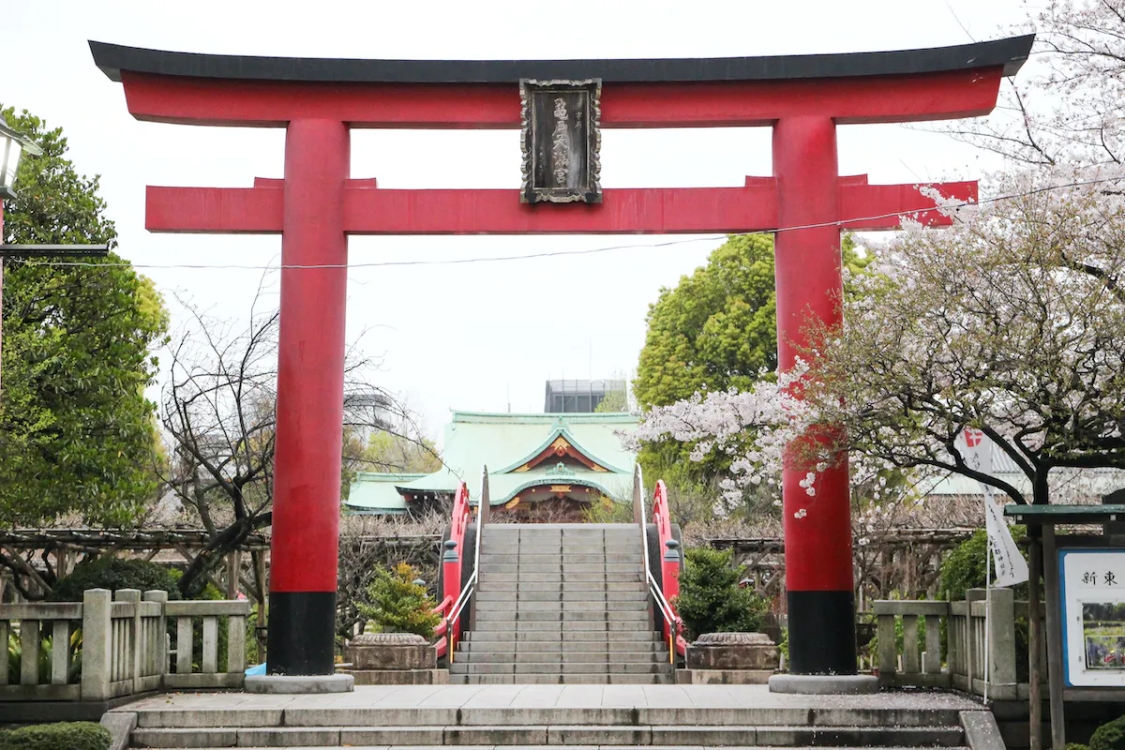
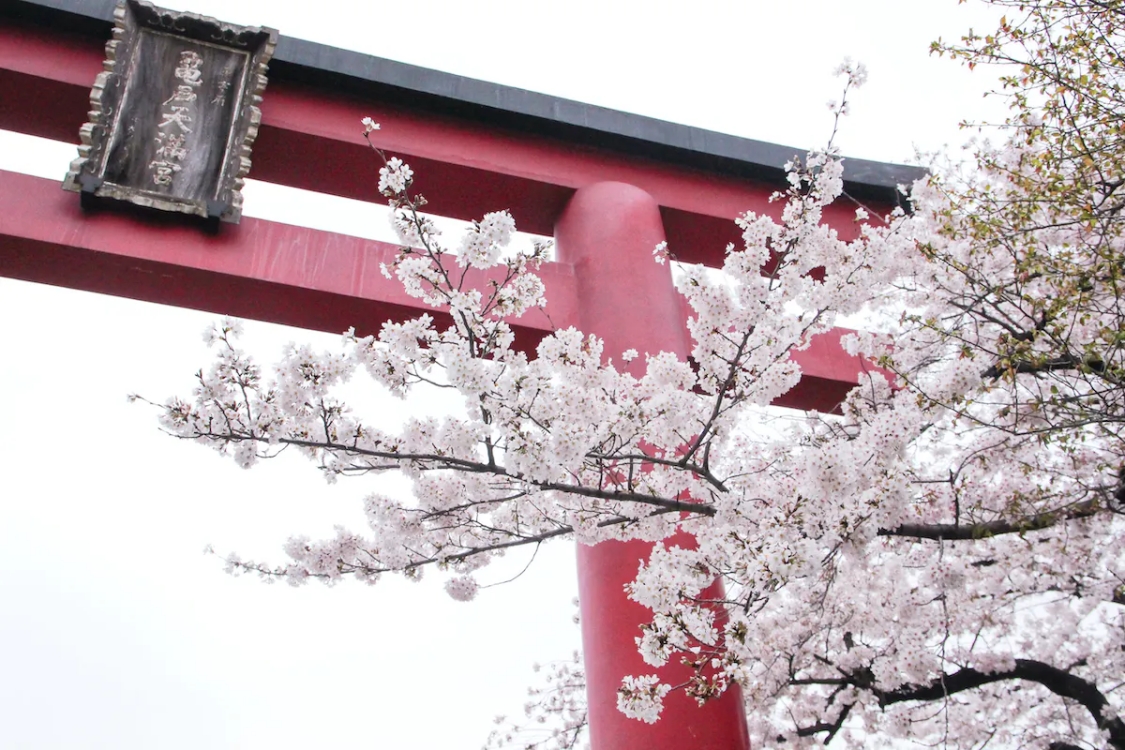
Beside the torii gate, cherry blossoms are just coming into full bloom. The annual festival of Kameido Tenjinsha is held in August, but the Jinko Matsuri held at this time of year is also known as the spring festival.
Kameido Tenjinja Shrine is also known for its plum blossoms, but the cherry blossoms are also beautiful!
Let us now take a look at the Shinmyo Festival!
Shinto ritual beginning at 6:00 p.m.
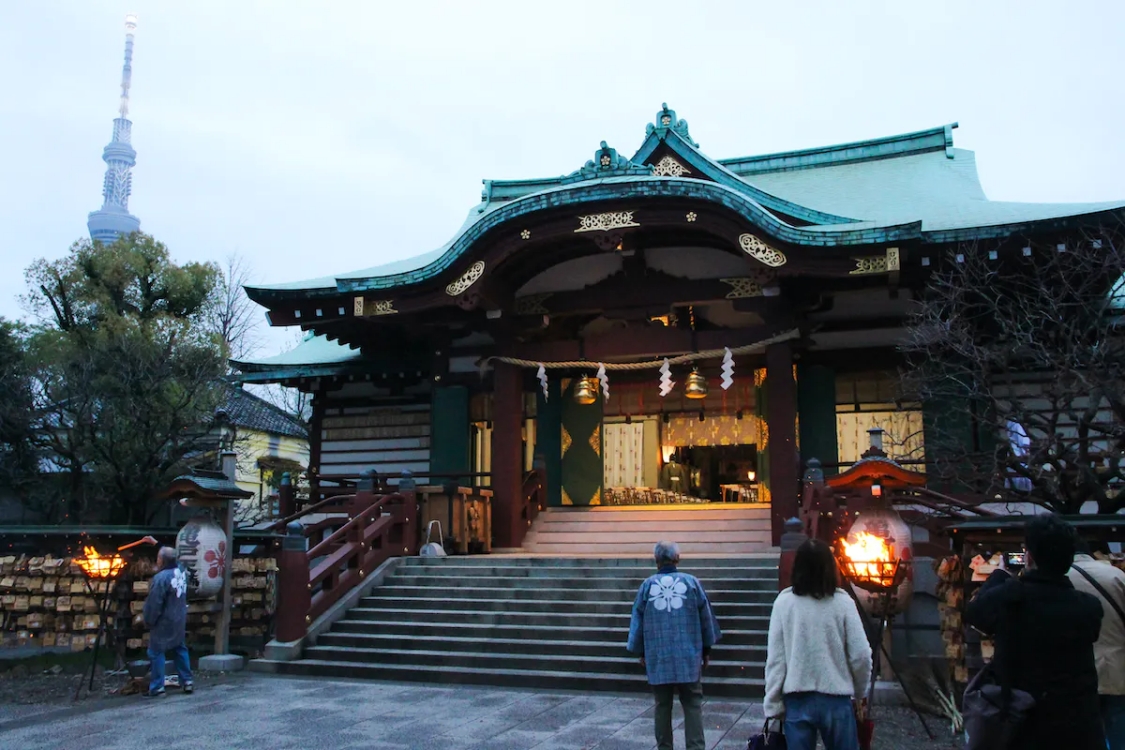
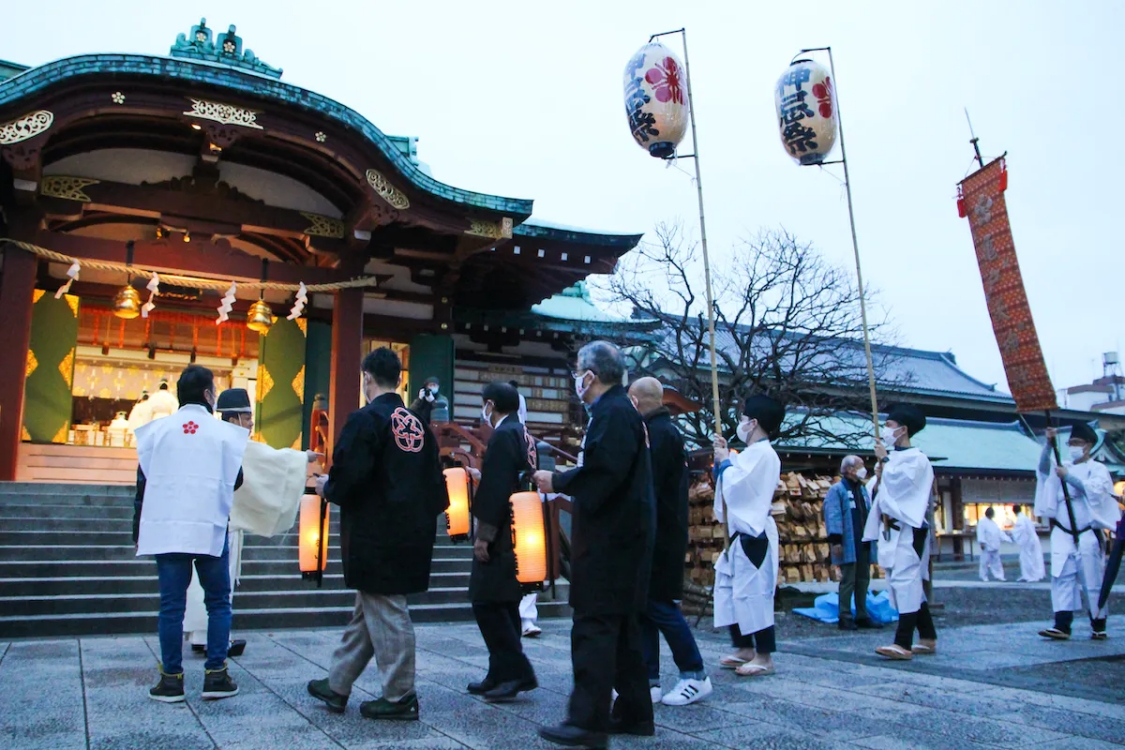
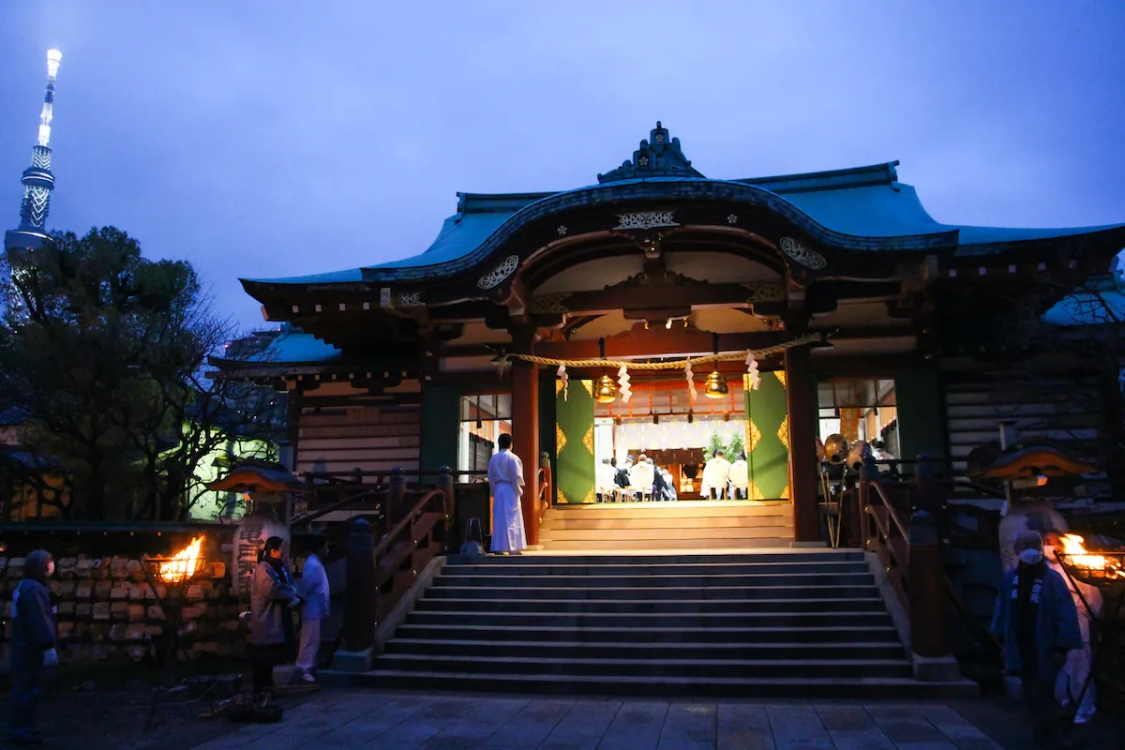
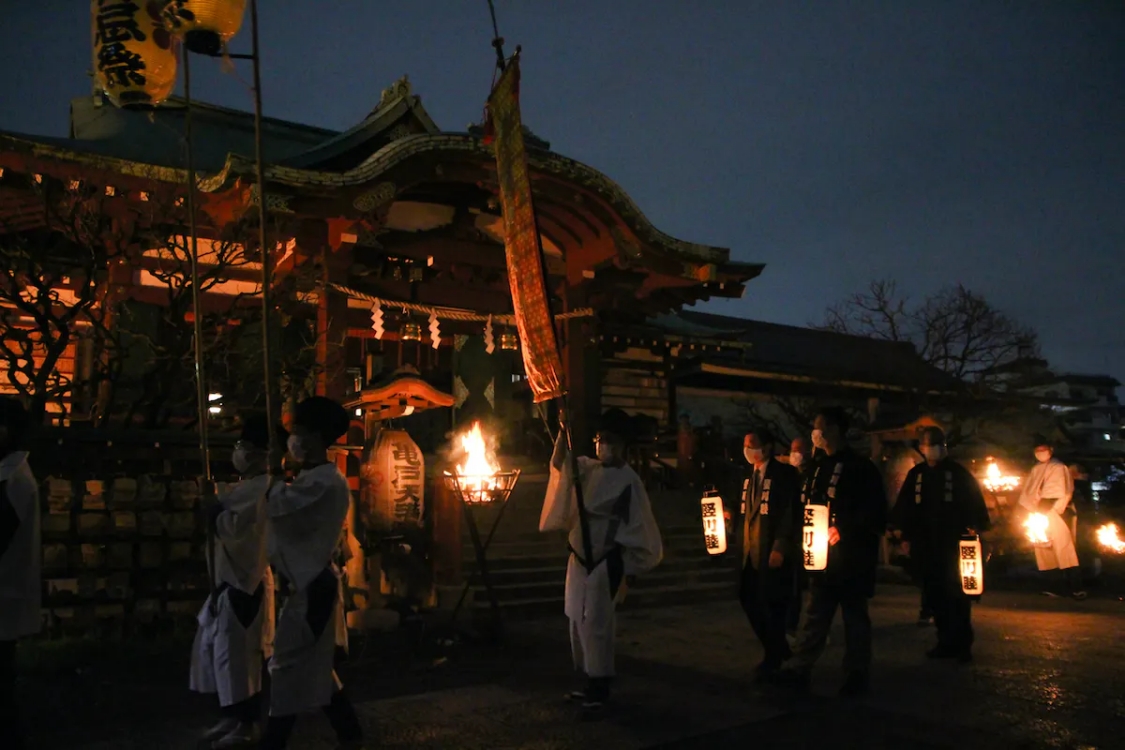
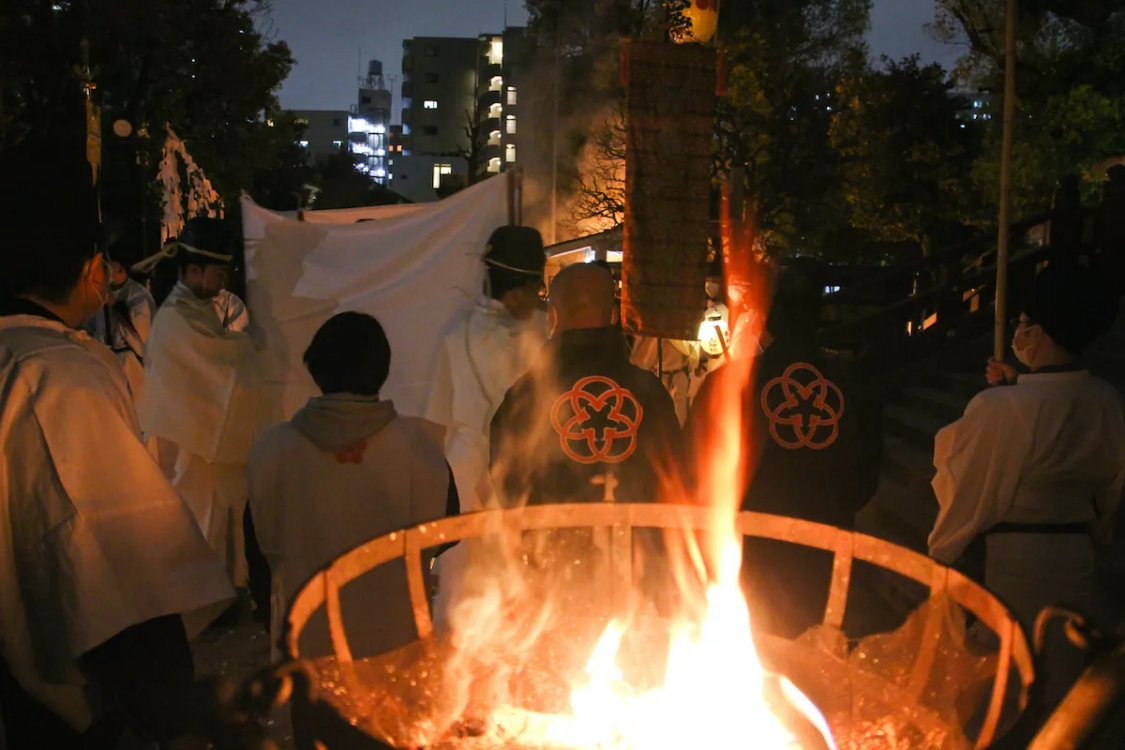
It was just before 6:00 p.m. when the sun began to set. When I arrived at the front of the shrine building, people wearing hanten (traditional Japanese garments) decorated with ume (plum) patterns were preparing for the festival.
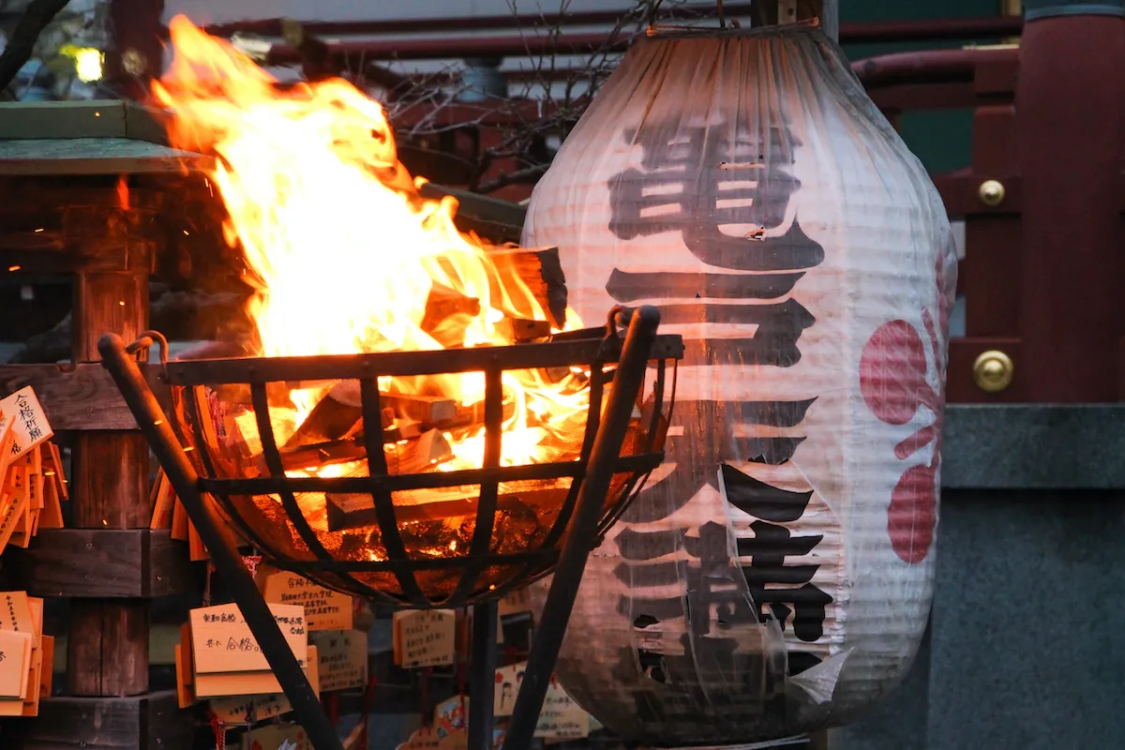
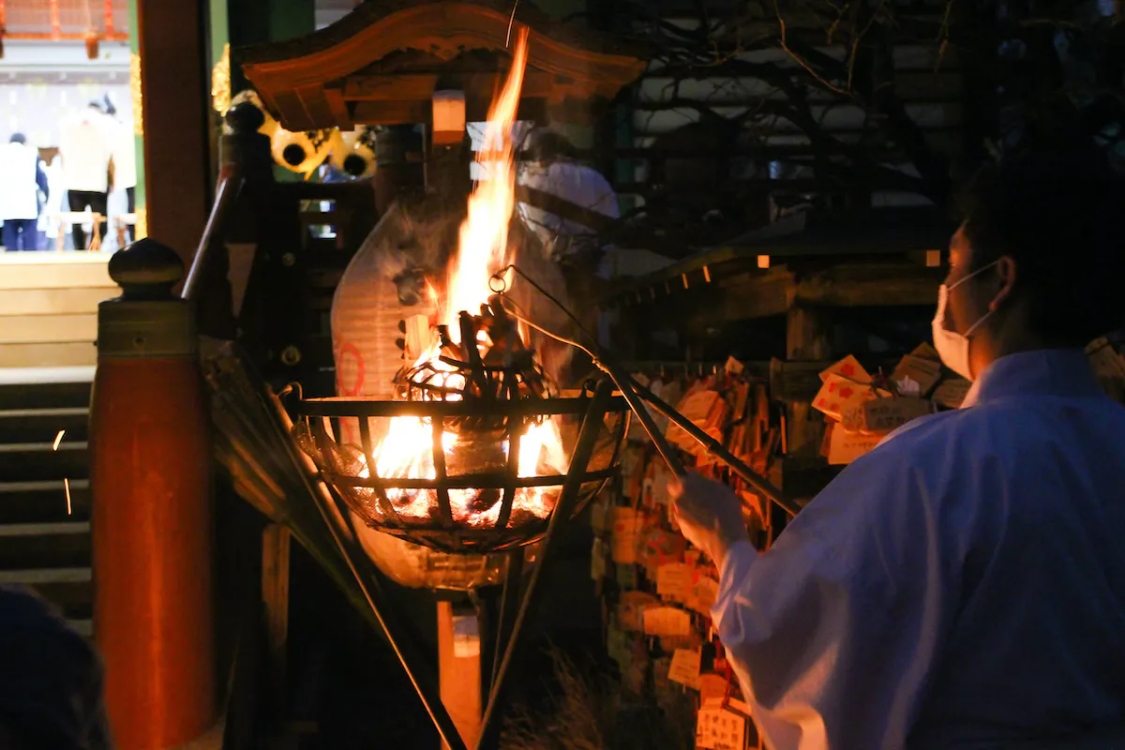
A bonfire was also built in front of the lanterns.
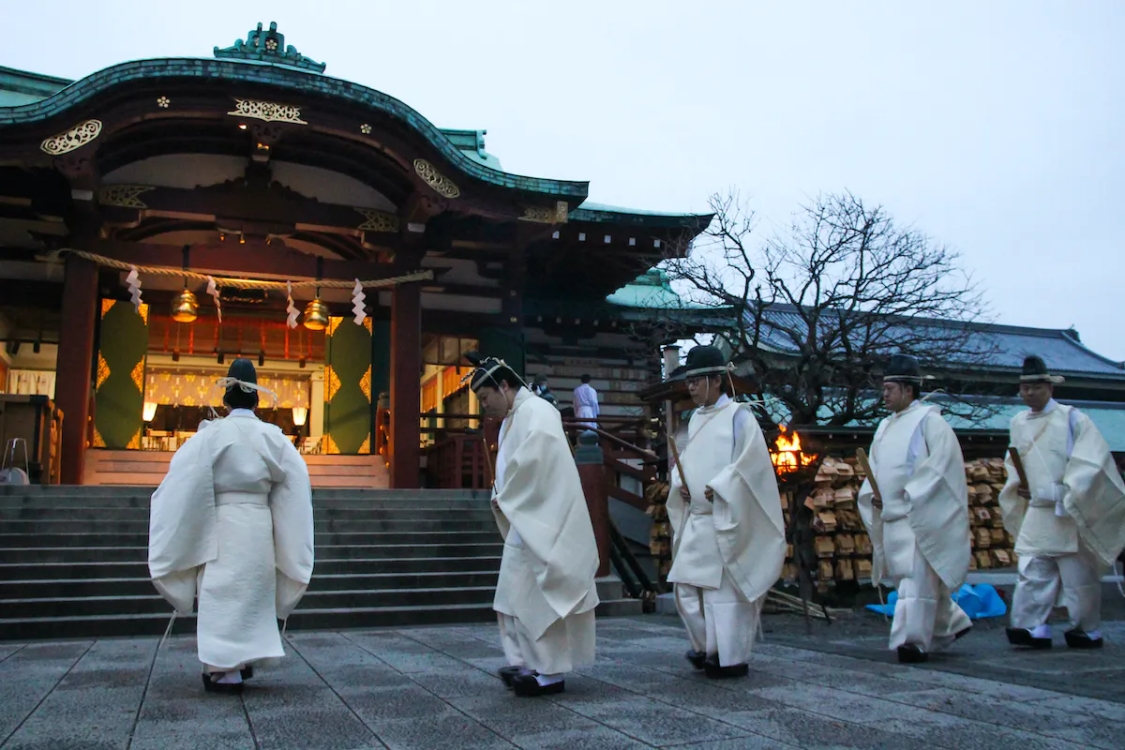
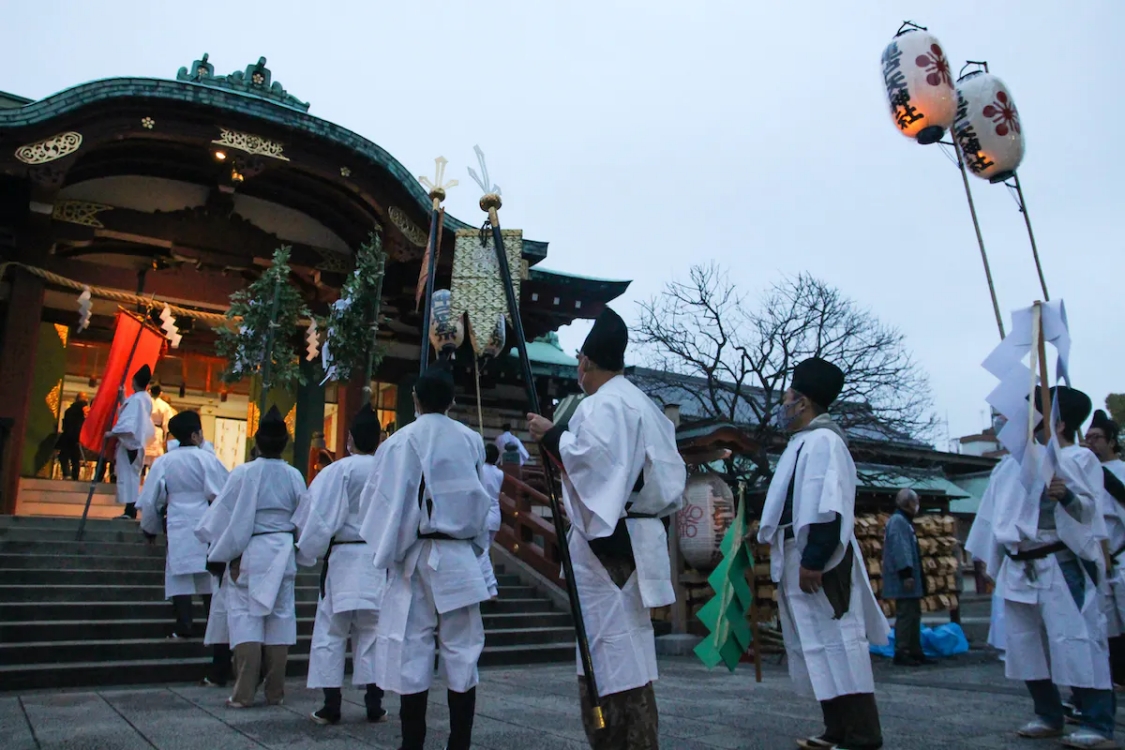
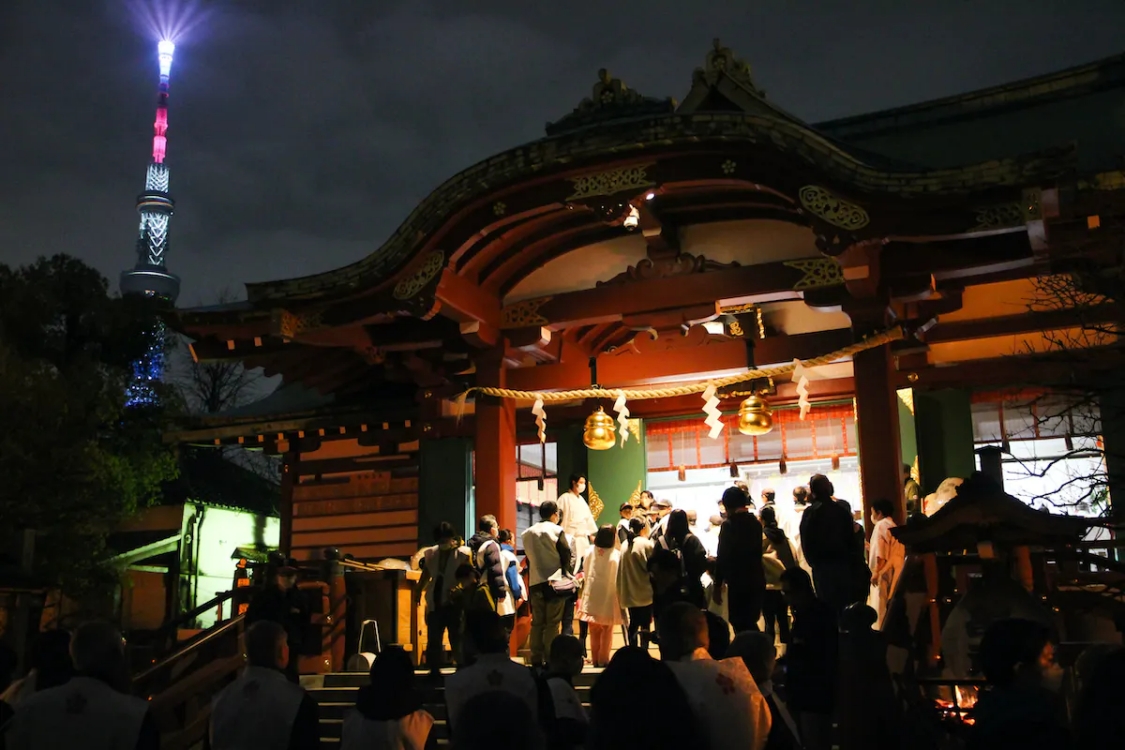
At 6:00 p.m., the priests appeared! They proceeded into the shrine pavilion.
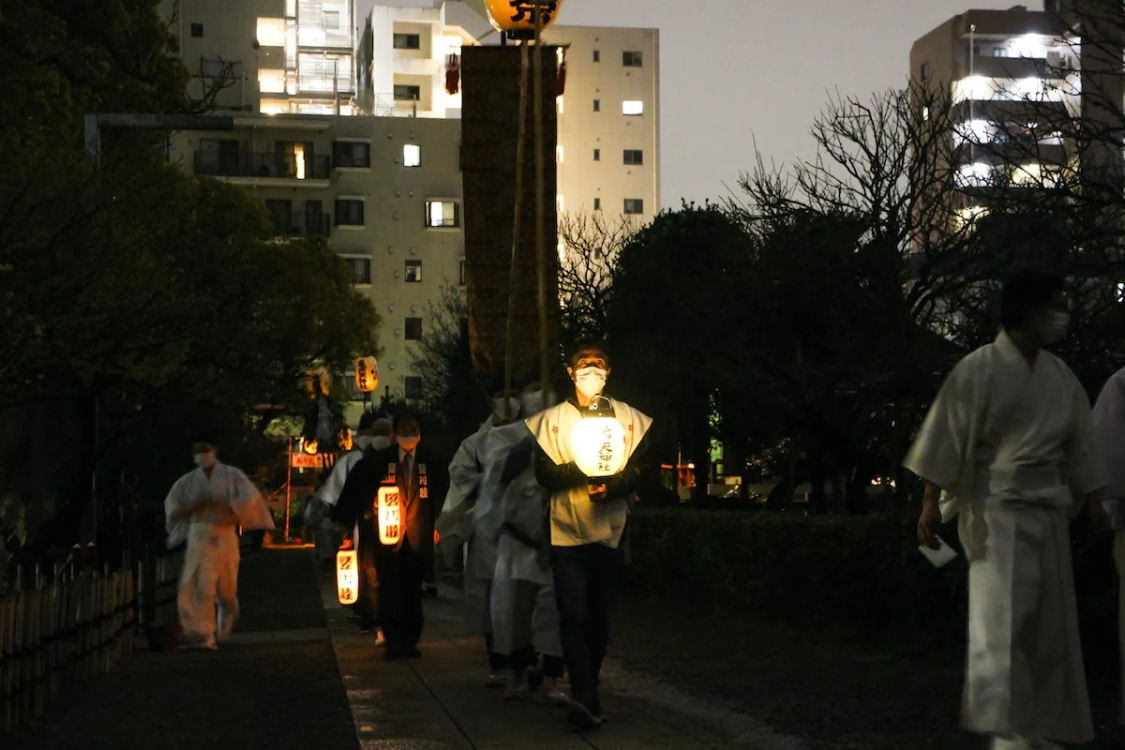
Then all the people involved also come. There were also high lanterns with the words “Jingyosai” written on them!
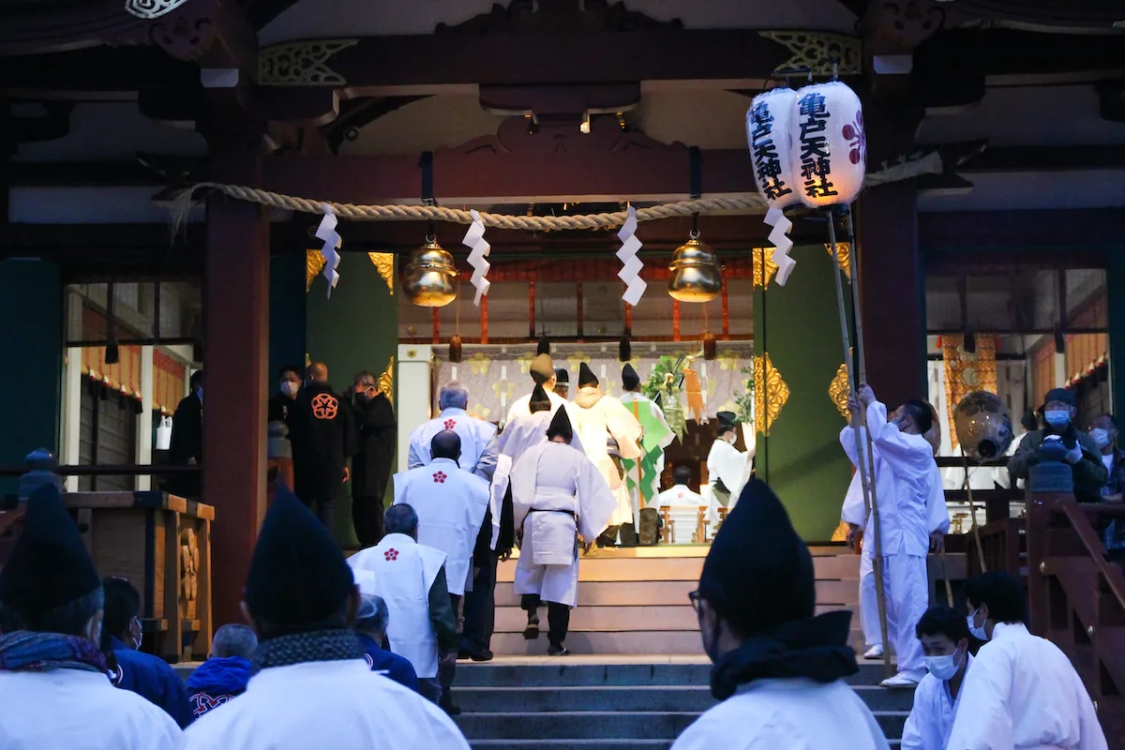
Also from the rear is a high-hanging lantern with the name Kameido Tenjinja written on it.
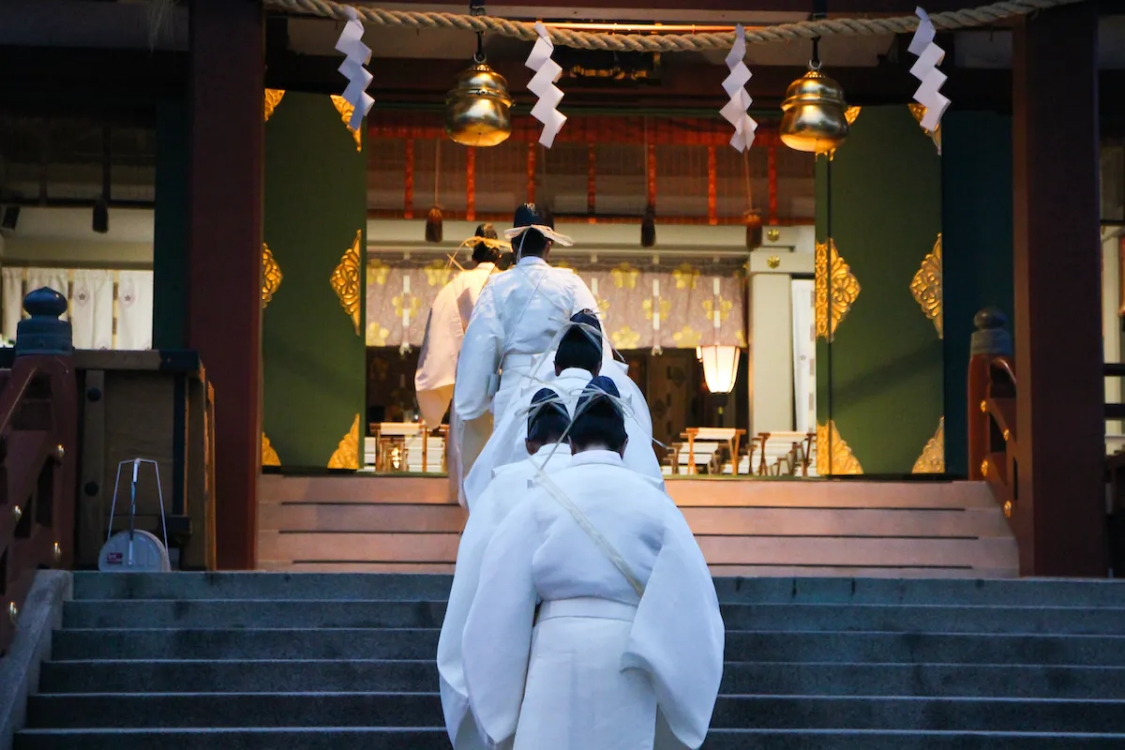
One after another, they entered the shrine building.
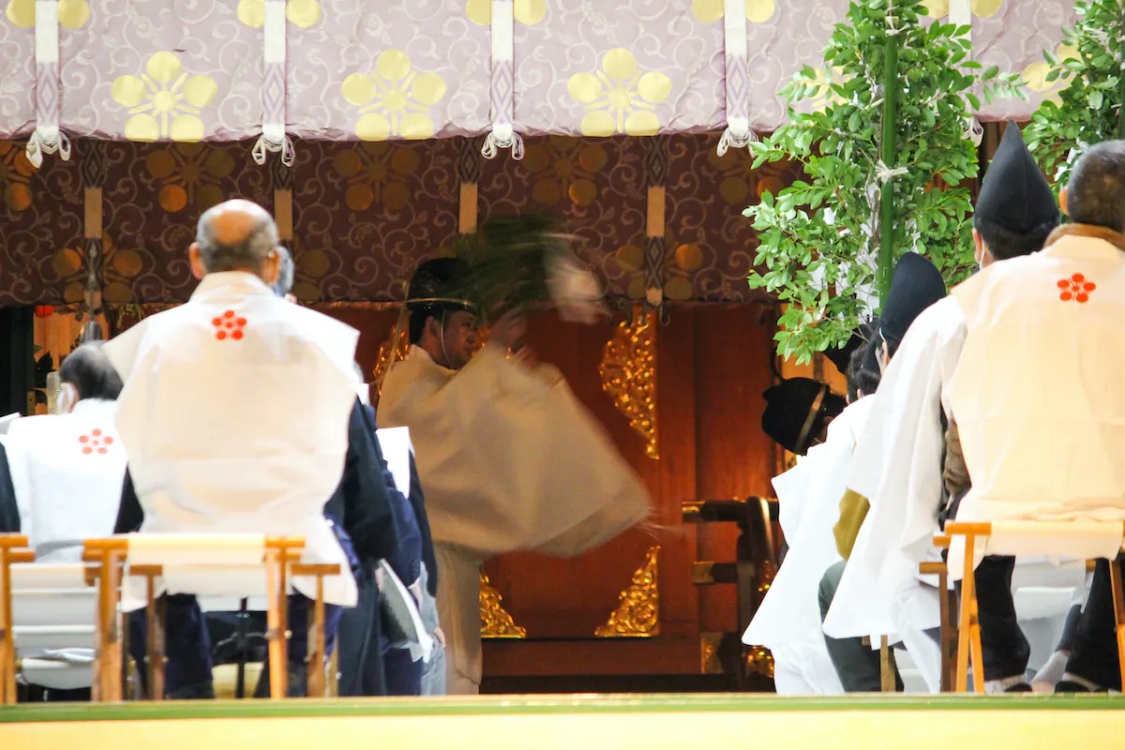
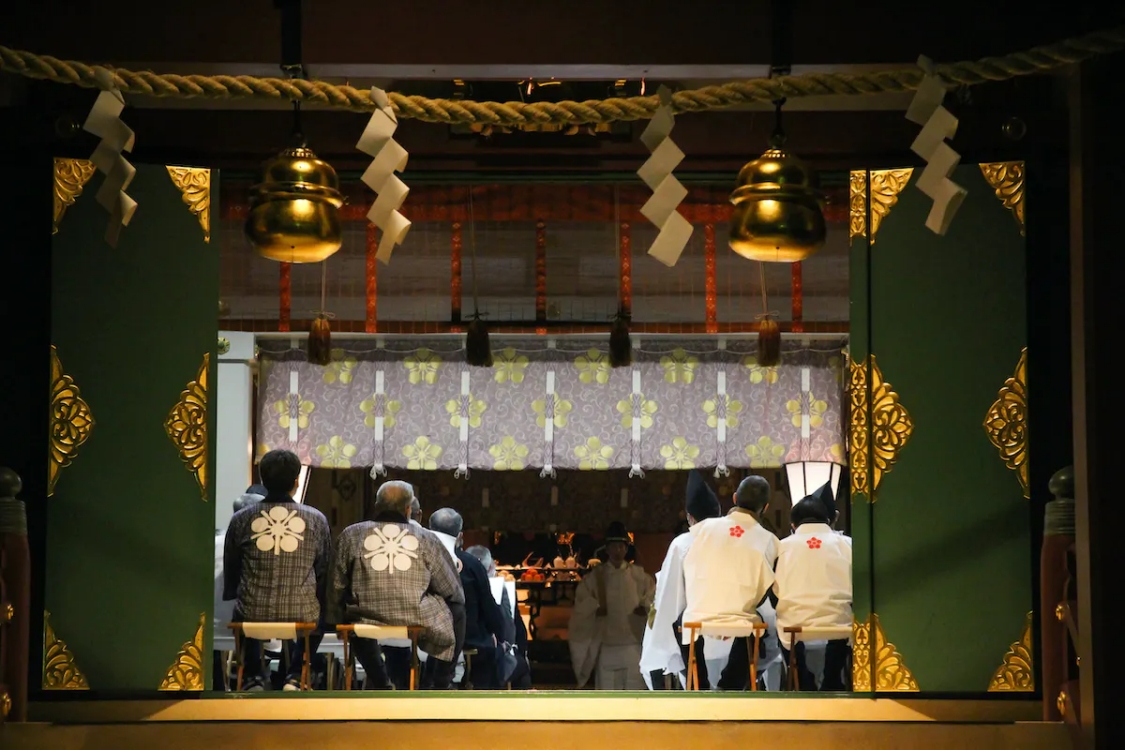
Shinto rituals have begun. Purification, offering, etc. proceeded.
During the 30 minutes or so that the ritual took place, the area became completely dark.
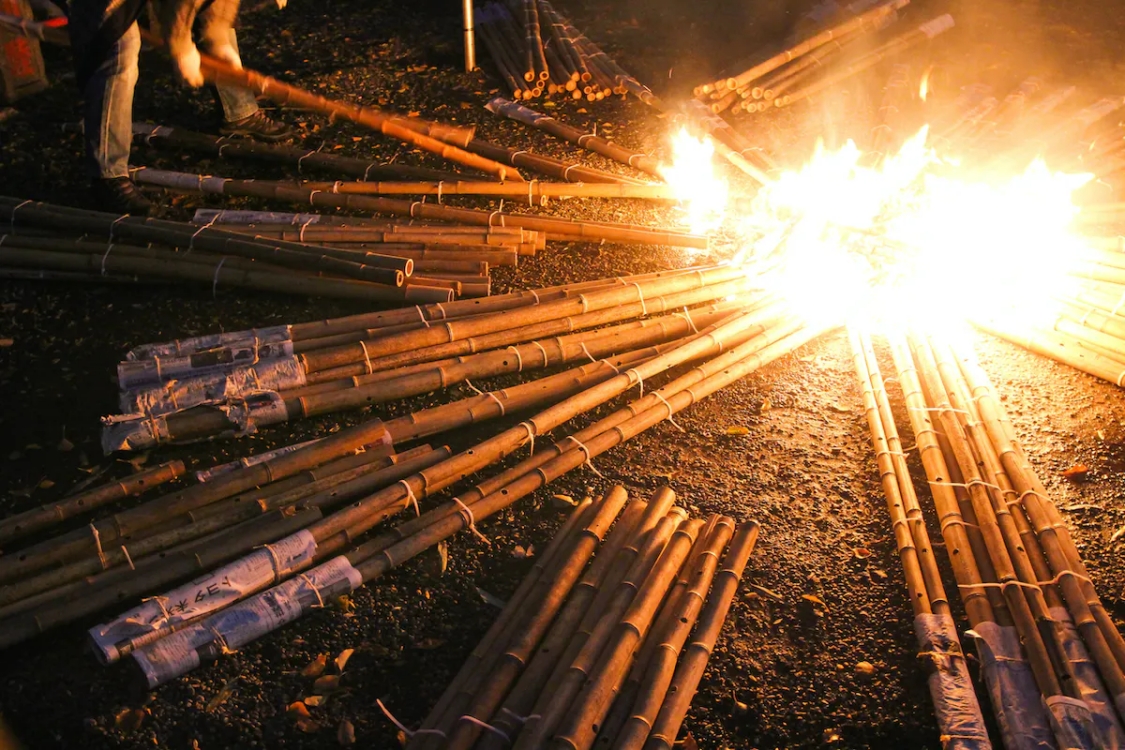
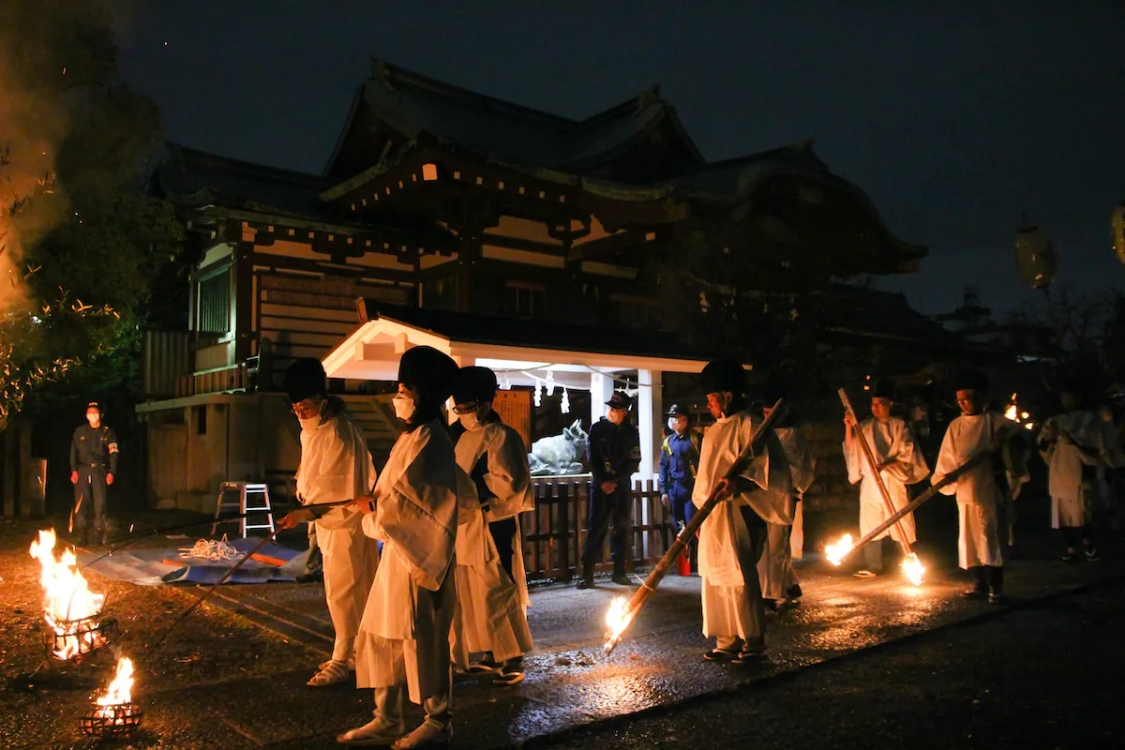
Parallel to the ritual is the preparation of torches to be held by the procession.
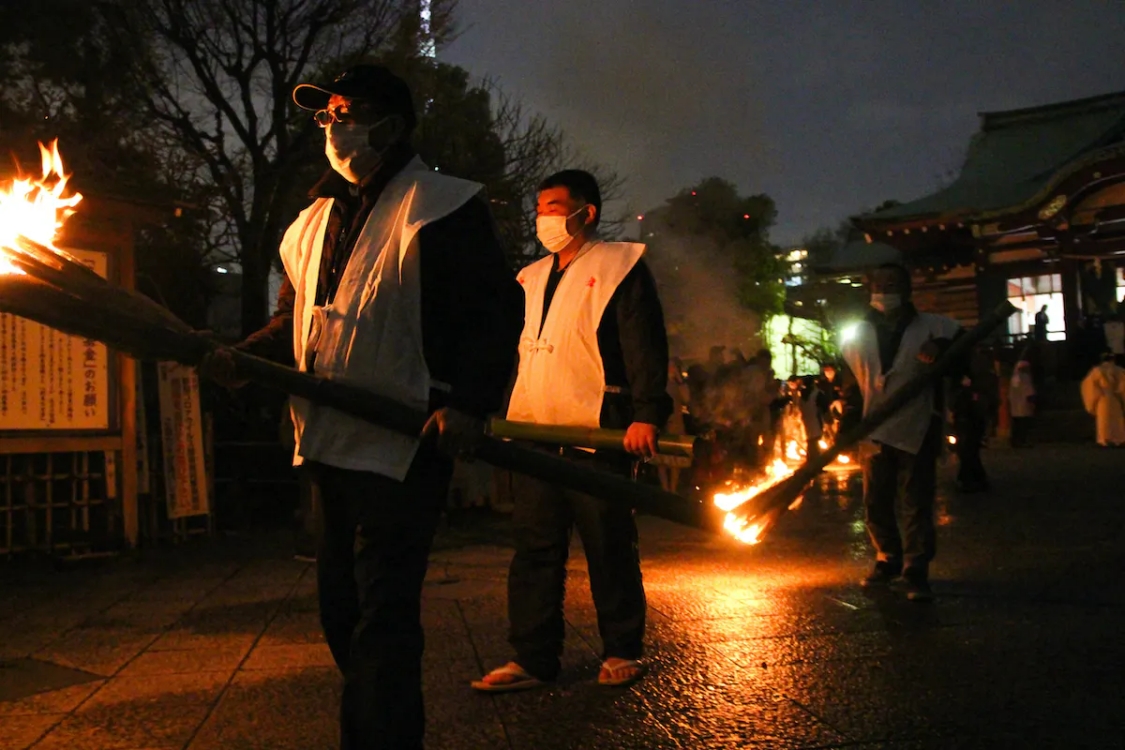
Fire is lit at the end of many bamboo poles.
Lantern-shaped lights were also available here.
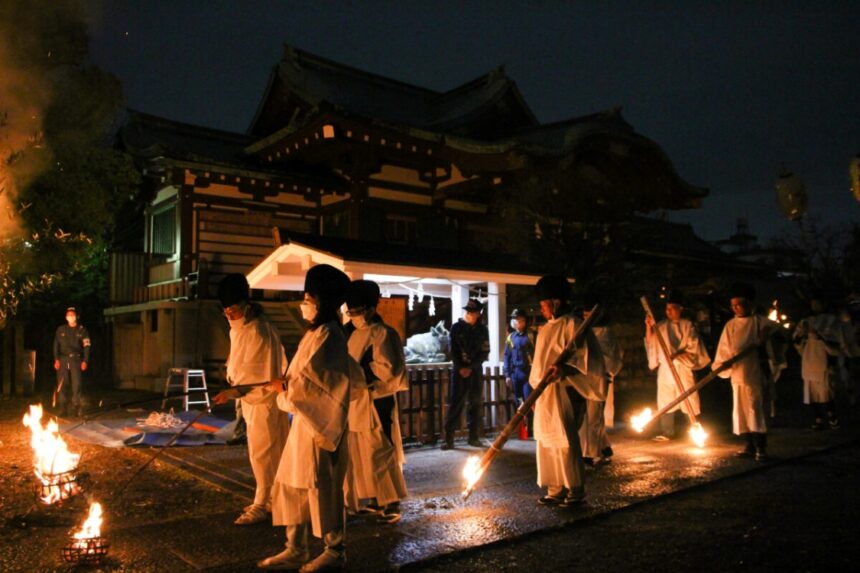
Torches light up the entire precinct.
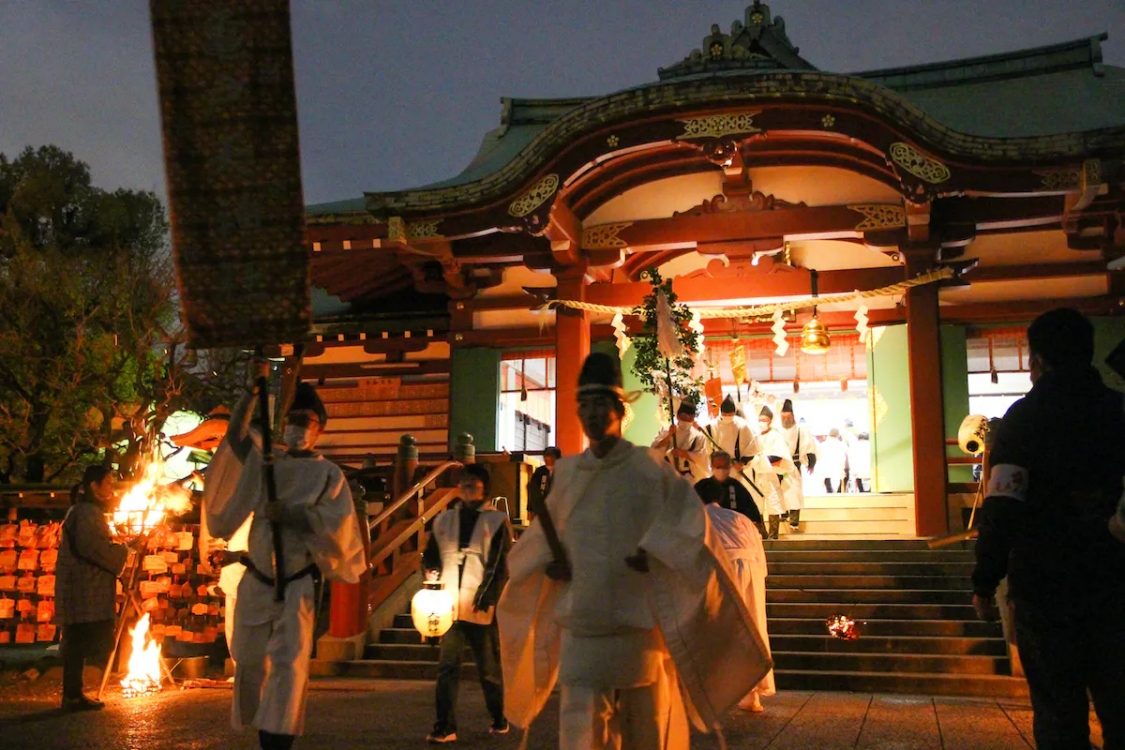
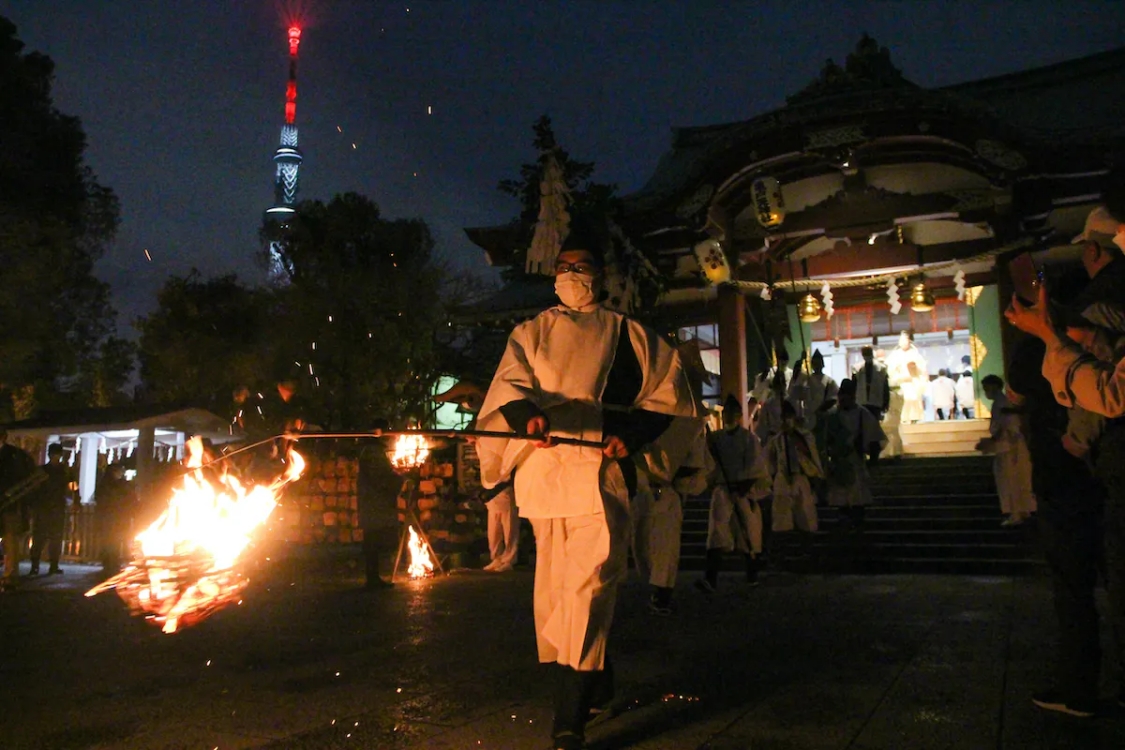
The ritual is over and the priests have come out! The procession continues on its way through the precincts of the shrine.
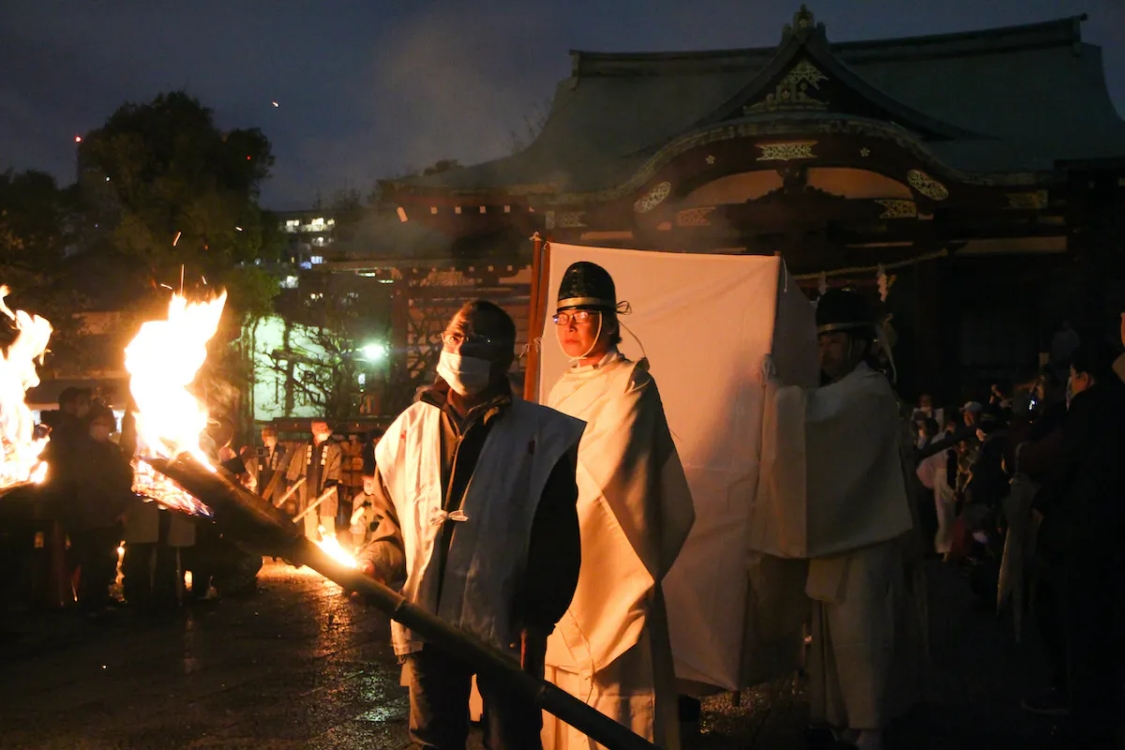
Everyone followed, holding the torches that had been handed out.
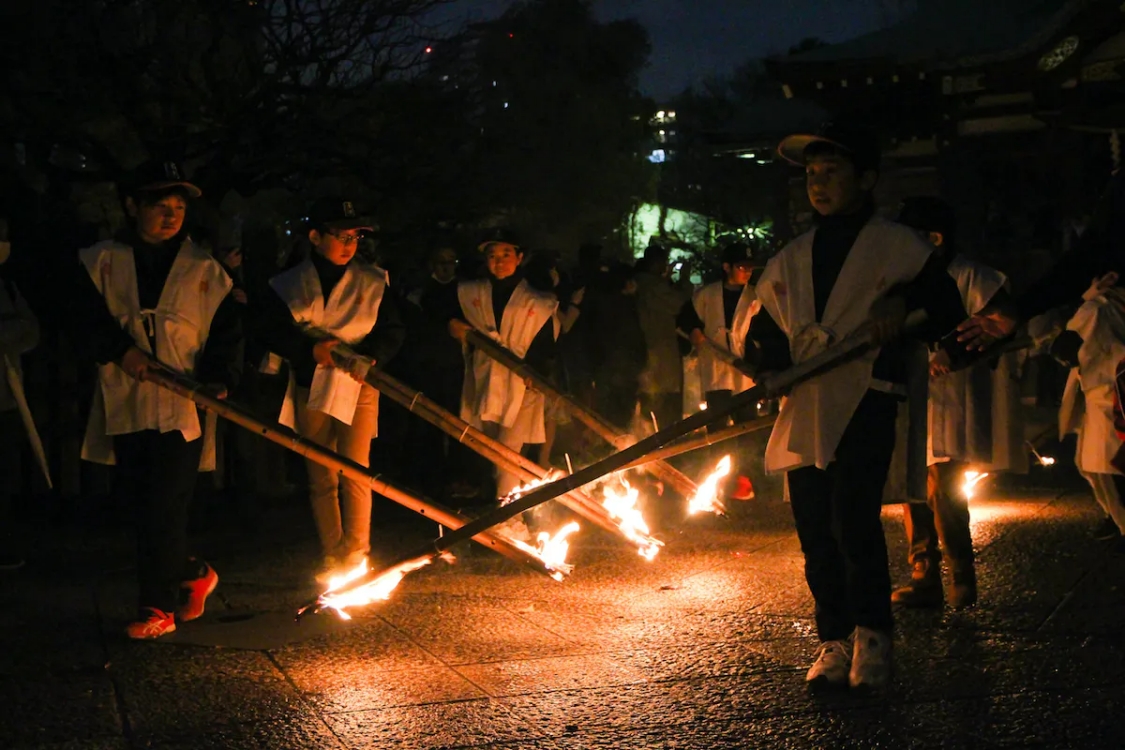
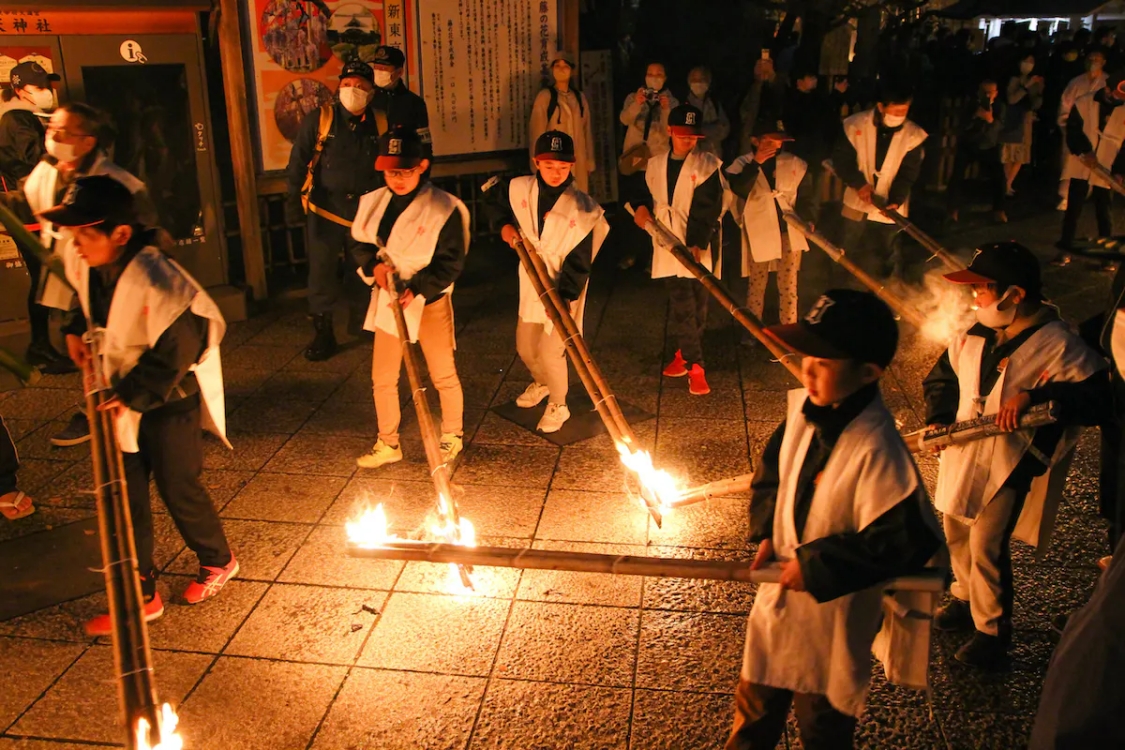
Local children also participated! We protect Tenjin-sama (Lord Michizane Sugawara) with the fire of torches.
It is paired on the left and right, and is also characterized by the crossed bamboo poles in the shape of the letter “x”.
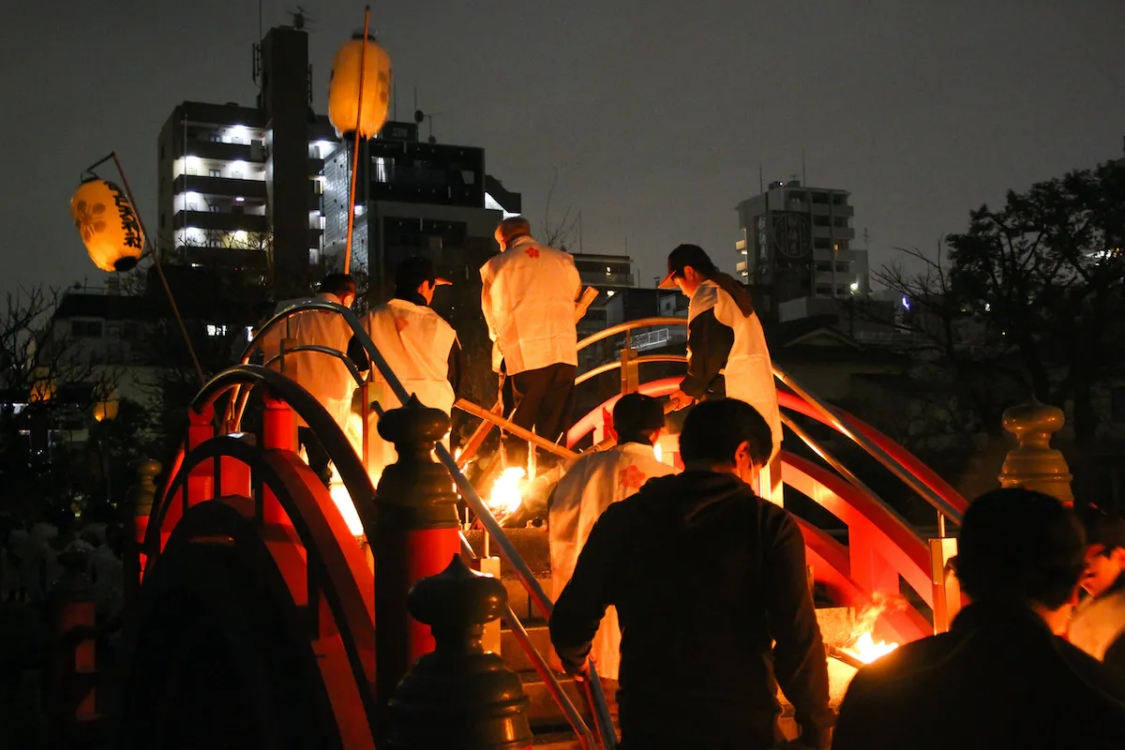
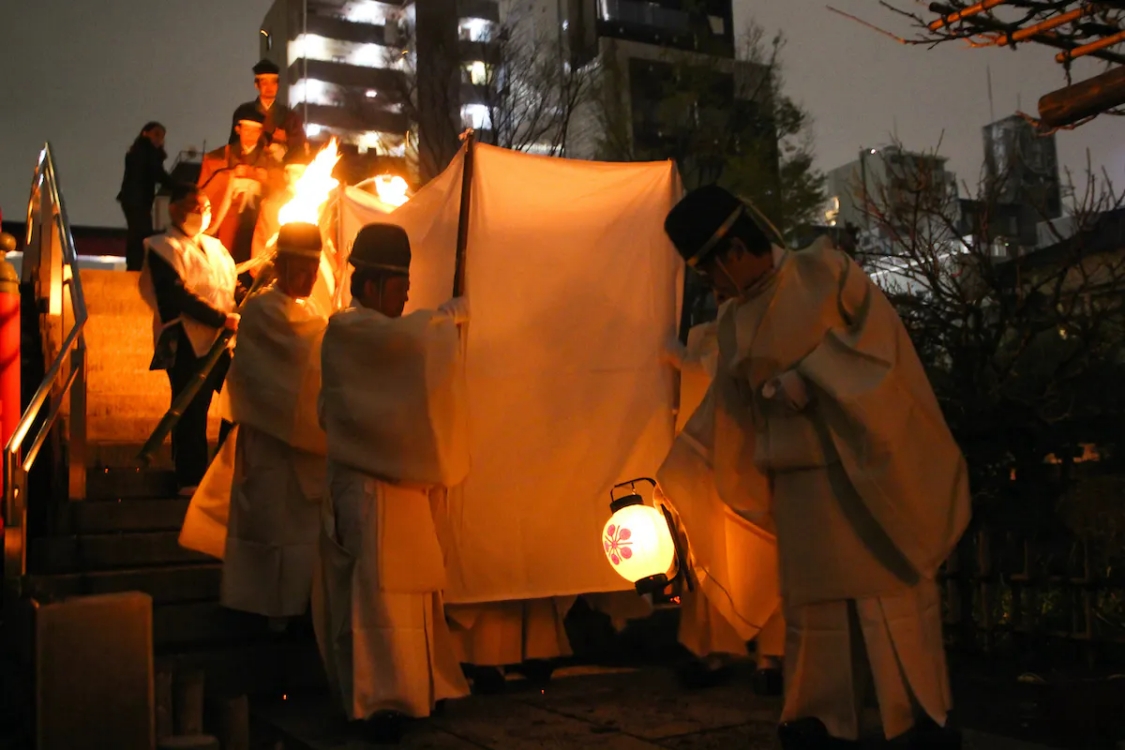
We have come to the drum bridge over the pond. We will go over this bridge too, lighting a fire.
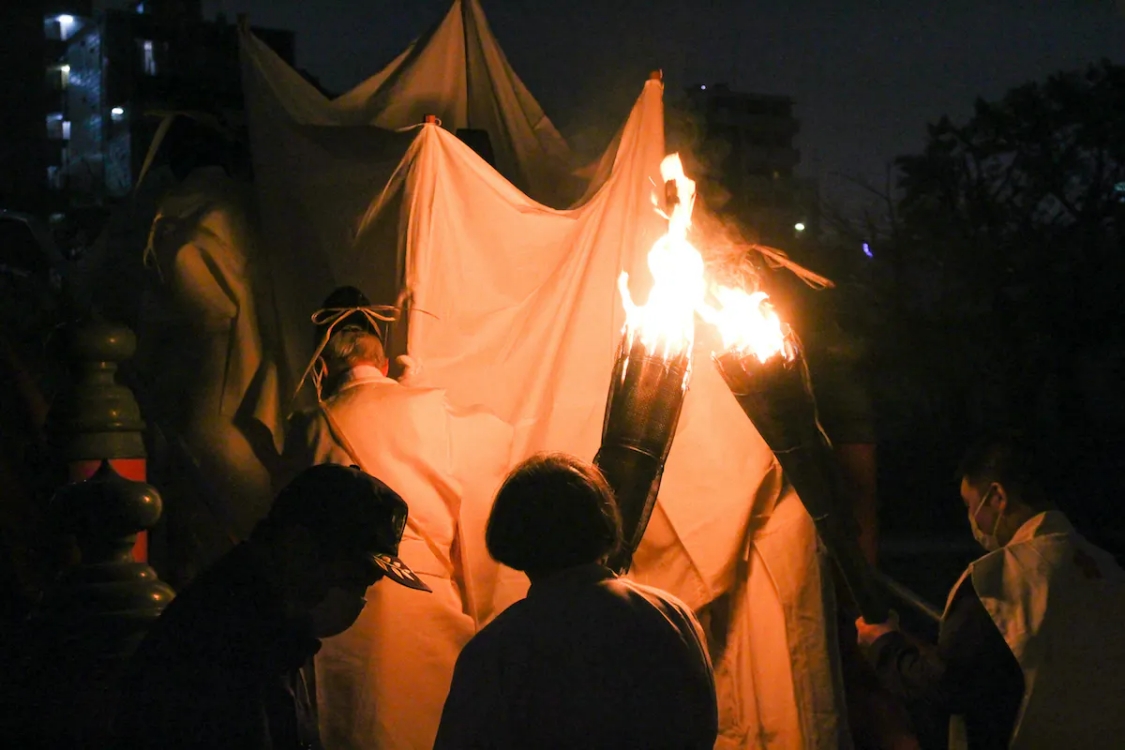
Next, the sacred spirit of Lord Michizane Sugawara advances along with a silk fence made of white cloth. Illuminated by torches, the scene is somewhat fantastic.
This is also to the Taiko Bridge. Proceed with your feet carefully.
The head of the procession had come a long way. The procession continued to make its way around the grounds of the temple.
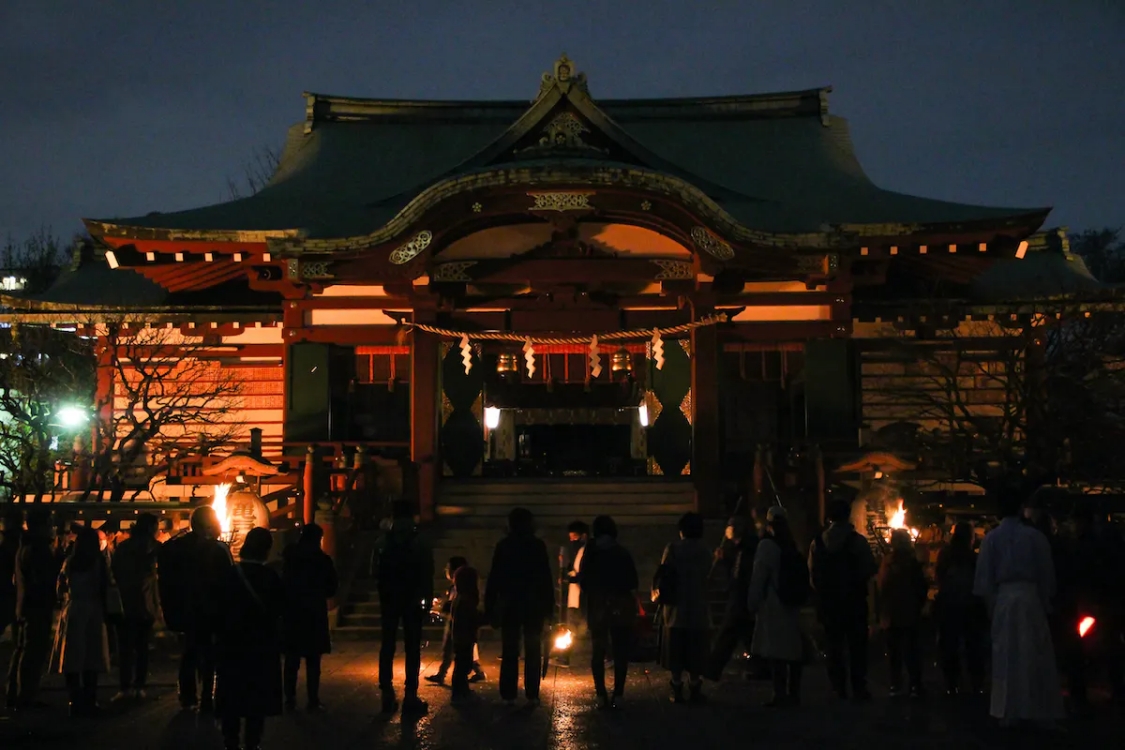
The procession also reaches the front of the shrine pavilion. The shrine pavilions lit by torches are beautiful.
The sight of the procession while gagaku (traditional Japanese court music) was played was somewhat captivating.
There were also parents warmly watching over their children with torches.
The procession proceeds through the shrine precincts, and finally goes from in front of the torii gate to the center of the precincts, over the taiko bridge, and back to the shrine pavilions.
The Spirit of God has also returned.
Continue straight ahead and head into the shrine building.
Everyone else in the procession has also fully entered the shrine! The Shinto rituals are performed again, and the shinto ceremony comes to an end.
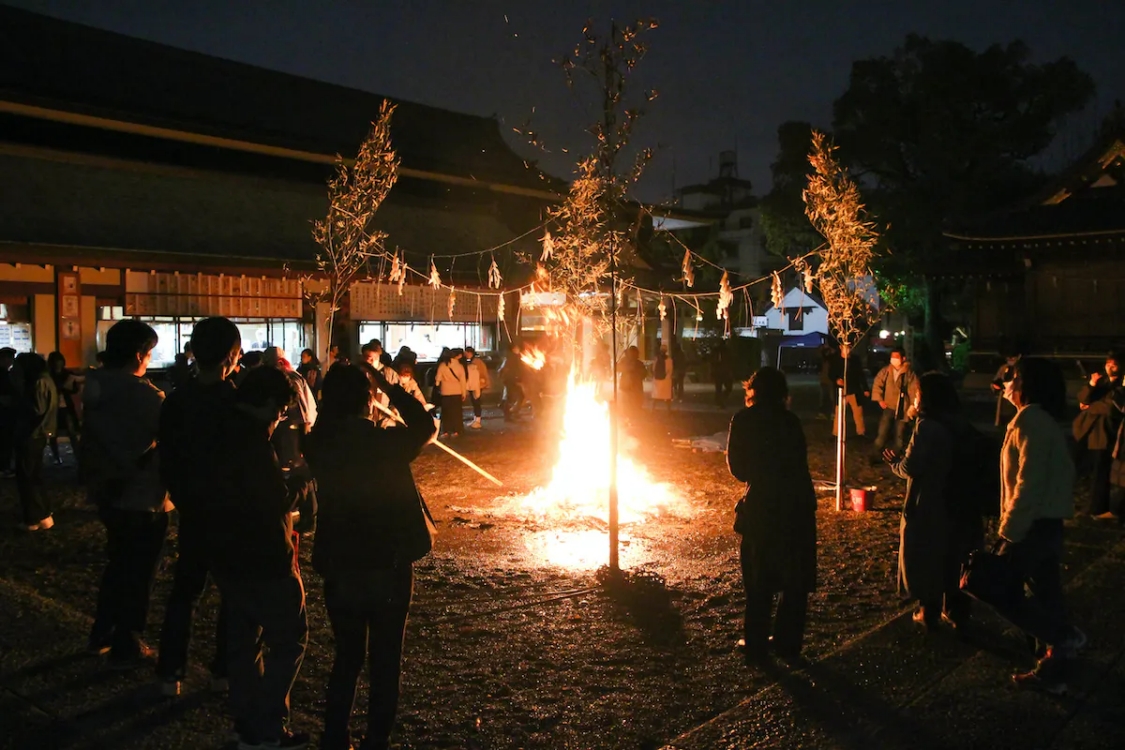
The festival was over, but a fire was still burning outside the shrine building. I appreciated the warmth of the fire on the cold night!
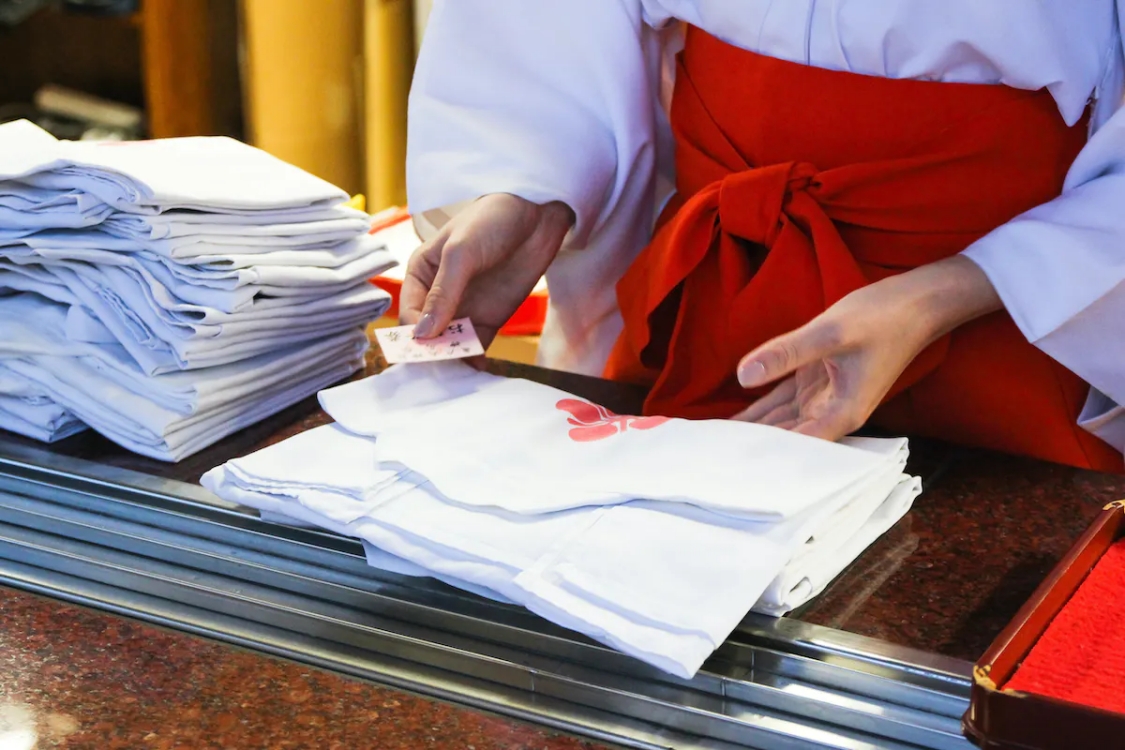
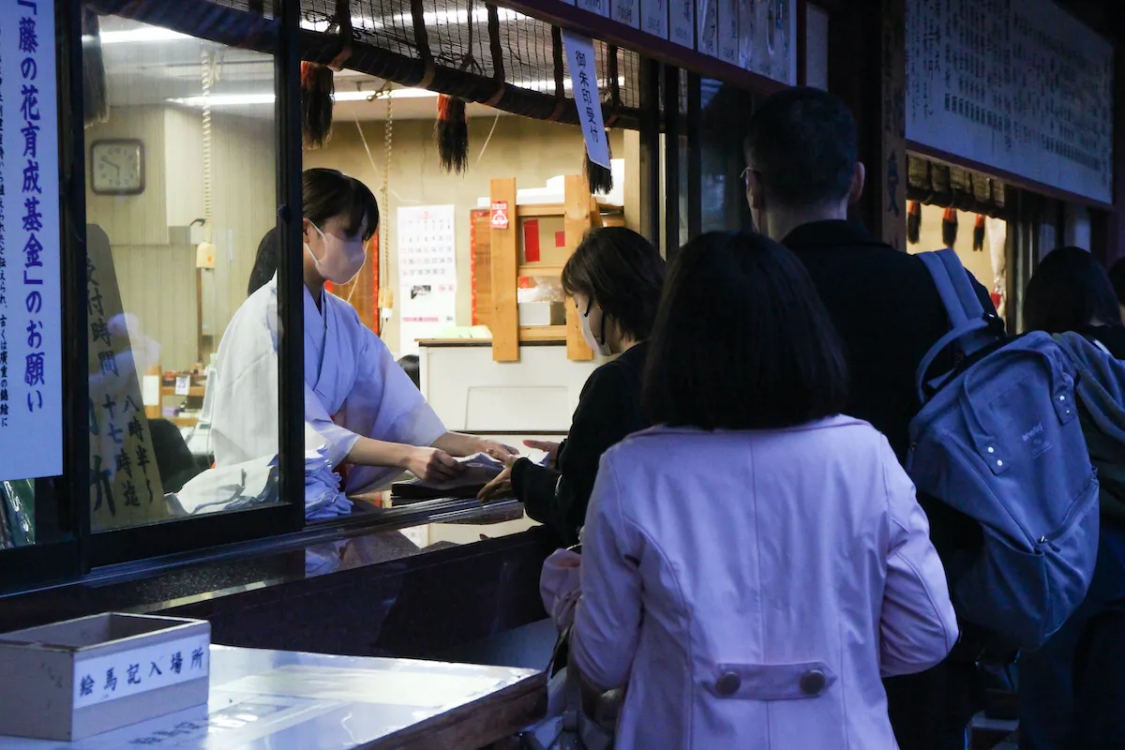
The role of torchbearer is also accepted on the day of the festival. If you complete the necessary procedures at the shrine office before the festival begins, you will receive a white jacket and be able to participate.
Many people lined up to participate. It is a valuable experience to protect Tenjin-sama, but be careful with your attire as you will be carrying a torch and handling fire!
The Shinto ritual festival of Kameido Tenjinsha is held every year on March 25th. Please come and experience this solemn and somewhat fantastic festival!
Access
Approximately 12 minutes on foot from Kameido Station
Approx. 13 minutes on foot from Kinshicho Station
Approximately 20 minutes on foot from Tokyo Sky Tree
Source: