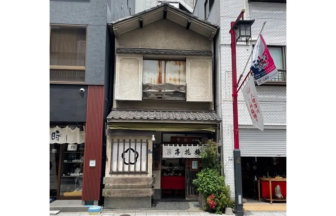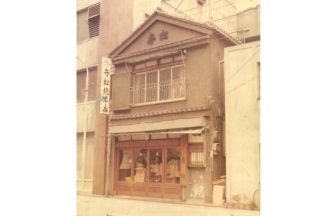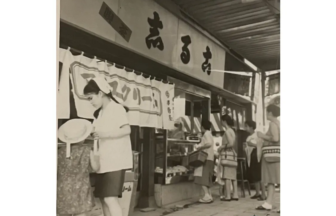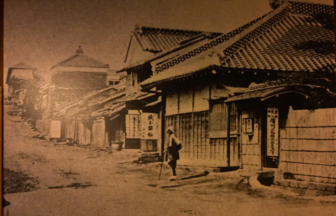


Founded in 1830 (the first year of the Tenpō era)
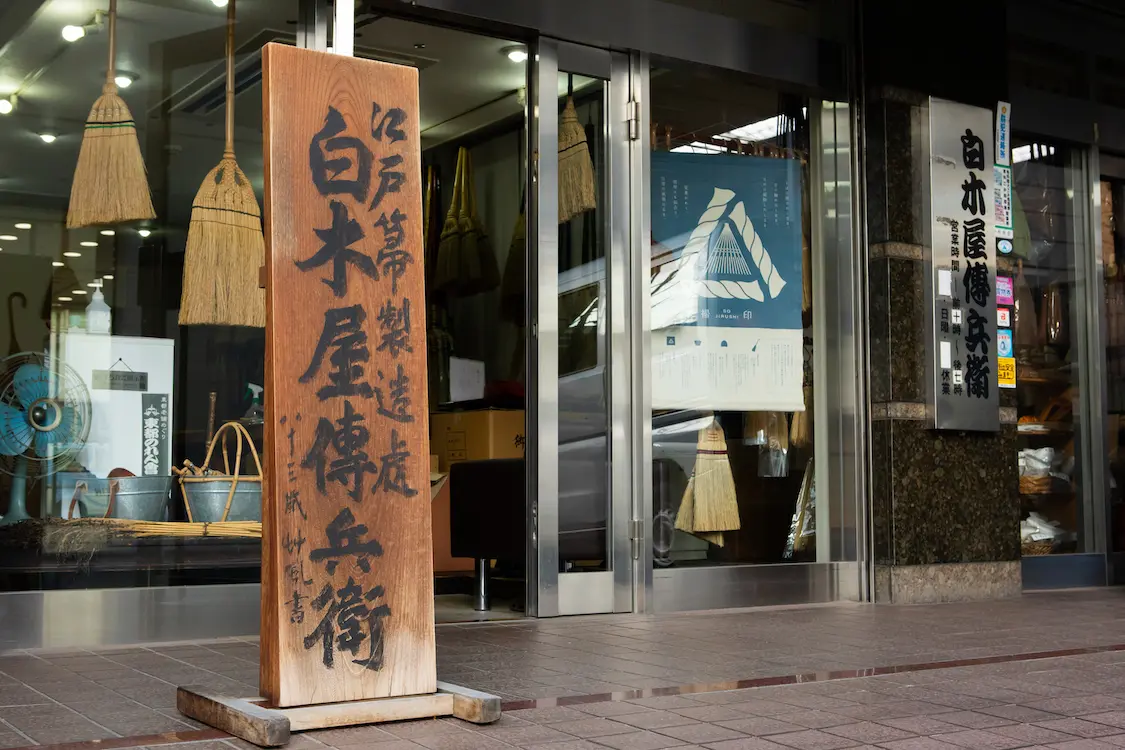
Attracting attention as a sustainable SDGs tool, the Edo broom inherits the genius craftsmanship of its founder.
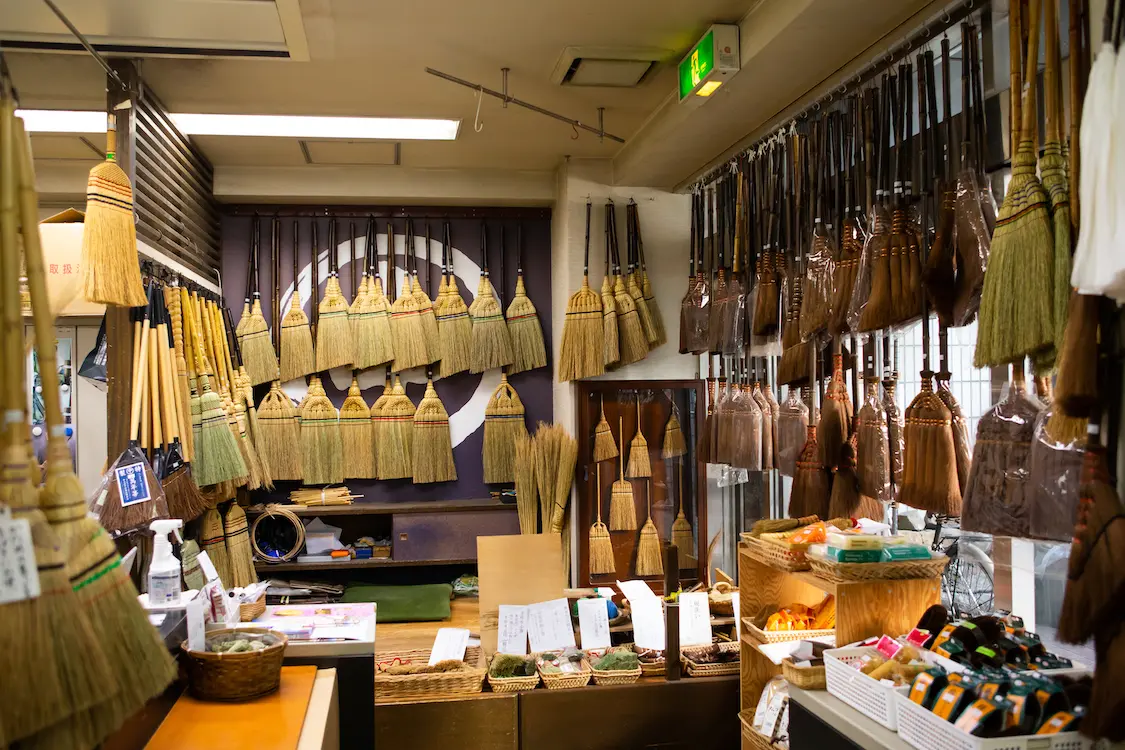
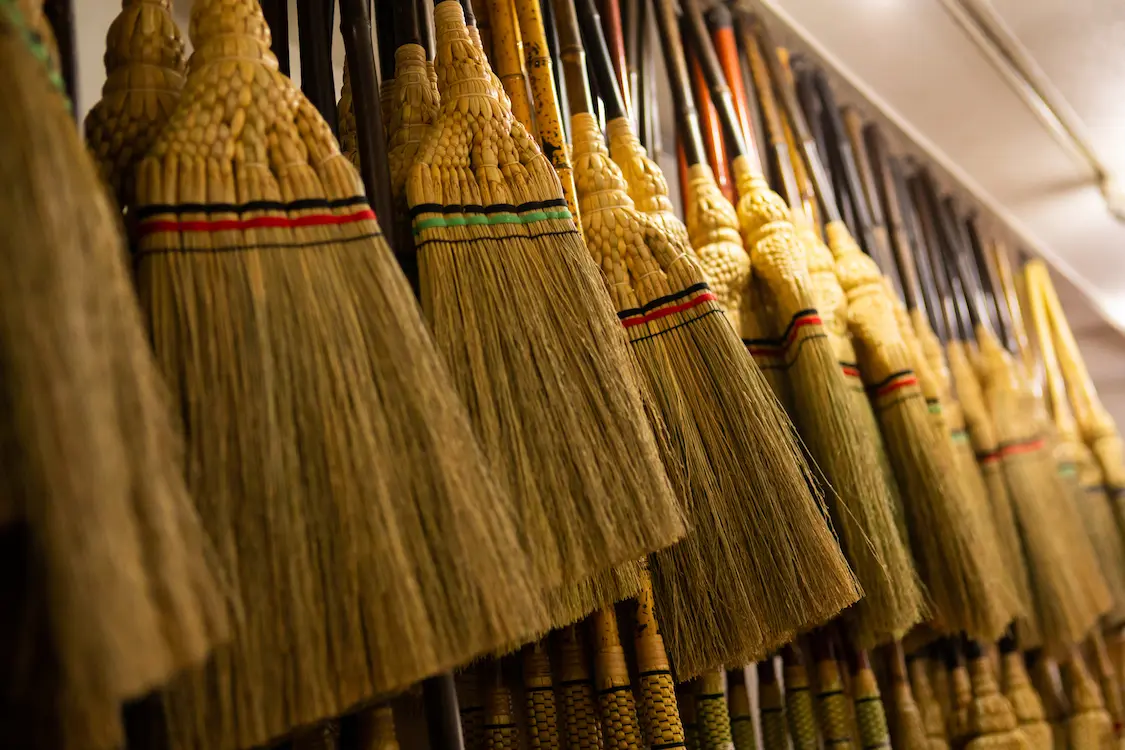
When you enter the store, Edo brooms hanging across the entire wall immediately catch your eye.The sight of brooms lined up in various shapes and sizes looks like art.“They are everyday tools, but when made by a skilled craftsman they become beautiful,” says Mr. Satoru Nakamura, the 7th head of Shirakiya Denbei.While many broom shops have shifted to simplified methods, their artisans still make brooms mostly by hand, preserving the skills of their founder, known as a genius of Edo broom making.
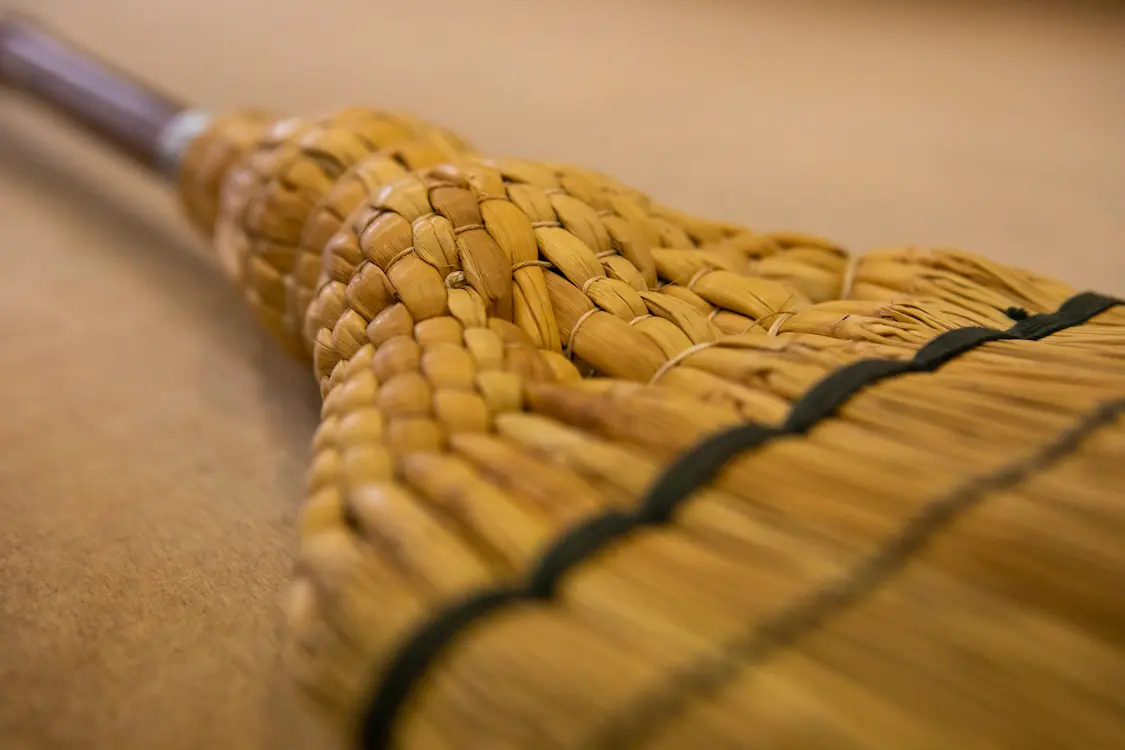
A unique production method of Shirakiya Denbei is the task called “Kusa-yori” (grass sorting).When assembling imported broomcorn stalks, the craftsman rubs the bristles with their fingertips to “sort them by rank.”The higher the quality of the bristles, the more elasticity and density they have, making them better at collecting dust and more durable.They rely solely on the sensitivity of their fingertips.It is said that after making 1,000 brooms, a craftsman can distinguish differences within one type of bristle.With 2,000 and then 3,000 more brooms, the differences of every bristle type become instinctive to the body.Grass sorting ensures that brooms of the same rank are consistently high quality with no variation.“Even if someone returns 10 years later asking for the same broom, I can provide nearly the same one just by checking the color of the binding thread.”He can say this with confidence because the craftsmanship involved can never be replaced by machines.
After the bristles are sorted by rank, they are woven while considering the balance with the bamboo handle.It takes about an hour and a half to complete one broom when done quickly.The completed Edo broom is surprisingly light and supple.Even within the same rank, subtle differences exist such as stiffness and sweeping force, so Shirakiya Nakamura Denbei Shop always recommends customers try sweeping before buying.Strangely enough, by trying several brooms, people find the one that fits their body perfectly.It is no wonder that a sense of closeness grows, as if it were a partner in everyday life.
After the period of rapid economic growth, vacuum cleaners took the place of brooms.However, the head of the shop says, “Brooms are the tool that best fits modern life.”They make no noise so they can be used early in the morning or late at night, they don’t take up space in small rooms, and they are eco-friendly because they don’t require electricity.“Actually, they are SDGs,” says the owner — a tool meant to be passed on for the next 100 years.
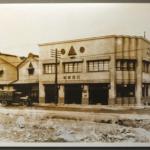
History
When you enter the store, Edo brooms hanging across the entire wall immediately catch your eye.The sight of brooms lined up in various shapes and sizes looks like art.“They are everyday tools, but when made by a skilled craftsman they become beautiful,” says Mr. Satoru Nakamura, the 7th head of Shirakiya Denbei.While many broom shops have shifted to simplified methods, their artisans still make brooms mostly by hand, preserving the skills of their founder, known as a genius of Edo broom making.
A unique production method of Shirakiya Denbei is the task called “Kusa-yori” (grass sorting).When assembling imported broomcorn stalks, the craftsman rubs the bristles with their fingertips to “sort them by rank.”The higher the quality of the bristles, the more elasticity and density they have, making them better at collecting dust and more durable.They rely solely on the sensitivity of their fingertips.It is said that after making 1,000 brooms, a craftsman can distinguish differences within one type of bristle.With 2,000 and then 3,000 more brooms, the differences of every bristle type become instinctive to the body.Grass sorting ensures that brooms of the same rank are consistently high quality with no variation.“Even if someone returns 10 years later asking for the same broom, I can provide nearly the same one just by checking the color of the binding thread.”He can say this with confidence because the craftsmanship involved can never be replaced by machines.
After the bristles are sorted by rank, they are woven while considering the balance with the bamboo handle.It takes about an hour and a half to complete one broom when done quickly.The completed Edo broom is surprisingly light and supple.Even within the same rank, subtle differences exist such as stiffness and sweeping force, so Shirakiya Nakamura Denbei Shop always recommends customers try sweeping before buying.Strangely enough, by trying several brooms, people find the one that fits their body perfectly.It is no wonder that a sense of closeness grows, as if it were a partner in everyday life.
After the period of rapid economic growth, vacuum cleaners took the place of brooms.However, the head of the shop says, “Brooms are the tool that best fits modern life.”They make no noise so they can be used early in the morning or late at night, they don’t take up space in small rooms, and they are eco-friendly because they don’t require electricity.“Actually, they are SDGs,” says the owner — a tool meant to be passed on for the next 100 years.
We will recommend the perfect broom to match your lifestyle.
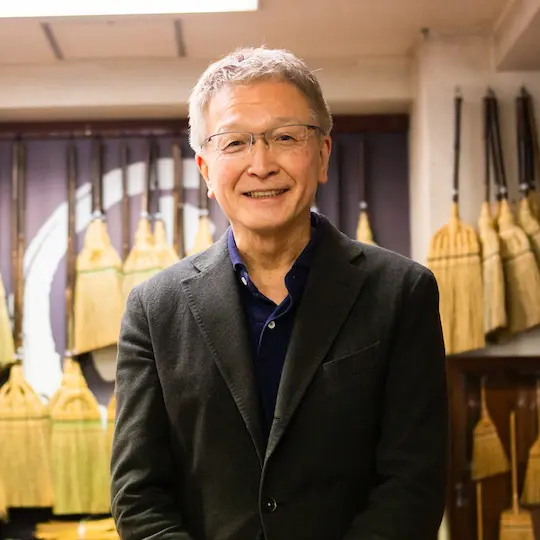
Satoru Nakamura
7th head of Shirakiya Denbei
We carefully handcraft each broom using techniques such as “Kusa-yori,” passed down from the founder.If you are new to using brooms, please visit our shop.We will propose the best broom to suit your lifestyle.
This Notable Item
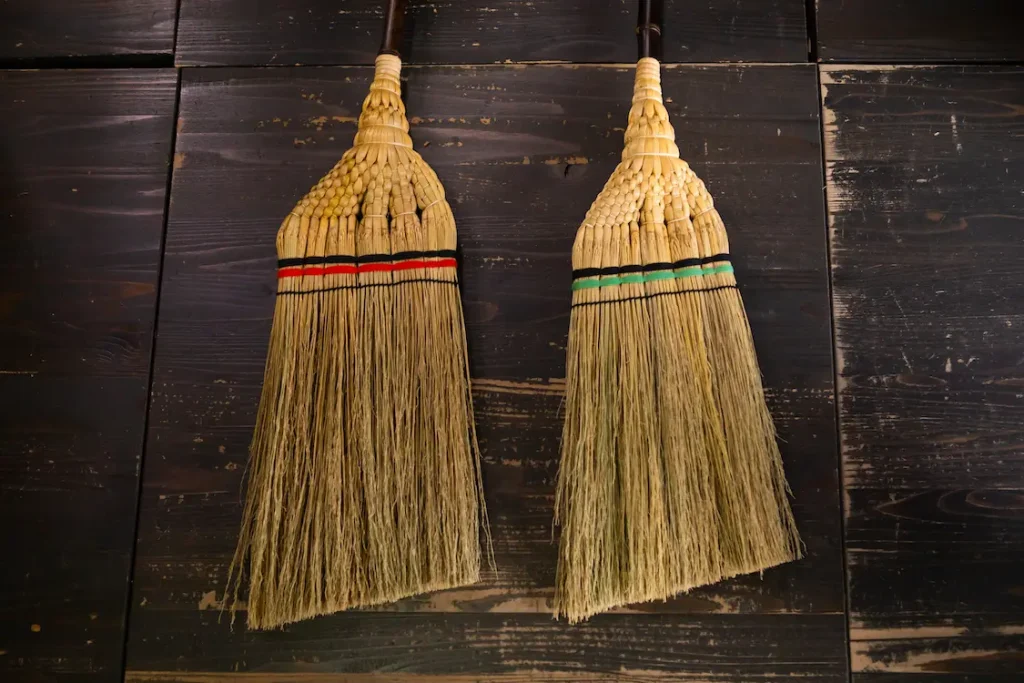
Edo hand broom
Special grade: 11,000 yen / High grade: 8,800 yen
These are the representative Edo hand-brooms of Shirakiya Denbei.Because strong, resilient bristles are selected, they have excellent springiness and capture dust extremely well among Edo brooms.They can be used on tatami rooms, wooden floors, and carpets, but carpets are especially recommended.They can sweep out hidden dust, hair, and pet fur in large amounts.
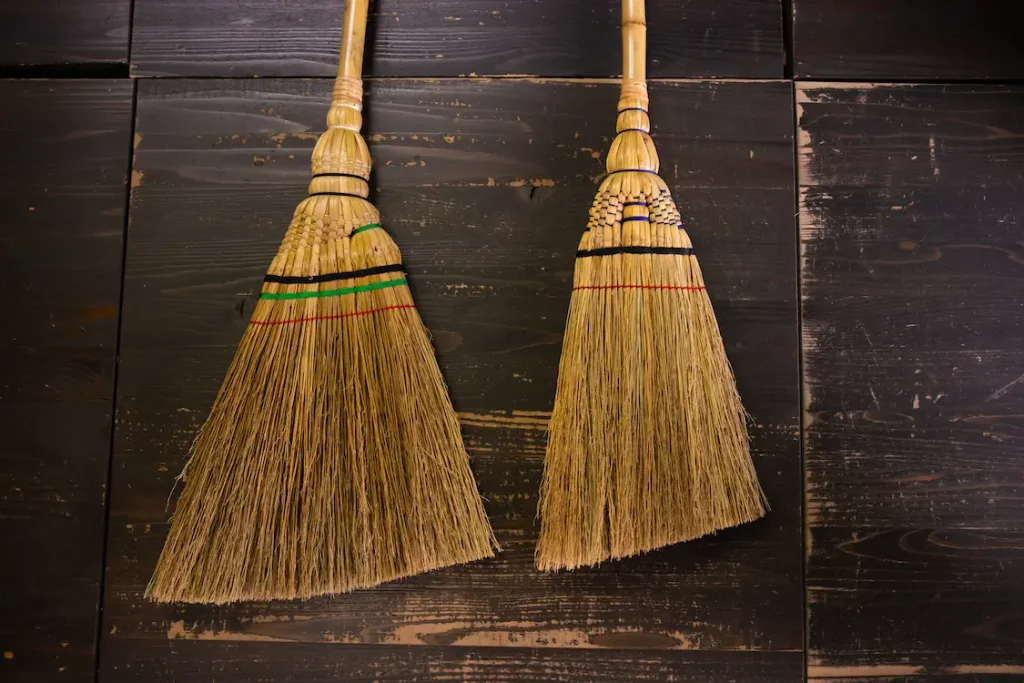
Easy broom / Lazy broom (long handle)
Easy broom: 4,950 yen / Lazy broom (long handle): 3,850 yen
We also offer affordable brooms made with imported bristles from Indonesia.Indonesian and Japanese broom craftsmen have a close relationship, and since around 1965, Japanese craftsmen have taught cultivation methods and broom-making techniques locally.They are firmly woven, making them versatile for use throughout the entire house.
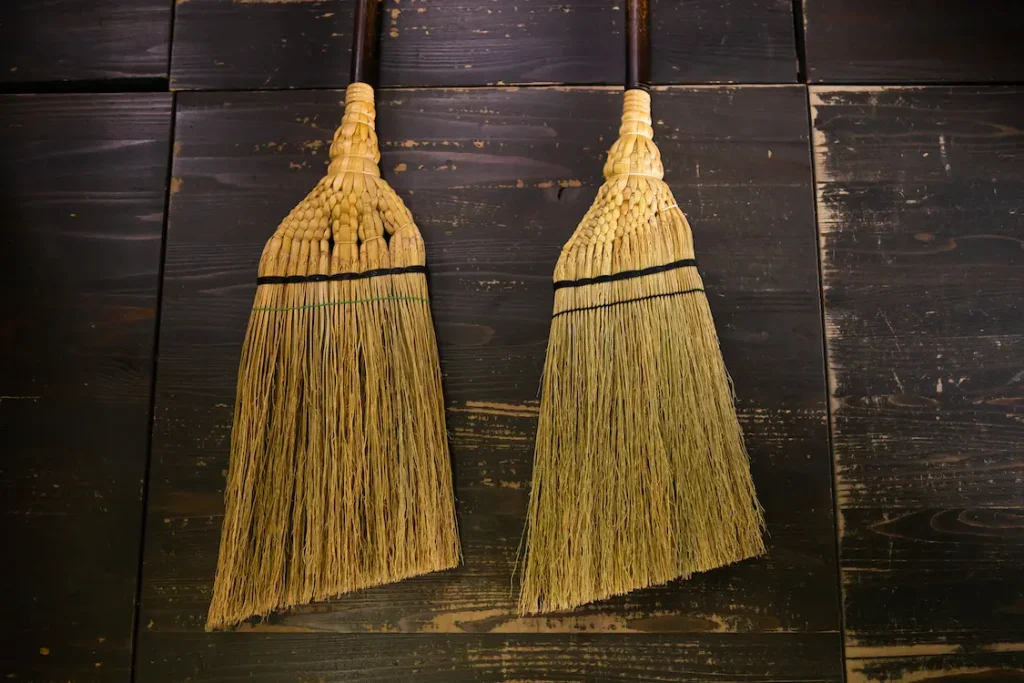
Edo hand broom
6,600 yen
An Edo hand broom with reduced bristle volume and a slimmer width than usual.Having fewer bristles makes it light and easy to handle.It reaches deep into narrow spaces such as between furniture and under TV stands where vacuum cleaners struggle to reach.It also looks stylish when casually displayed against the wall as interior decor.
Spot Overview
| address (e.g. of house) | |
|---|---|
| phone | |
| Business Hours | |
| regular closing day | |
| Payment Method | |
| External Links |