Walking around Edo with old mapsNihonbashi (bridge)
No.4: Was the Yoshiwara brothel located in Ningyocho? Theater by day, brothel by night. A trip to the ruins of a former entertainment district
Ningyocho (department store)brothel in Yoshiwara (Edo period)Nihonbashi RiverTamadeido HikokuroAmazake Alley
The “Tokyo Old Map Walk” uses old maps to uncover places in the ever-changing Tokyo that have not changed, places where, if you look carefully, you can sense faint hints of history. Guided by Tae Hoshino, a guide from “Walking Journey Support House,” a pioneer in this type of tour, we will walk through present-day Tokyo to discover Edo (old Tokyo). This time, the tour will start from the Horidome site on the Nihonbashi River to the shibaihouses in Ningyocho and the Yoshiwara brothels. The Yoshiwara brothel is located behind Sensoji Temple in Asakusa. ……? In fact, the Yoshiwara brothel was located in Ningyocho in the early Edo period and later moved to Asakusa. There was a ditch and a bridge between Nihonbashi and Ningyocho. There was also a playhouse nearby. Let’s walk around with an old map in hand.
The site of the bridge that separated Nihonbashi from the entertainment district of Yoshiwara is a children’s park.
This time, the stage is set from between the Nihonbashi area and Ningyocho. This is right next to the Edobashi JCT of the Metropolitan Expressway. The walking trip, starting at the junction of the Higashi-horidome River, which was dug for logistics from the river, a little downstream to the east from the former site of Nihonbashi Fish Market, one of the best shopping zones in Edo.
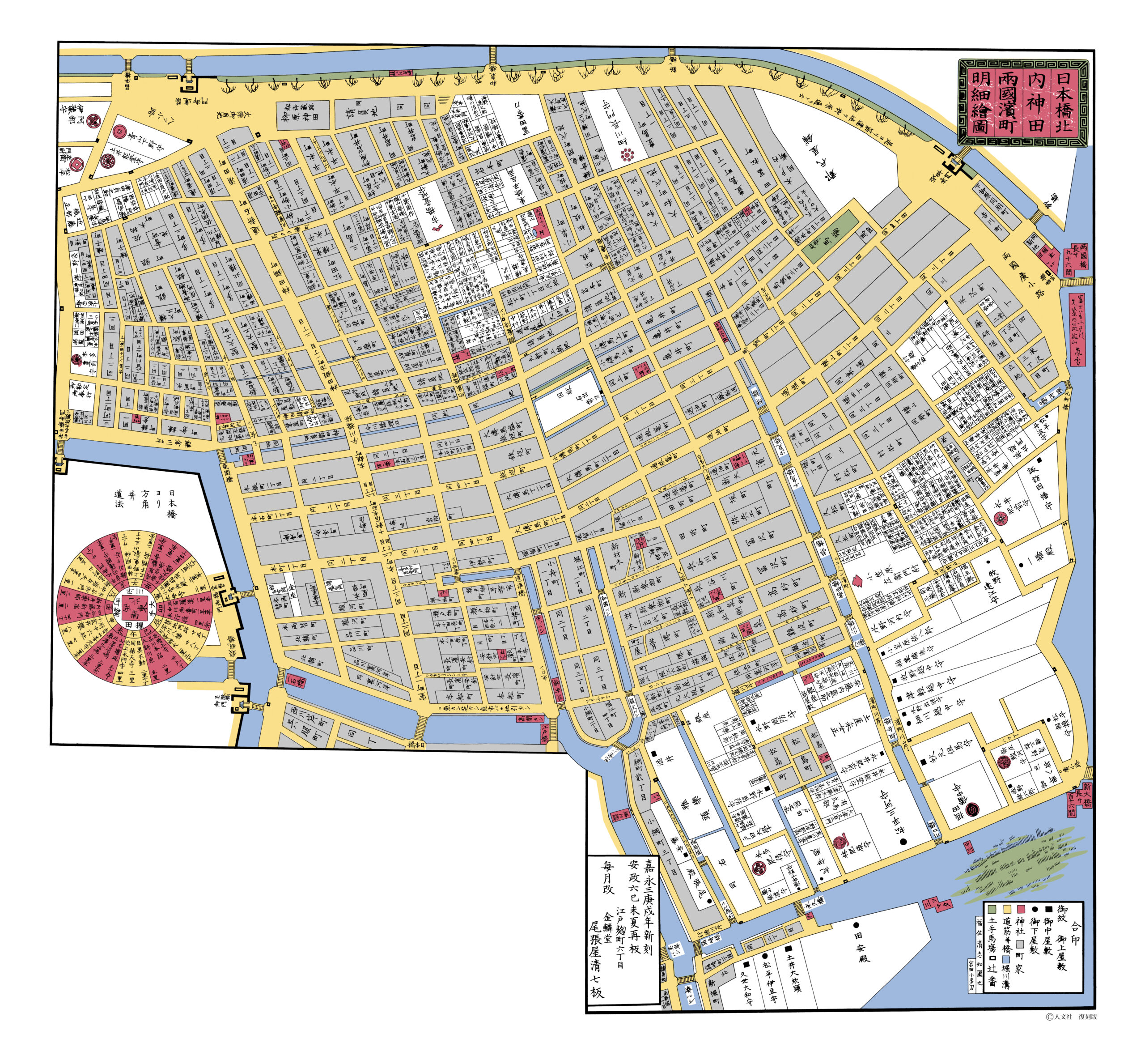
The missing spot in the lower center of the old map, at the corner where the Nihonbashi River turns at right angles, is the starting point. A little upstream, the end of the moat called Horidome was created and called the Nishi-Horidome River. Each of them was designed just like the letter “J” in the alphabet. Now let’s zoom in a little.
There used to be a bridge called ‘Shikan-bashi’ (meaning ‘thoughtful bridge’ in Japanese) at this location. From this bridge, one could see both the playhouses and the brothels of Yoshiwara, so it is said that people stood here and thought, “Well, which way should I go?
Now it is a small park called “Koamicho Children’s Park. It is now a fashionable name for a place where one wonders whether or not to go to play with women. In fact, it has become a place where adults, not children, take a break.
Walking along an alley that was once a river, looking for traces of a bridge
From the park, we enter the alley that used to be the Nishi-horidome River at the end of the former moat. From the starting point on the old map, we walk up the part of the river that used to be a “J” from the bottom.
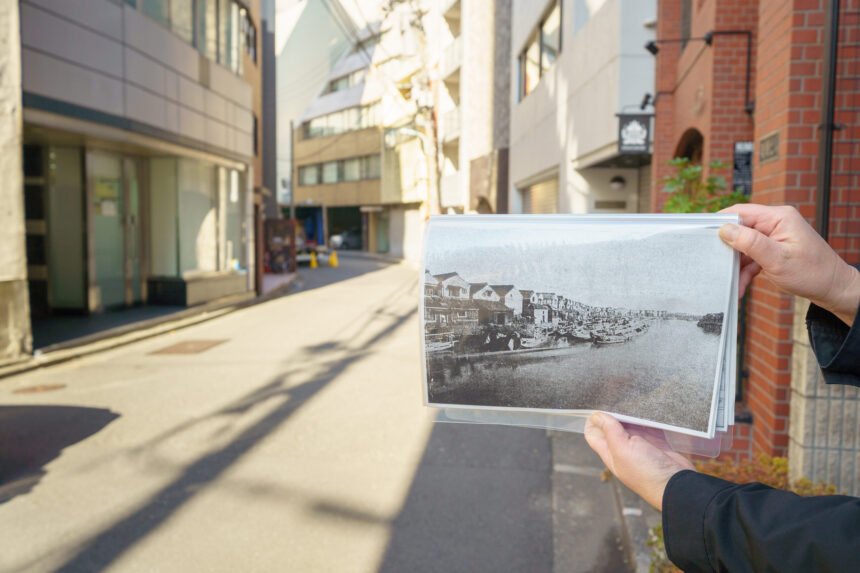
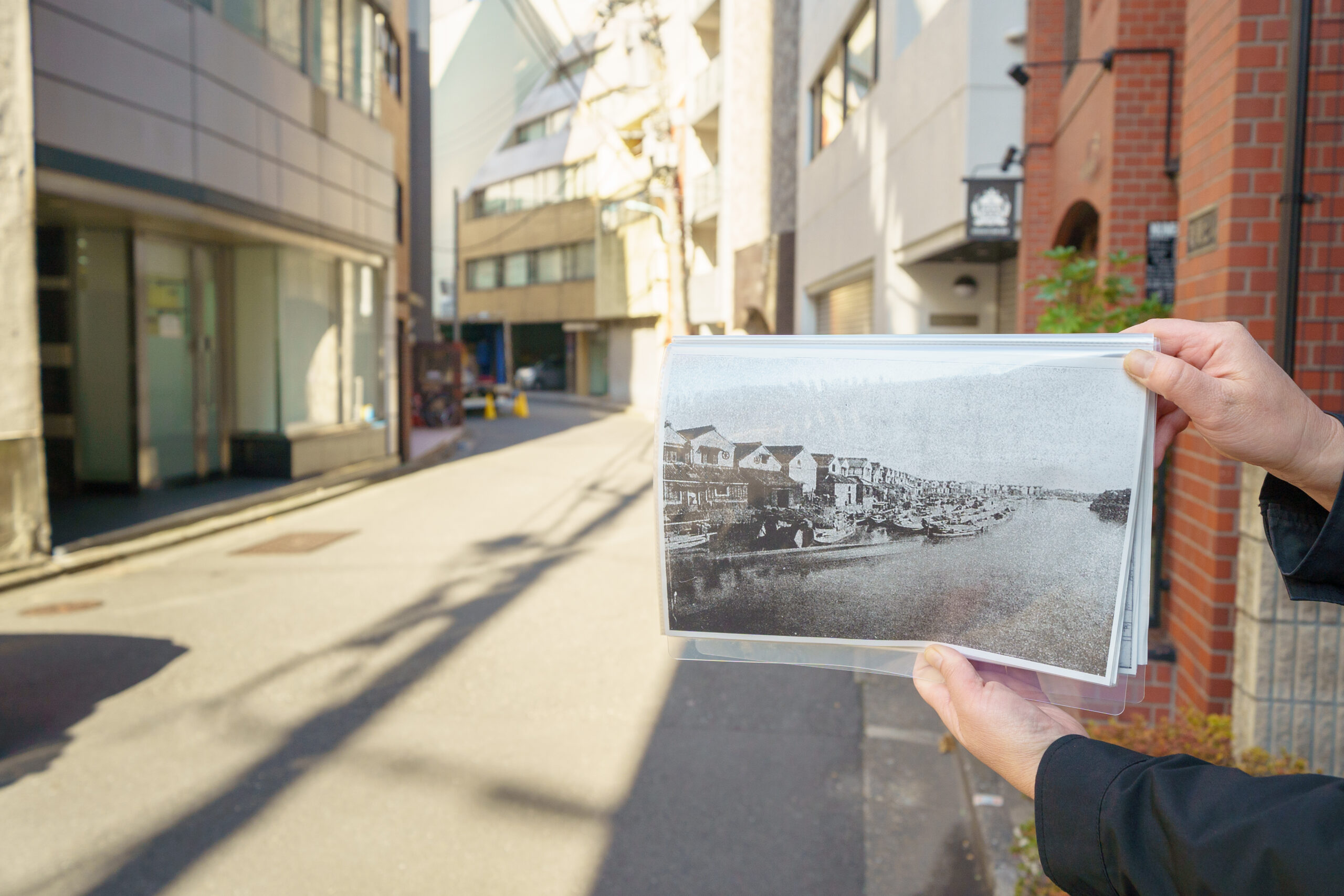
There was actually a river here until after the war. Between 1948 and 1949, it was reclaimed to dispose of the postwar surplus soil. That’s why we still have these photos,” Mr. Hoshino said, opening a file and holding it up.
Although no trace of the river remains, the topography is interesting, and the reclaimed road is curved along the original river flow.
However, compared to the current street, the width of the river looks much wider.
The street is much narrower than the river width. It is just about the width of one building on each side. Later, I will show you a point where you can see the width of the river!
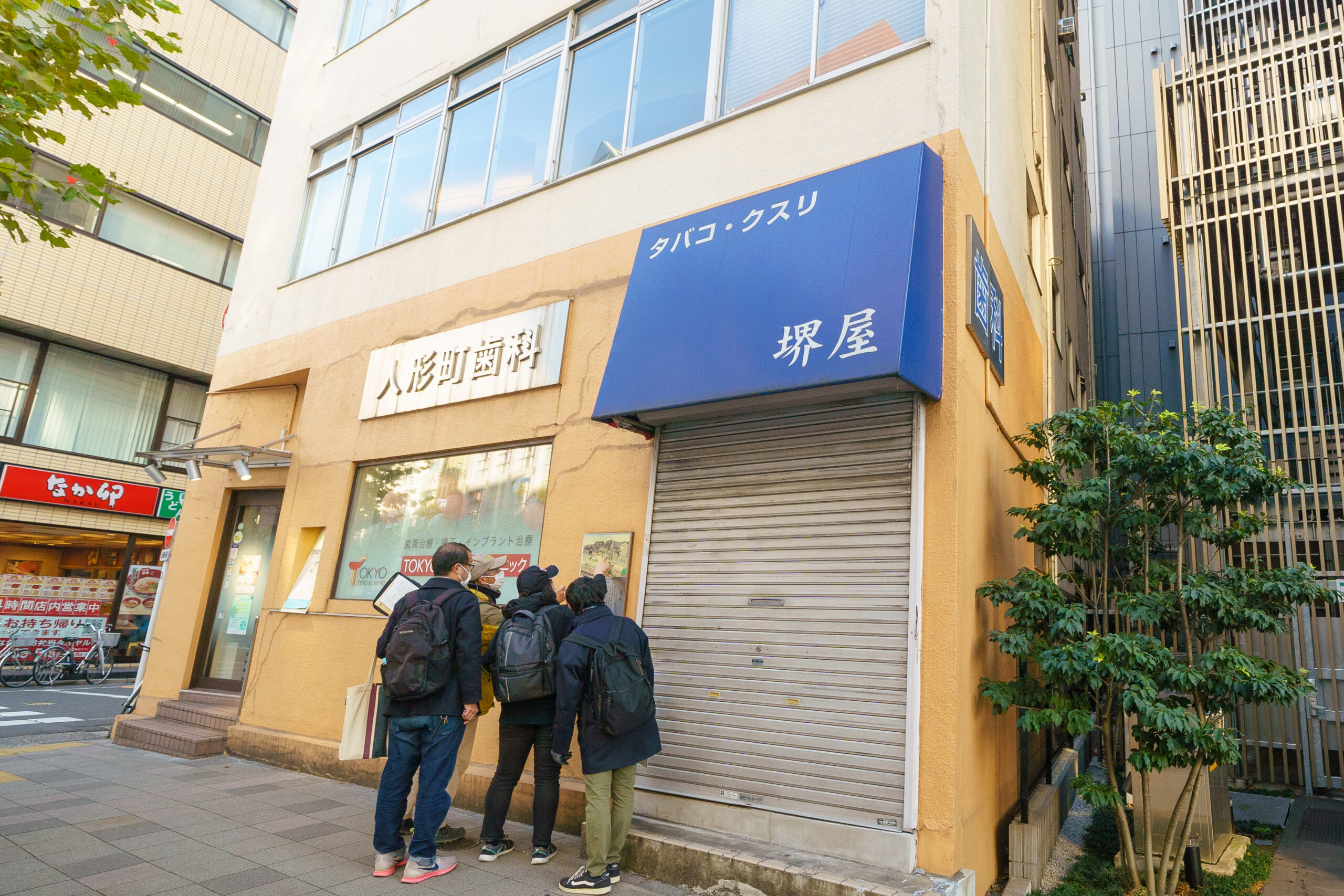
The Higashi-horidome River is about 600 m long, with three bridges along the way. First is the Shikan-bashi bridge mentioned earlier, and then the Oyabashi bridge. Although there are no vestiges of the bridges now, Sakaiya, a tobacco and medicine shop that has operated at the foot of the bridge since the Edo period, has placed a sign on the wall of his store.
Yoshiwara Yurakaku was a grouping of brothels scattered throughout Edo that was officially sanctioned by the shogunate. The person who made this possible was Shoji Jin’emon, a vassal of the Odawara Hojo clan. The bridge was named “Oyabashi” (old man’s bridge) after this man who was called “Oyaji” (old man) at the brothel he ran.
The topography of the area is the same, but the business has remained the same. According to the signboard, Sakaiya is now the ninth generation of the Sakaiya family. According to the signboard, Sakaiya is now in its ninth generation, and was a tobacconist and drug dealer in the Edo period as well.
The Higashi-Horidome River continues north through the city to the current Horidome Children’s Park and the adjacent Nihonbashi Health Center. It is said that a water feature will be installed, and it may become a place that evokes the image of the Higashi-Horidome River where boats used to come and go.
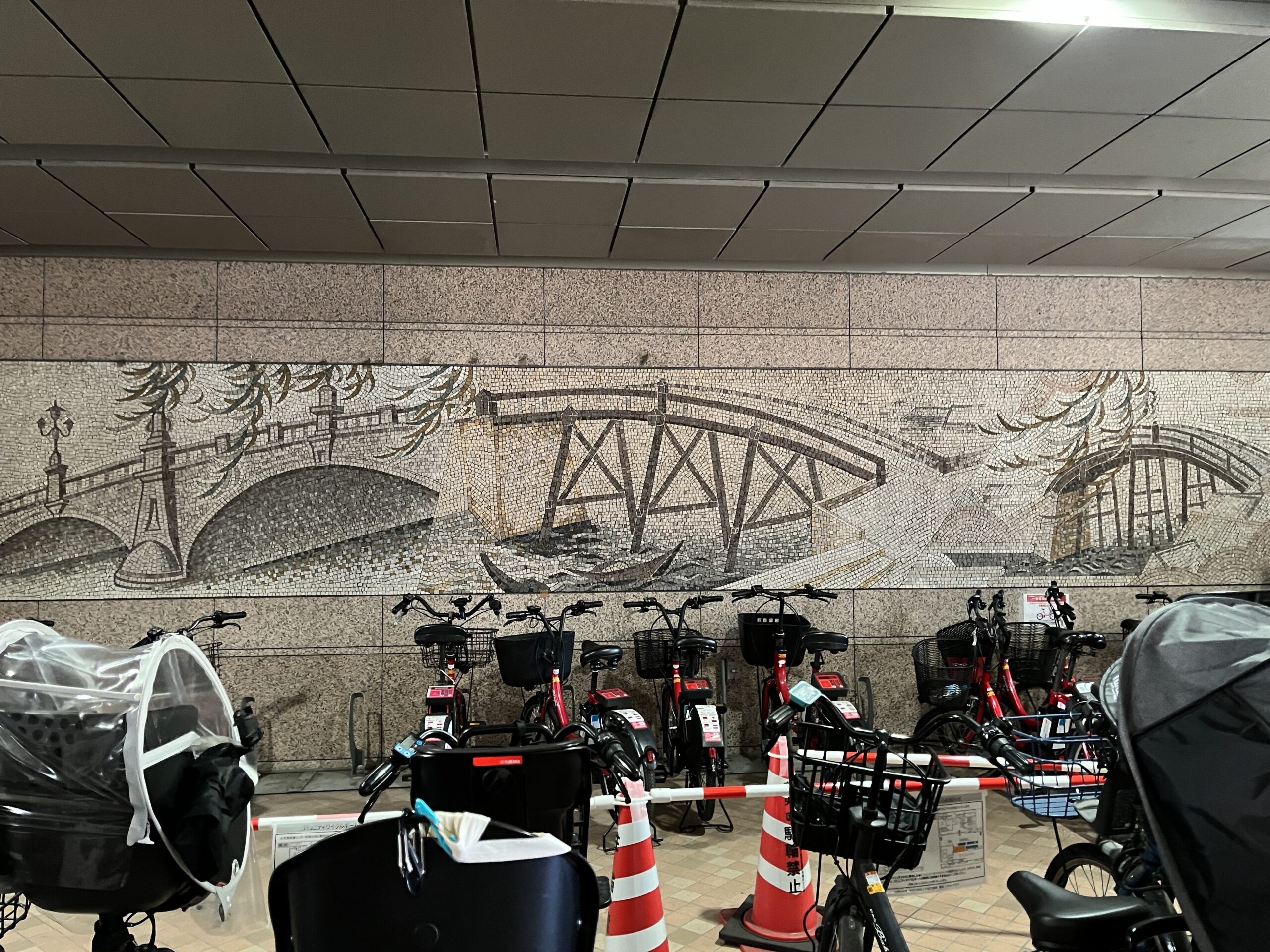
But then again, the bicycle parking lot at the Nihonbashi Health Center already has a design with a bridge motif,” says Hoshino.
I see, the design depicts a bridge that seems to have evolved little by little since the Edo period.
The park and the Nihonbashi Health Center site are exactly the same width as the Higashi-Horidome River. And it seems that the third bridge on this river, Wakuni Bridge, was located right past this facility.”
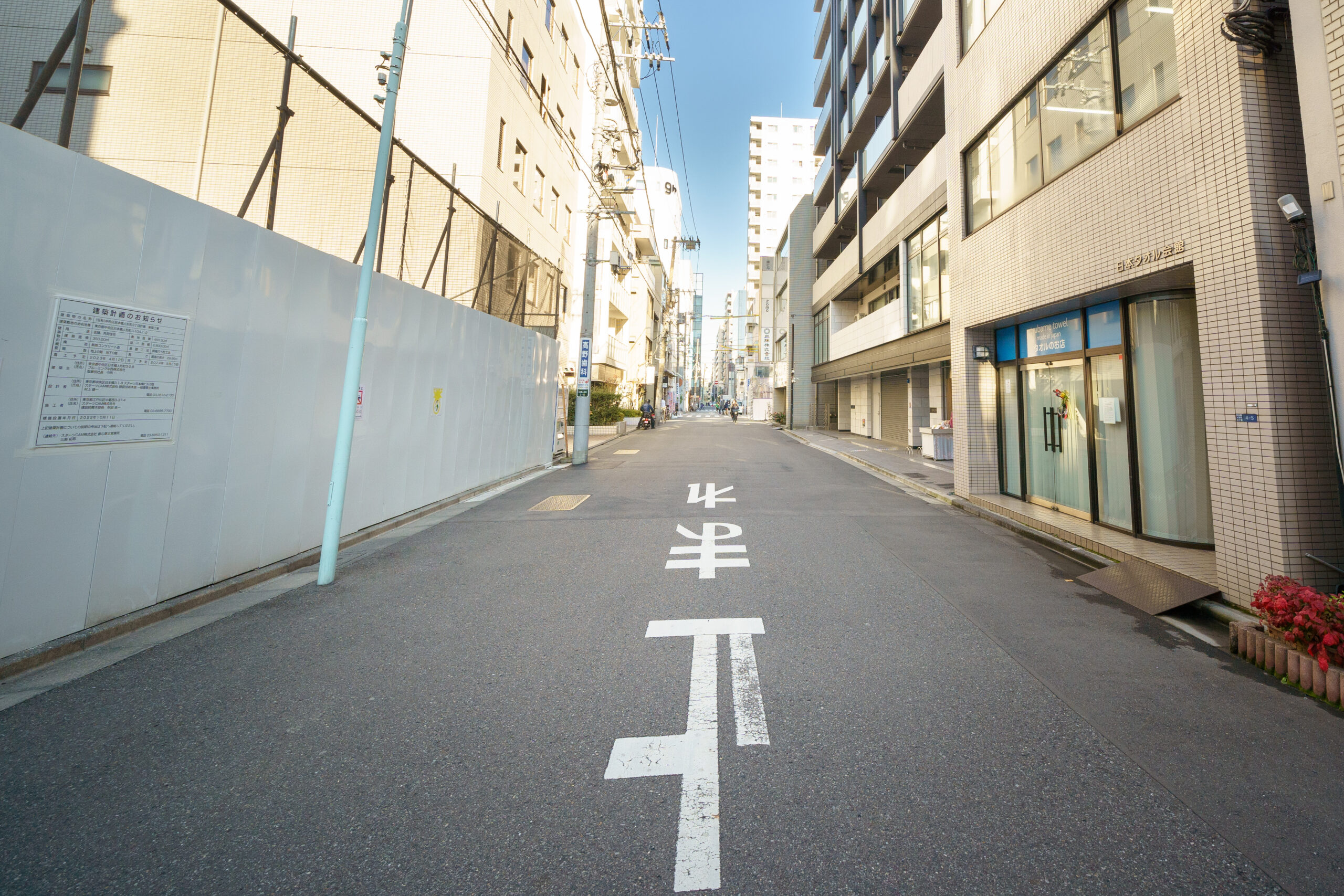
This is the entrance to the Nihonbashi Health Center, which was built adjacent to the park. This is also the site where the Wakuni Bridge over the Higashi-horidome River once stood. There is no trace of the bridge at all, so you have to compare the old map with the map very carefully to notice it. The width of the river is from the concrete wall in the foreground to the “P” parking lot sign in the back. It is a very ordinary town scene, and there is a national chain business hotel next to it, but to my surprise, there are remnants of Edo there. ……
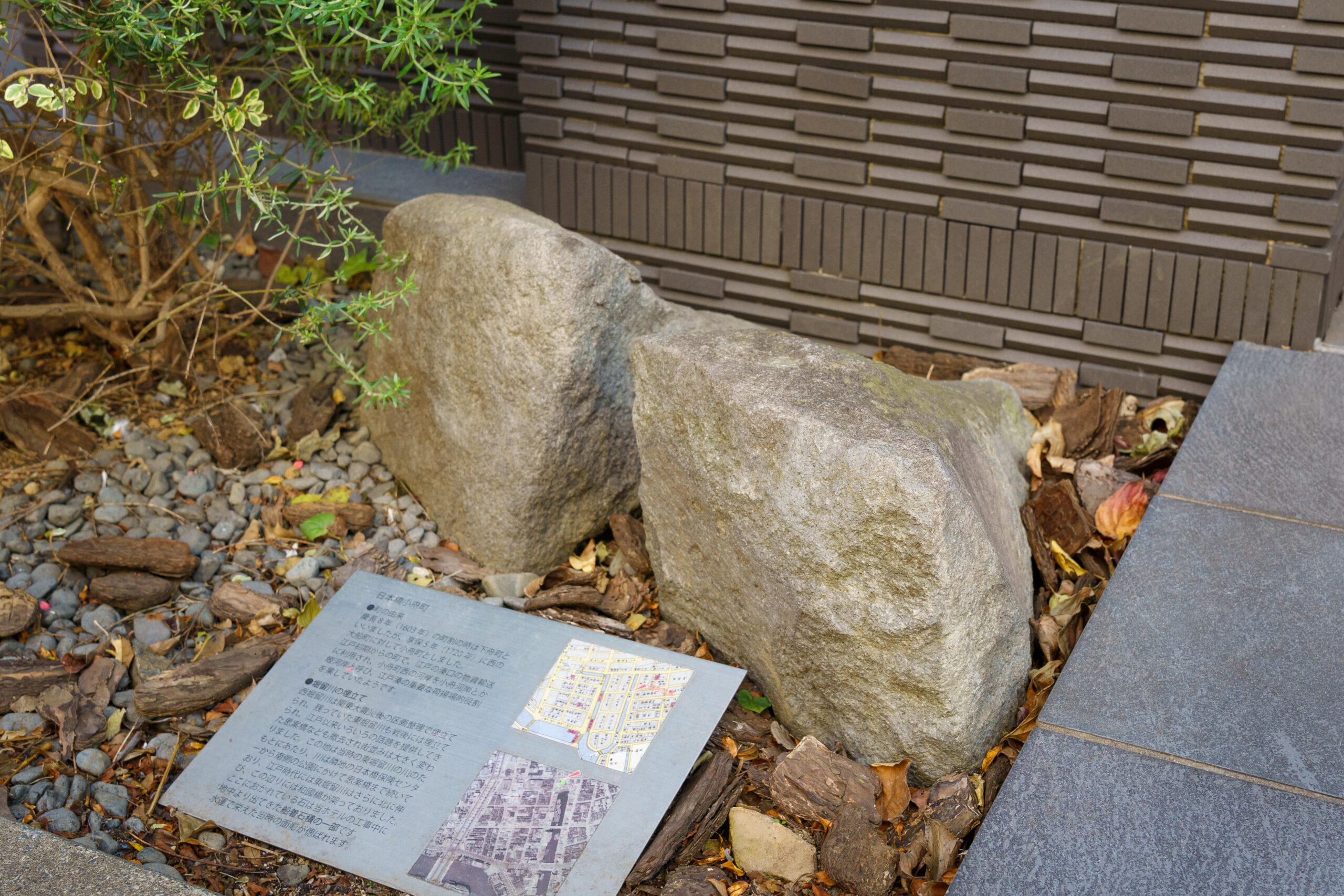
Part of the stone wall of the landing place of the Higashi-horidome River, which was built for water transportation, was unearthed during the construction of the hotel. It is displayed with an information board in front of the hotel entrance.
People in Edo liked to play lots, and the shrine was crowded with people making wishes.
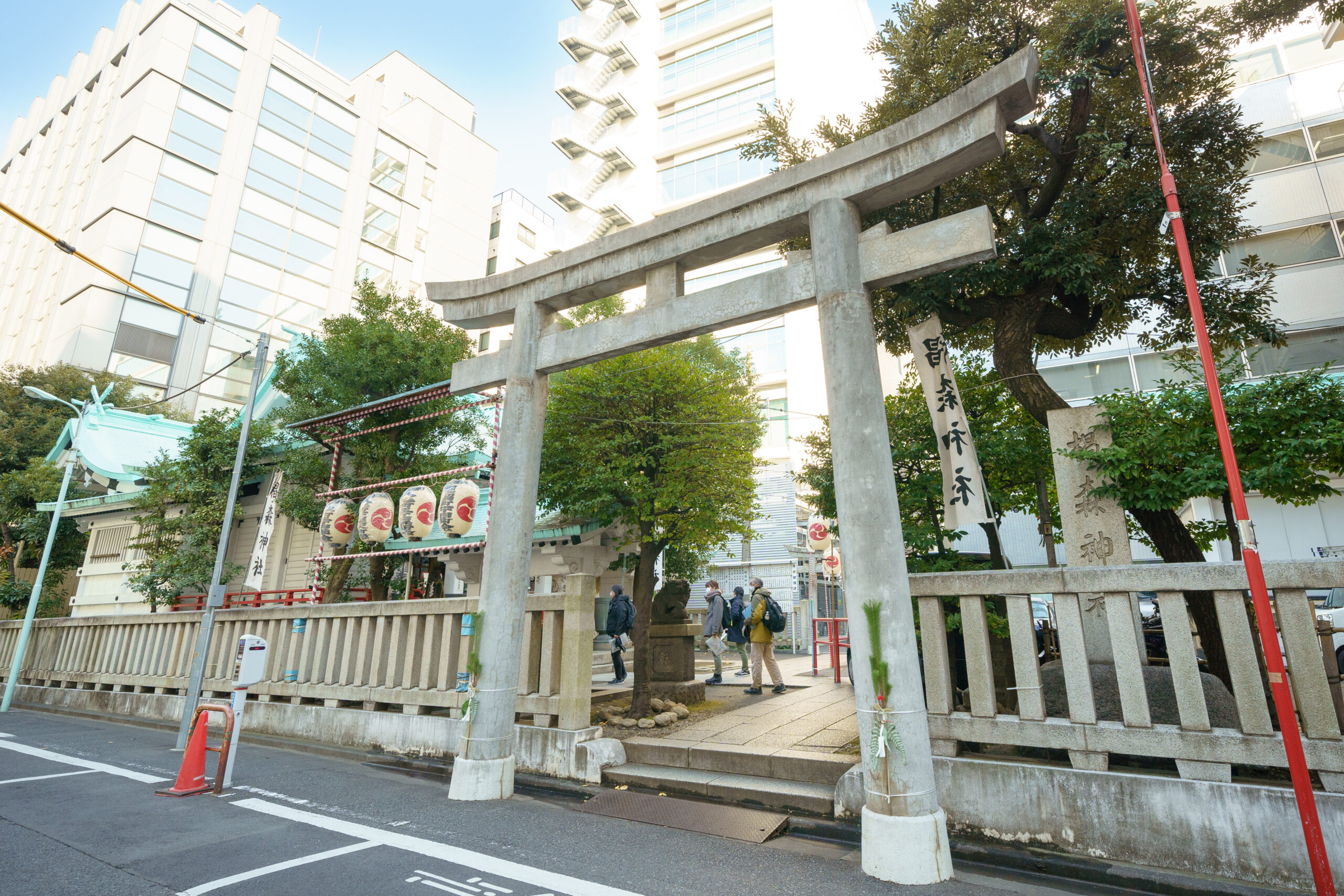
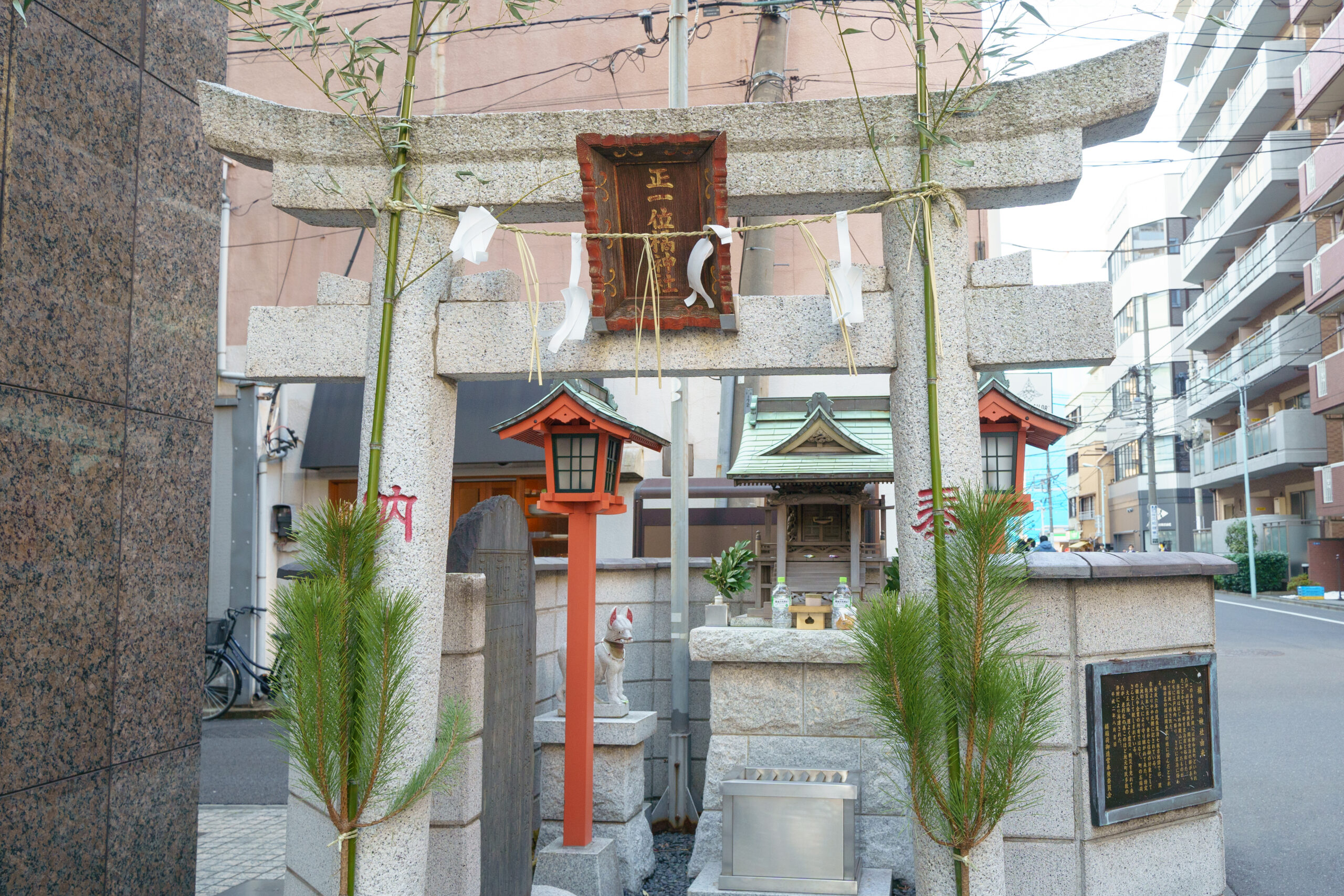
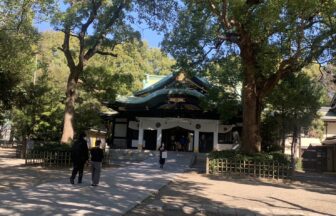
If you walk eastward into an alleyway, feeling as if you have crossed the now-defunct Wakuni Bridge, you will come across Suginomori Shrine, which is properly named on an Edo-style map.
According to the explanatory board on the shrine grounds, the shrine has a history of more than 1,000 years and was called “Sanmori” together with Karasumori Shrine in Shimbashi and Takemori Shrine in Kodenmacho during the Edo period, and is said to be the birthplace of the Edo merchants.
It is also said to be the birthplace of Edo merchants.
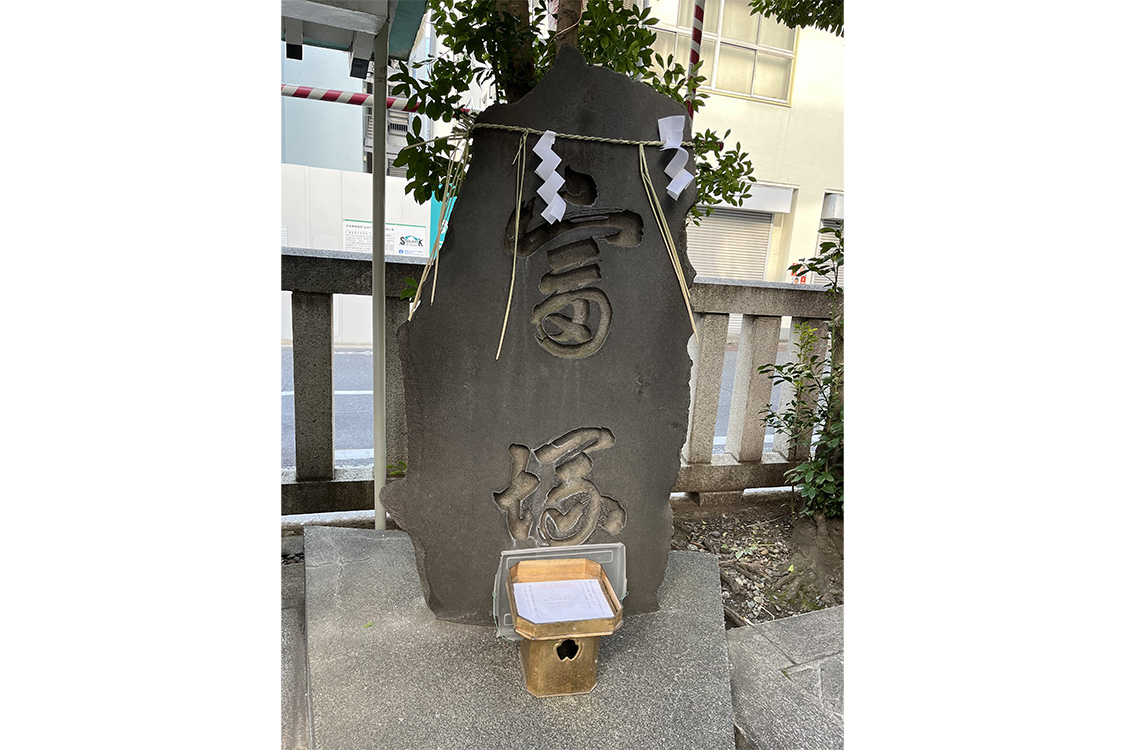
A lottery is what we call today’s lotteries. During the Edo period, temples and shrines were allowed to sell lotteries with permission from the shogunate to raise funds for the repair or reconstruction of buildings. The “Tomizuka” was built in the Taisho Period as the origin of the lottery, and is also known as a power spot for lottery tickets.”
Incidentally, the Sugimori Shrine is also the setting for the classic rakugo stories “Shukoya no Tomi” and “Tomikyu” (which also played an important role in the historical drama “Idaten”).
The site of a former playhouse and the name of the street are vestiges of the Yoshiwara brothel.
The area around 3-2-7 Nihonbashi, Chuo-ku, Tokyo, which is the current address, was the “Shibai-cho” in Edo period (1603-1868). The first old map of the area shows it as a “shibai-machi” (theater district).
The Nakamura-za and Ichimura-za theaters, which had been performing kabuki for about 200 years since the early Edo period, were located here. There were also other huts for performing ningyo joruri (puppet plays) and teahouses where people who came to see plays enjoyed drinking and eating, and the area was crowded. There seems to be no doubt that this town was the birthplace of Edo Kabuki.
Recently, excavations have been conducted and various relics related to theatrical performances have been unearthed, but unfortunately, no remains have been found to show at a glance that this was a town of theatrical performances. Like this.
Just walking around without knowing anything about the town, it was nothing out of the ordinary.
Crossing the former Shibaimachi, we arrived at the “Daimon” gate of the “ex-Yoshihara” of the early Edo period. The Daimon gate was the only entrance and exit to the town, and there are no historical remains of the gate.
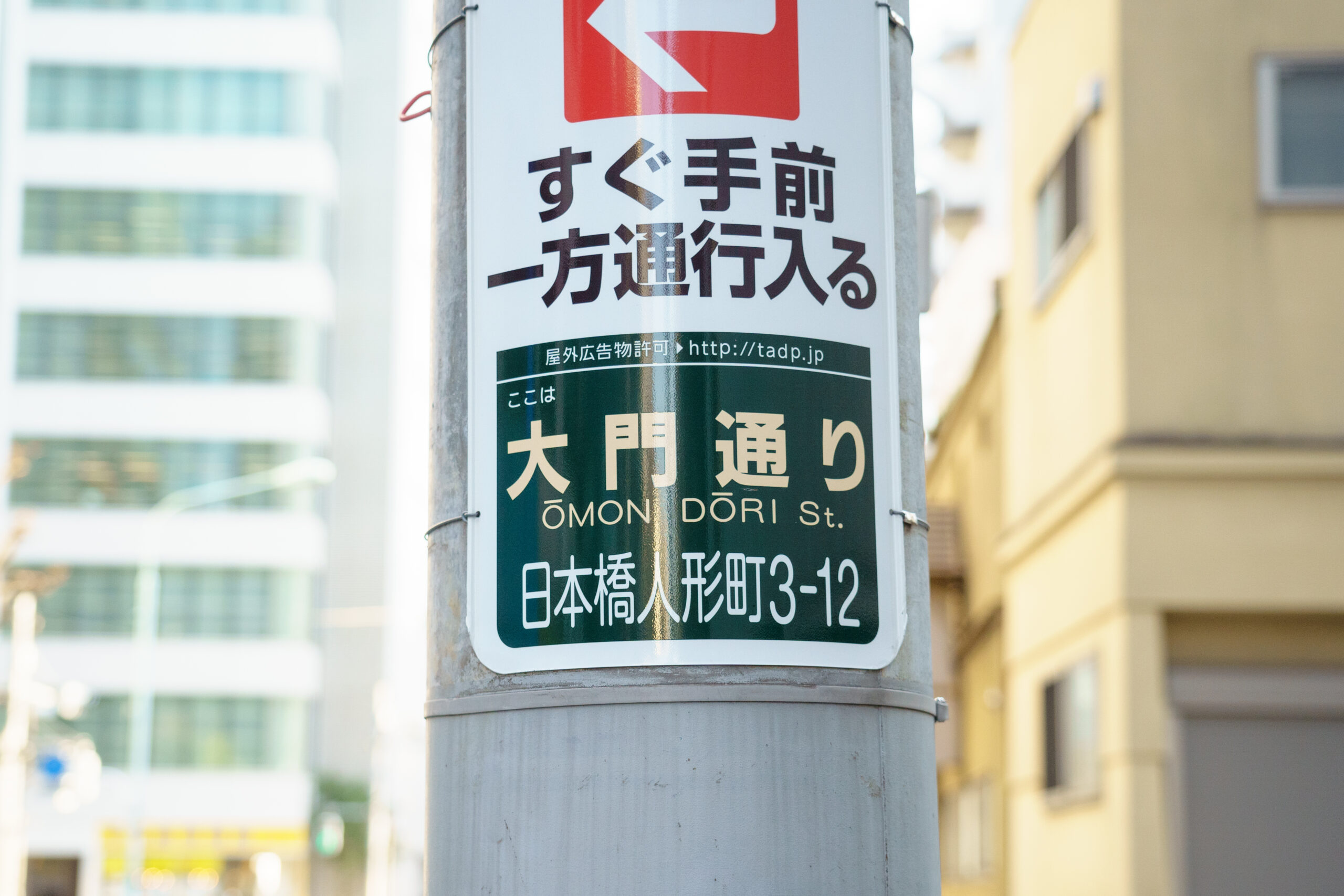
Stretching straight out from the Daimon is Daimon Street. In those days, teahouses lined up along the Daimon, and the system was such that those who were not very familiar with the area would be introduced to stores, and those with familiar female customers would meet up with them at the Daimon.”
There are no vestiges of Edo, but it still retains its name on the street.
The only remnants of the former Yoshiwara are the ruins of the former horidome.
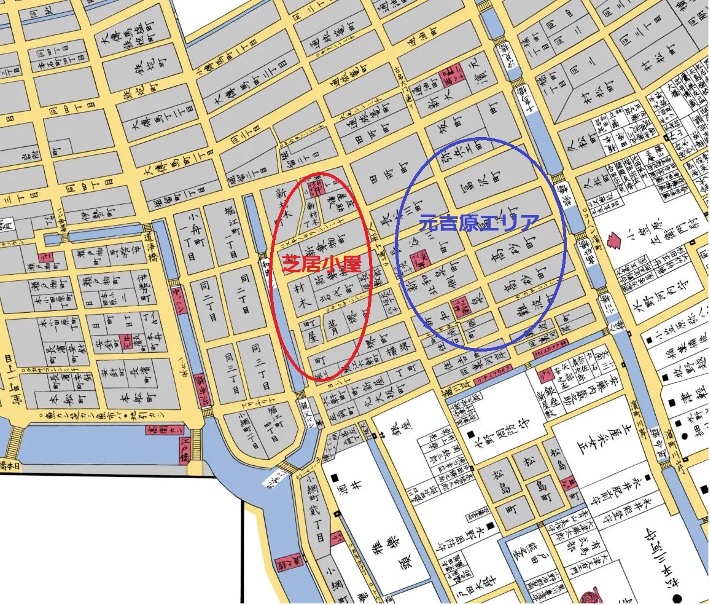
There were strict rules within Yoshiwara, and as often seen in dramas and movies, the girls were not allowed to go outside of Yoshiwara freely. And the town was located in such a way in the first place. Let us look again at an old map of the area around Moto-Yoshiwara.
It can be seen that two sides of the former Yoshiwara are surrounded by horidome. The large gate of the brothel was located between “Hasegawa-cho” and “Tomizawacho” on the north side. The horidome running diagonally from upper left to lower right on the right side of the map is the former “Hamachigawa River. Another horidome was built at the intersection of the two, blocking the passage to and from the outside. The two sides without the moat were surrounded by a wall. The former Hamachigawa River on the north side is now called “Hamachigawa Ryokudo” (Hamachigawa Greenway), and traces of the river are said to remain.
So what is now happening to Horidome, where the Hamachigawa River intersects with it?
That’s what we’re going to see!”
Mr. Hoshino leads us down Daimon-dori, past the Toei Asakusa Line, and about 2.5 blocks away, he asks us to stop. This was the climax of our walk on the old map!
Here we are.”
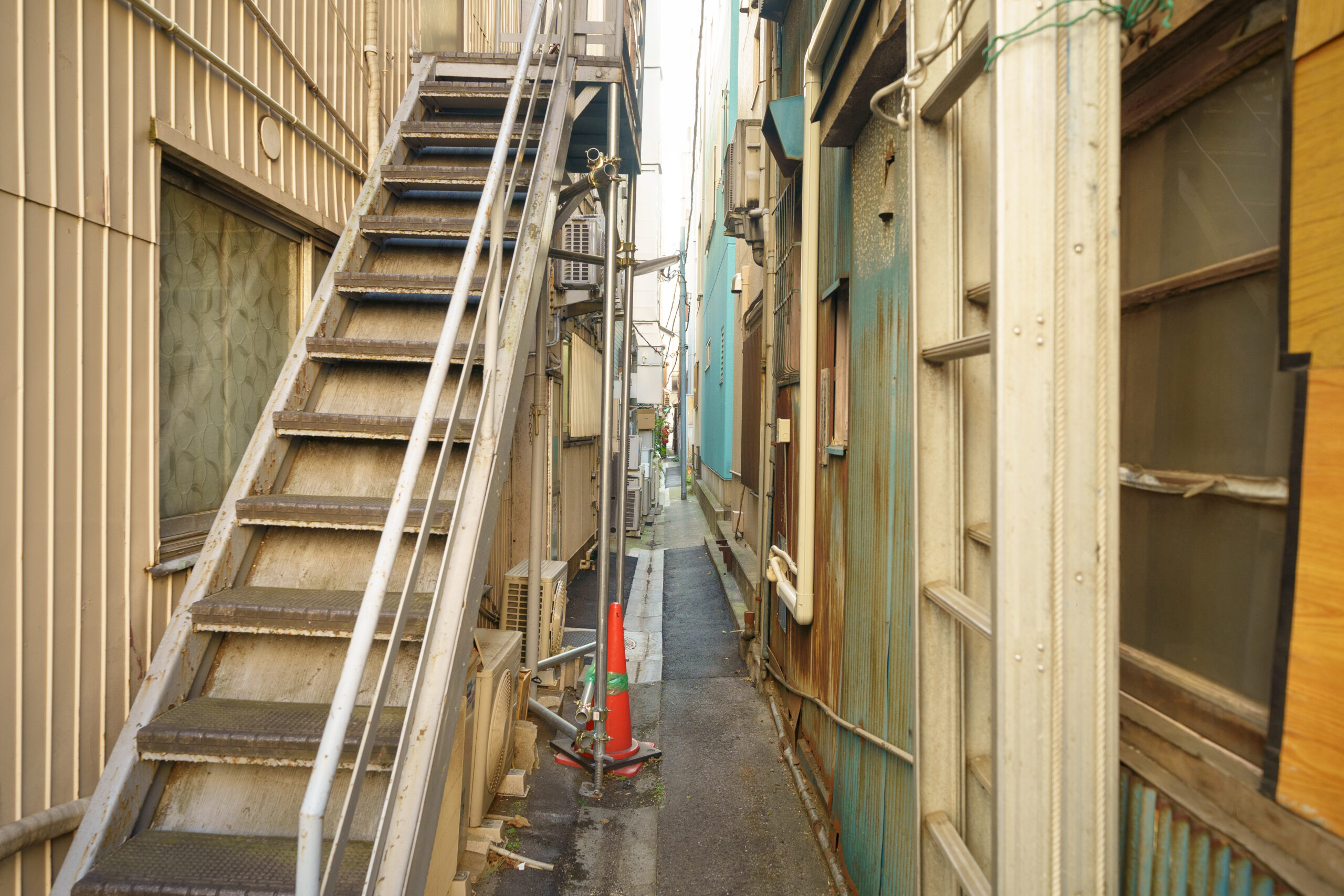
It was a narrow alley between buildings. The width of the alley was so narrow that we had to yield to each other when we tried to pass each other, but I guessed that only residents would pass through here.
After the great fire of Meireki Era in 1657, Yoshiwara moved to Asakusa. After that, the area became a townhouse where merchants lived, and it seems that many kamado (earthen kiln) makers lived in this neighborhood. This moat was called “hettekkashi. It seems that this is where they unloaded the kamado. The river must have been wider at that time. It is thought that after land reclamation, buildings were pushed out, and the narrow alleyway became this narrow.”
It is overwhelmingly plain. But perhaps the best part of old maps is that you can find history and stories in such ordinary alleys that you would pass by if you did not know about them.
If you want to get a feel of Ningyocho, visit temples, shrines and long-established shops!
Finally, since we have come all the way to Ningyocho, let’s take a look at a few “typical” places.
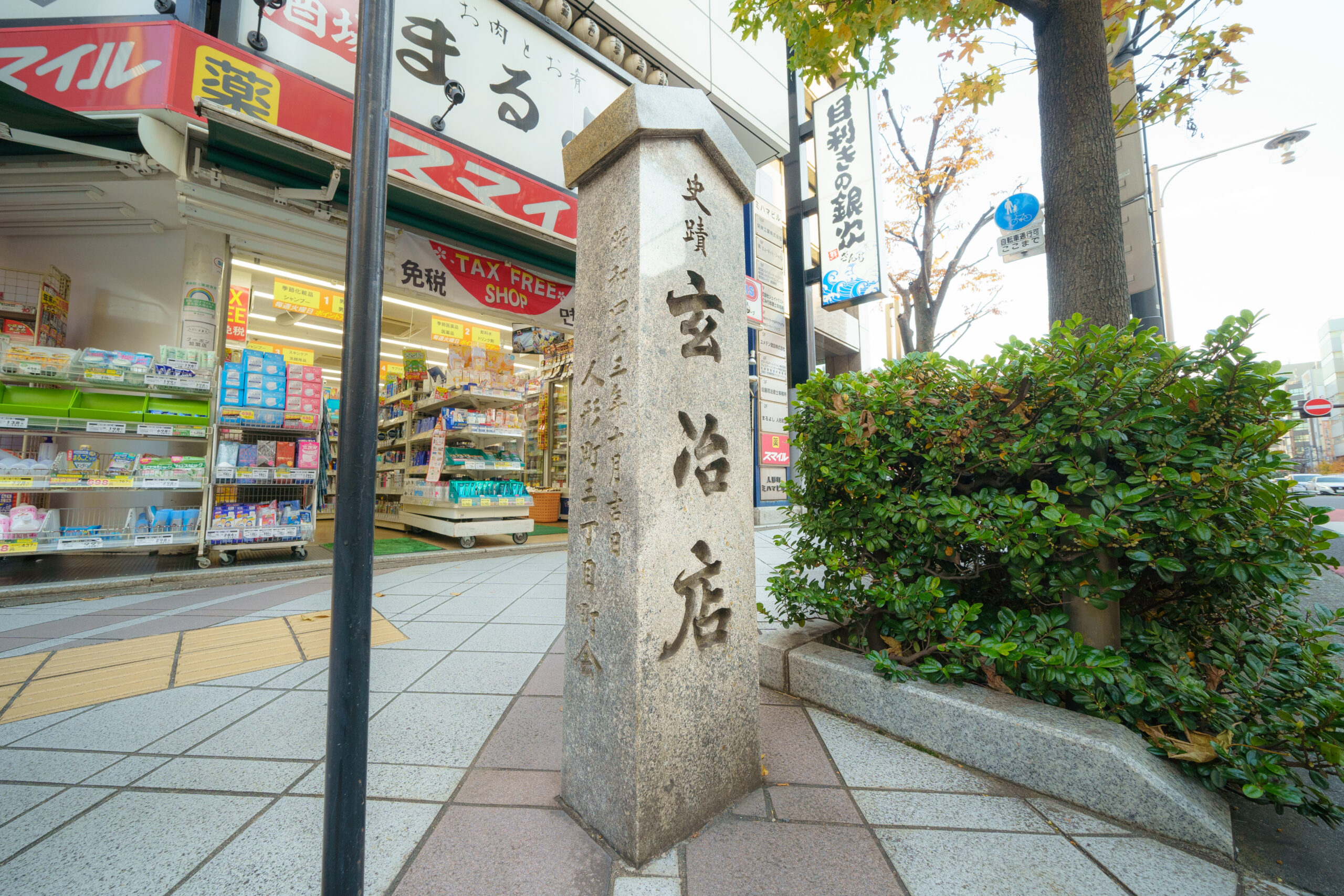
First is Genjiten.
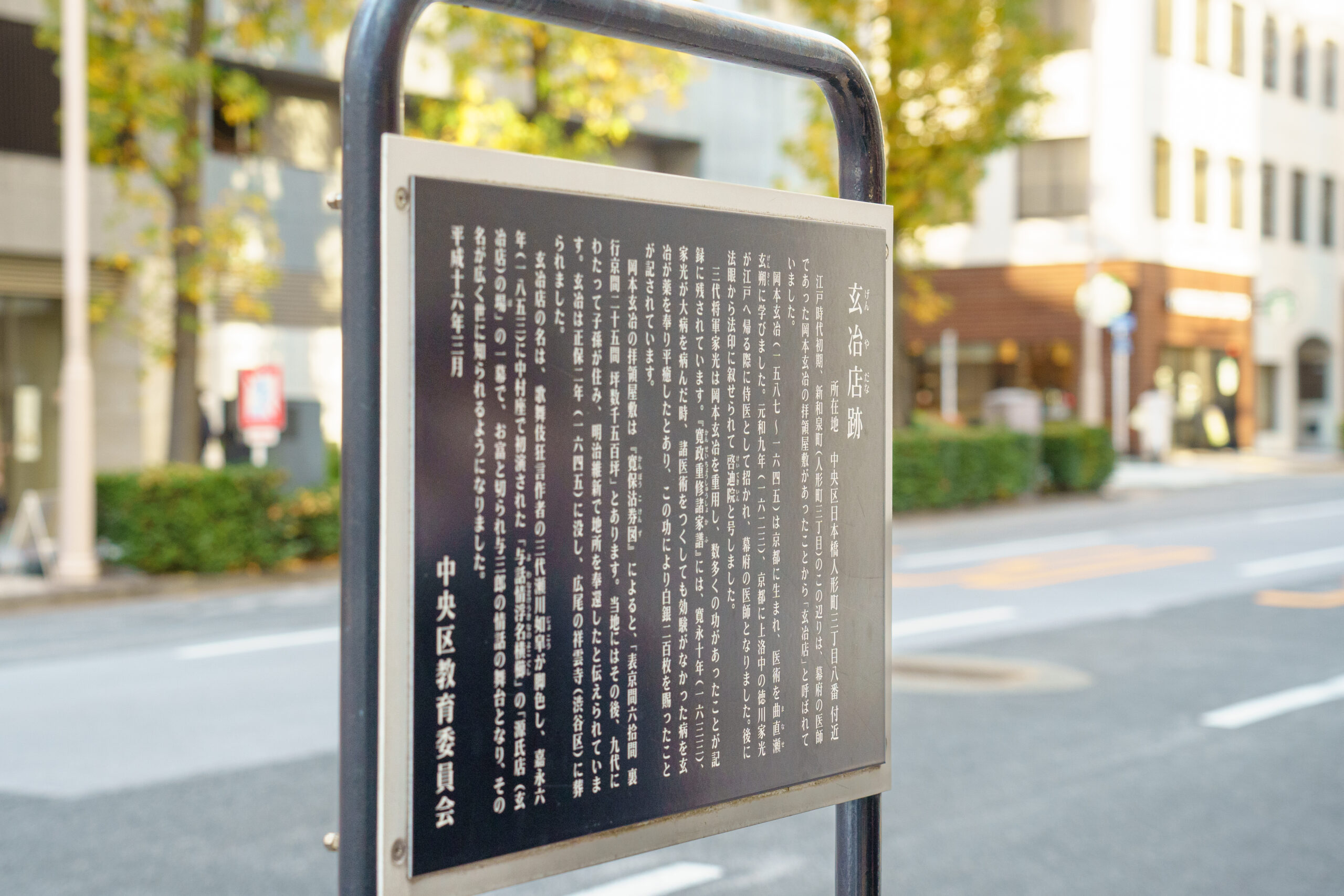
Part of what is now Ningyocho 3-chome, Chuo-ku, Tokyo, was commonly known as “Genjiten” in the Edo period.
A doctor named Okamoto Genji was highly valued by the shogunate for curing the smallpox of the third shogun, Iemitsu, and was given land in this area. Later, the townspeople came to live in the area, which was named after Genji.”
The name Genjiten was widely known in Edo, because the kabuki play “Yowanasake Ukiyo Yokogushi (A Story of Care and Love)” set here became a big hit. The story is that he reunites with an old woman in this town, whom he thought was dead after they were separated at the sea in Kisarazu. By the way, the woman’s name is “Otomi-san. This Kabuki play is based on Hachiro Kasuga’s hit song “Otomi-san” from the Showa era.
- The “Tachibana Inari” given by Genji Okamoto has been passed down through the generations, changing its location.
After the relocation of Moto-Yoshihara, this area became a thriving hanamachi (flower district) under the name of Yoshimachi, and although the name “Yoshimachi” was changed in 1977, geiko are still working here, and there are many places where you can enjoy the chic atmosphere of the olden days.
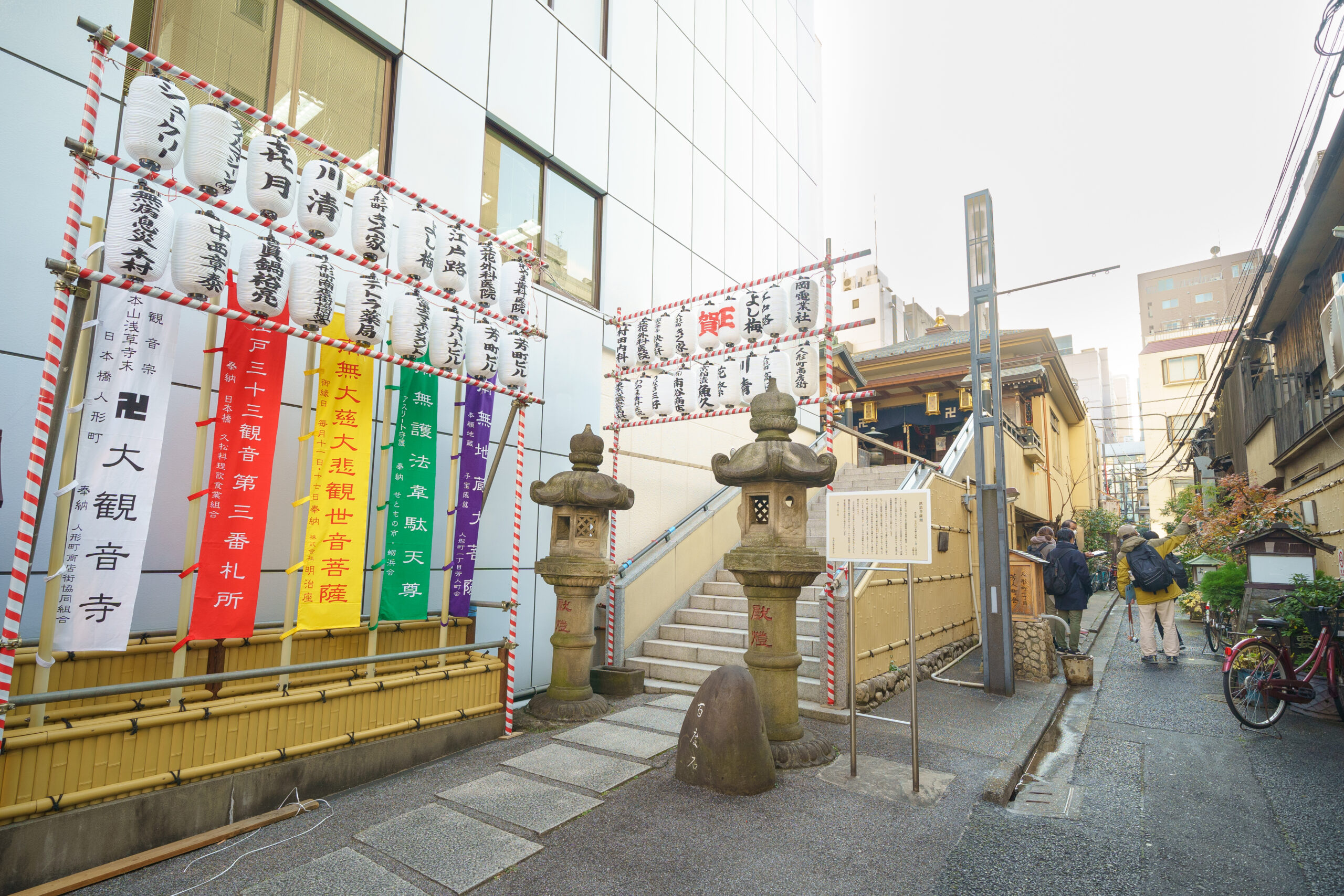
For example, there is the Daikanonji Temple in Ningyocho. The temple was built in 1940, and the main statue, an iron statue of Kannon, was originally enshrined at Shin-Shimizu Temple, built by Hojo Masako in the Kamakura period (1185-1333). 1.7m in height, the head only, can be seen on the 11th and 17th of each month.
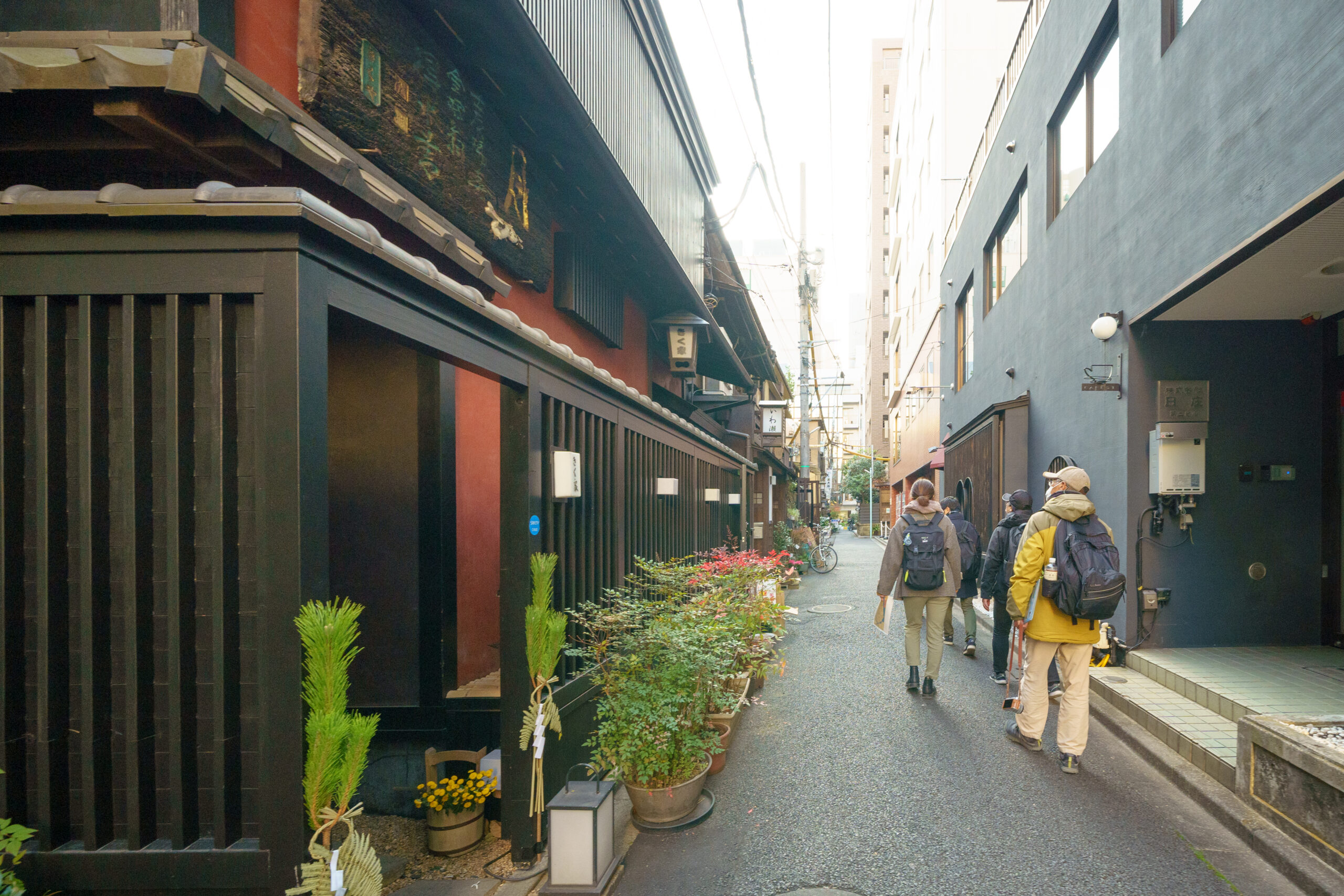
This neighborhood was spared from the Tokyo Air Raid and is lined with stores built in the early Showa period. Strolling through the area while gazing at the black walls of former ryotei (traditional Japanese restaurants) and bamboo fences, you will feel like you are in Ningyocho.
And speaking of “Ningyocho” mood, here it is.
Across “Amazake Yokocho” lined with old-fashioned specialty stores and stores with a nostalgic atmosphere, on the opposite corner is “Tamaeido Hikokuro,” a long-established Japanese confectionery shop.
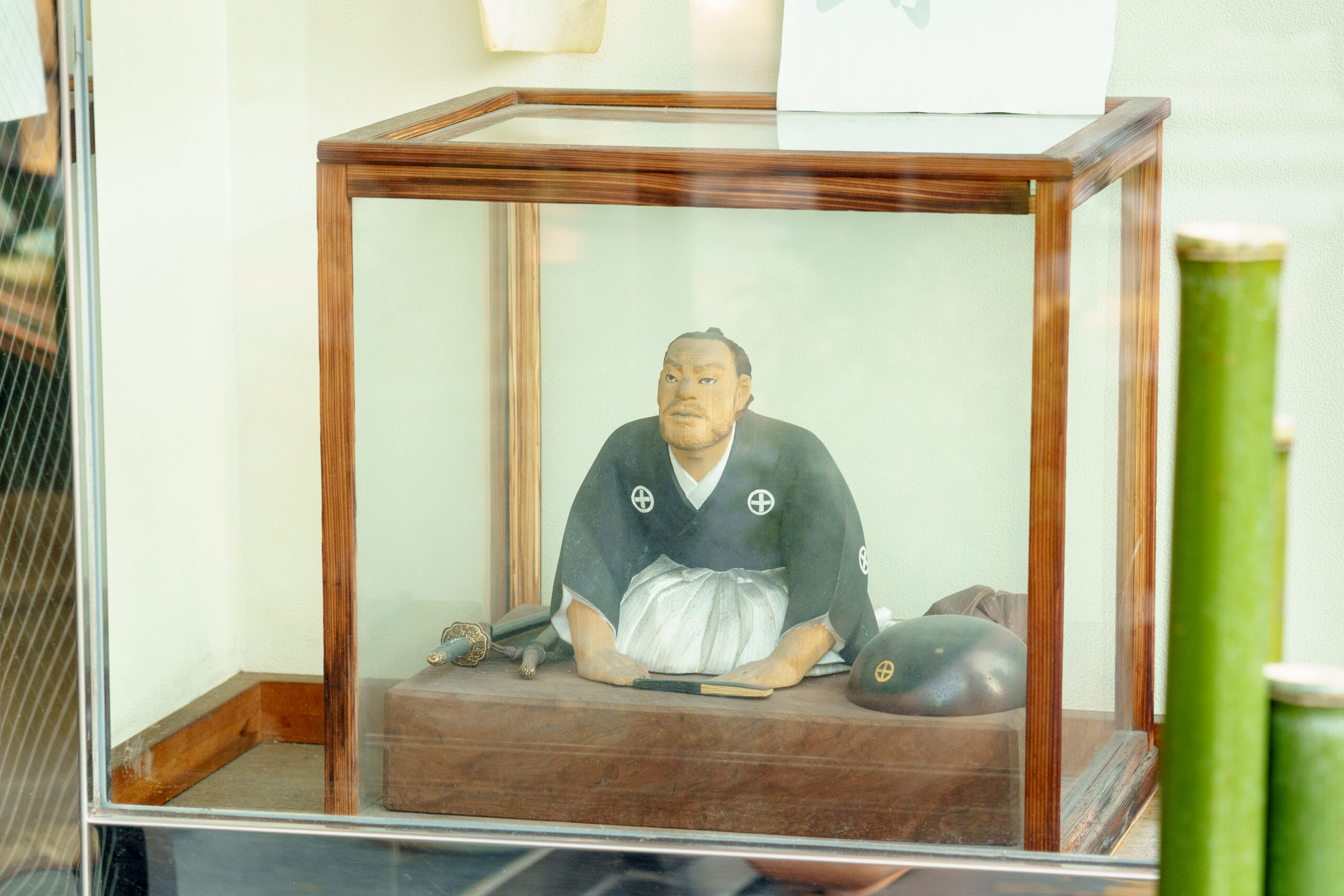
- Statue of Hikokuro Takayama in the show window of GYOKUEIDO HIKOKURO. He was a thinker known as one of the three eccentric figures of Kansei, and there is a similar statue of him on the Sanjo Ohashi Bridge in Kyoto.
The store was originally established in Kyoto.
The doll displayed in the eaves is Takayama Hikokuro. He was an emperor thinker at the end of the Edo period and is said to have been a pioneer of the Meiji Restoration. It is said that he stopped by when Gyokudo was running a tea store at the foot of Sanjo Ohashi Bridge in Kyoto and received the name Hikokuro.
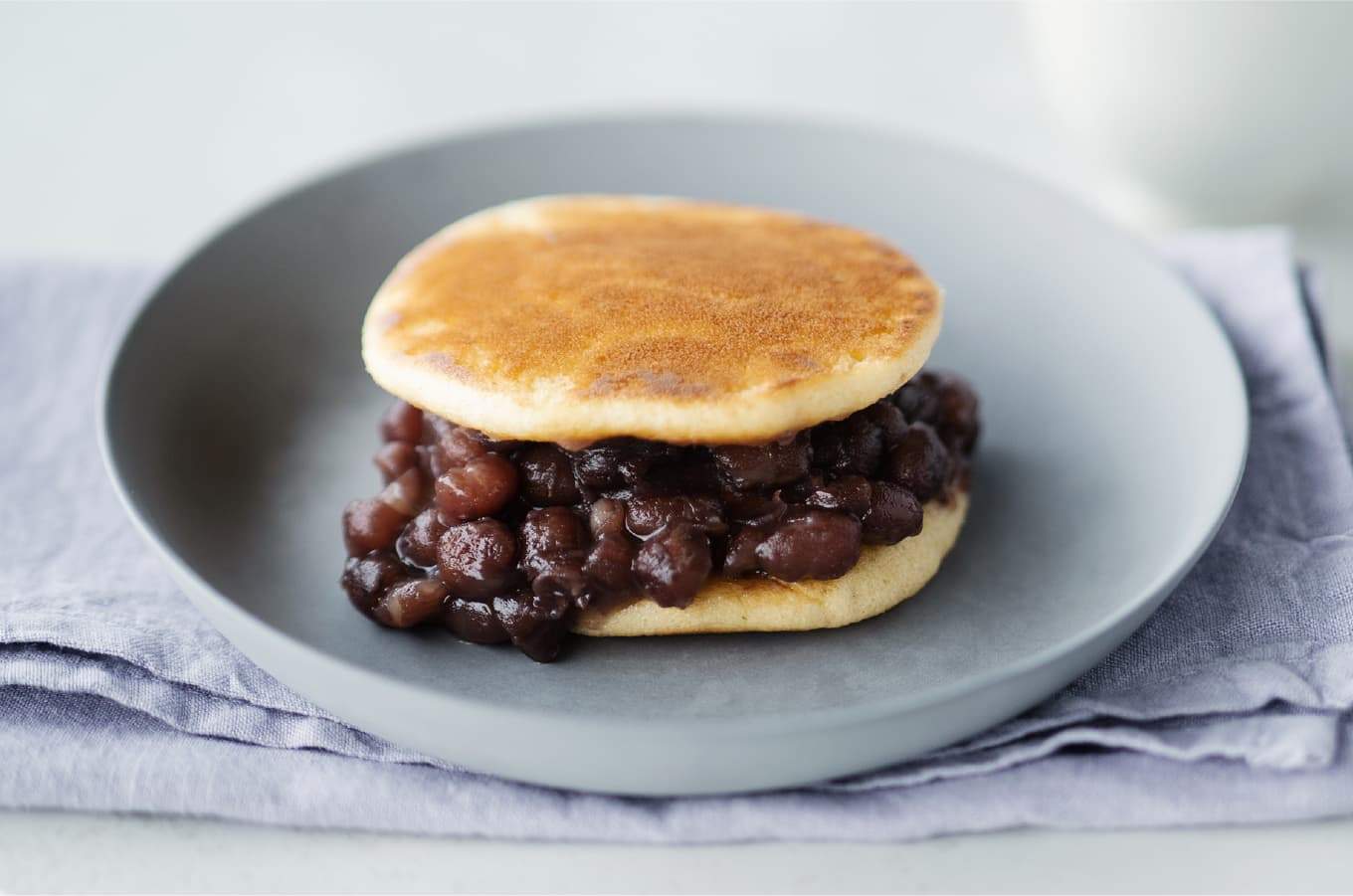
The store was established here in 1954. The “Torayaki” was created when the store opened in Tokyo, and is a gem with a fluffy, striped skin and a soft, textured sweet bean paste.
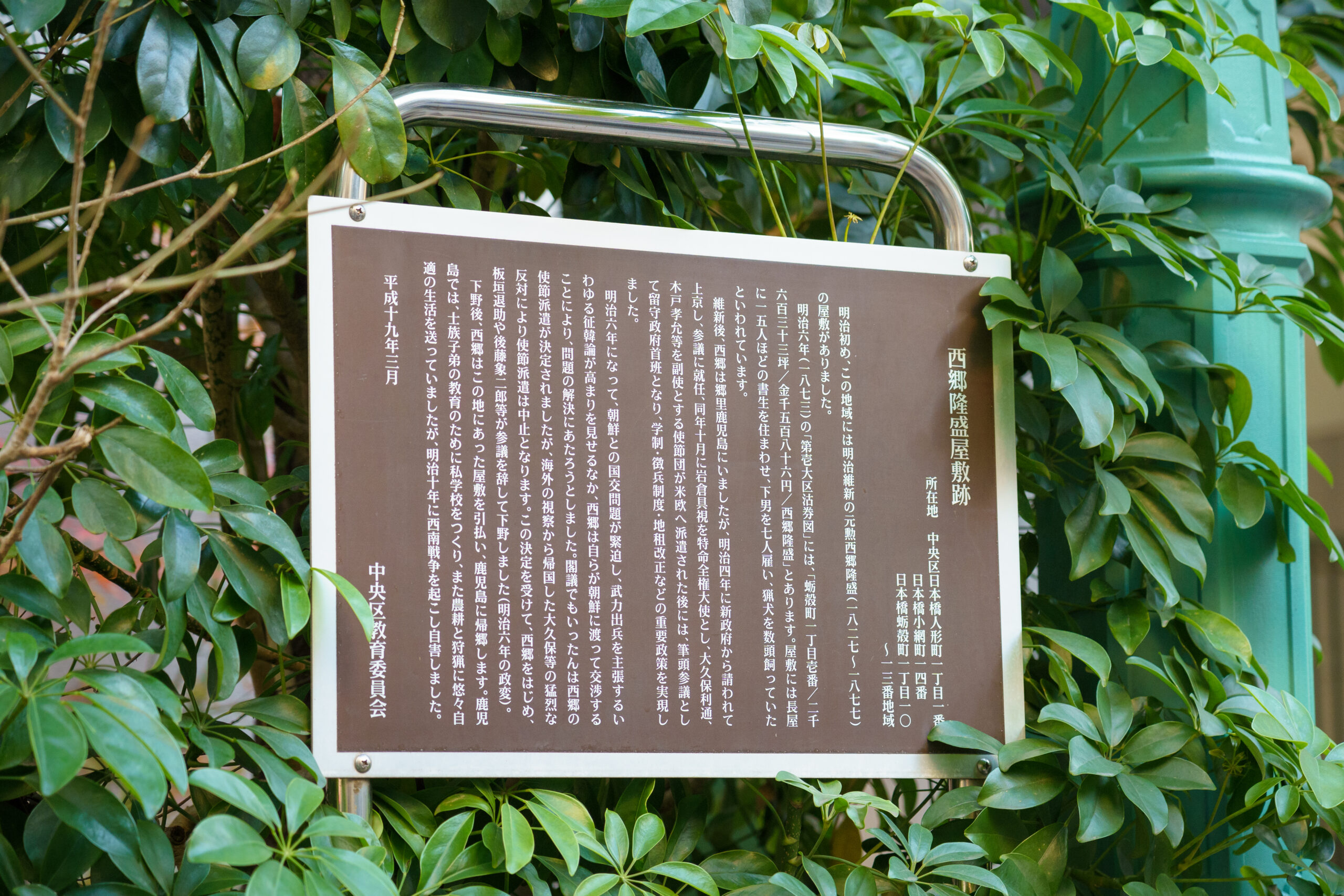
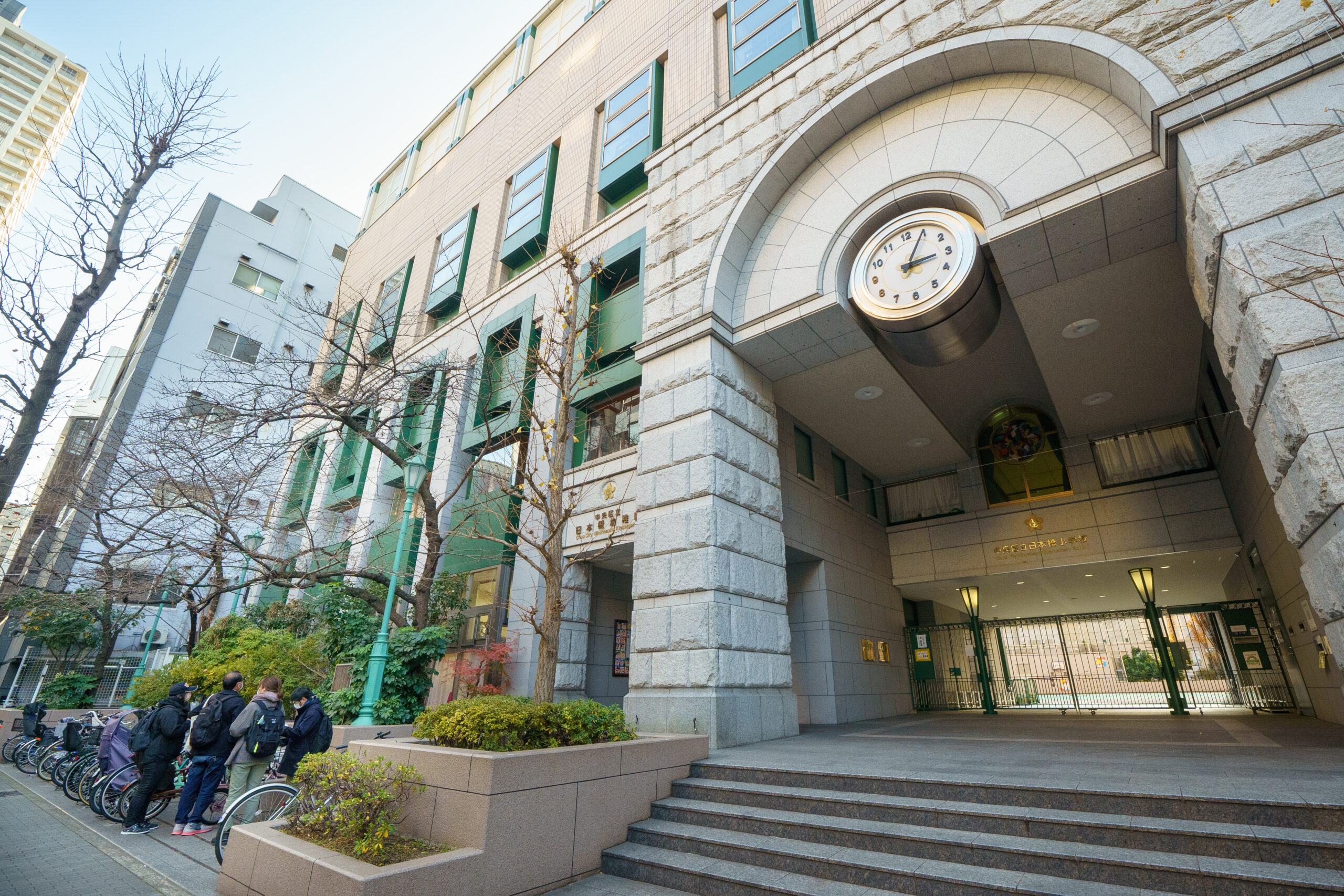
From here, you can go into Amazake Yokocho for shopping, eating, and drinking. You may be surprised to learn that the nearby Nihonbashi Elementary School is actually the former residence of Takamori Saigo.
You can also look for the remains of Junichiro Tanizaki’s birthplace (it’s in the neighborhood. (A clue is a shabu-shabu restaurant with the same last name.) It is fun to follow the old maps, and even if you don’t follow the old maps, it is still fun. We conclude our trip to the Ningyocho area.
Interview and text by Atsunori Takeda (Steam)
Photo by Satoshi Okubo
Supported by Walking Trip Ouensha