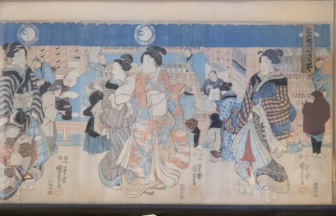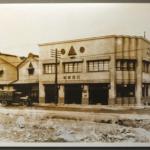
Ubukeya is a knife store specializing in kitchen knives, scissors, and hairpins. The ultimate “sharpening” that even makes a paper-cutting artist say, “It’s so sharp, I’m in trouble!

The Five Secret Secrets of Long-established BusinessesNihonbashi (bridge)kitchen knife(hair) tweezers

Bringing the best of Japan to the world, and the best of the world to Japan, agatajapan.

Japan is one of the few countries in the world where there are more than 33,000 long-established shops that have been in business for a hundred years. In this series of articles, we ask the owners of these shops about the “five secrets” that make them “long-established” shops. This time, we interviewed the owner of “Ubukeya,” a cutlery specialty store established in 1783, whose three main products are kitchen knives, scissors, and hair pluckers.

‘I’m just being serious, looking with my eyes and feeling with my fingers as well.’

What is the secret behind the sharpness of the blade that has wowed cooks, tailors, and even paper cutters?

The name of the store is based on the reputation of customers for being able to shave, cut, and pull off even a shaved head.

Kinnosuke was a very skilled craftsman. The blades he made were well known for their ability to shave, cut, and remove even ubunage, and this was the origin of the store’s name, Ubukeya.

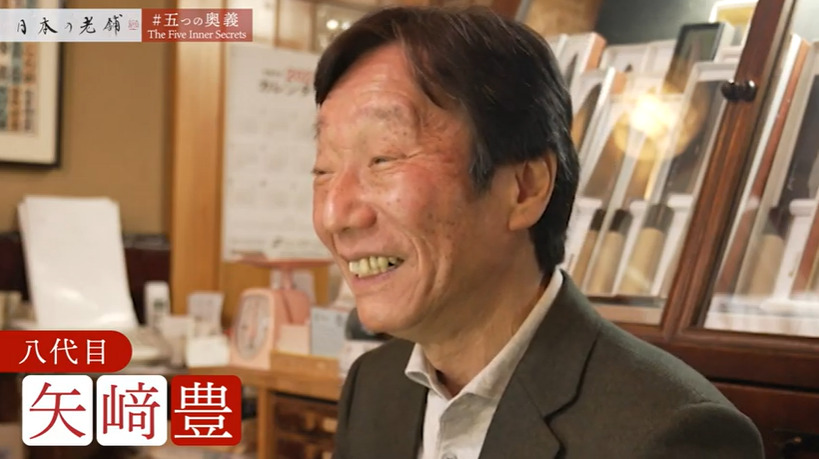
So says Ubukeya’s eighth generation owner, Yutaka Yazaki.

From the second generation onward, the store has taken the form of an “artisan merchant,” sharpening the blades made by the forging craftsmen in the store to ensure that they are in good cutting condition before selling them.

How would you describe your sharpness? Mr. Yazaki’s words are muddled as he smiles wryly at the question, “How would you describe your sharpness? He is a genuine Edokko, a person who does not talk about frivolous matters.

The knives sharpened by Mr. Yazaki are used by top chefs.

The Five Secret Secrets of Long-established Businesses No. 1: The sharpness of a knife is determined by the feeling of the fingertips.

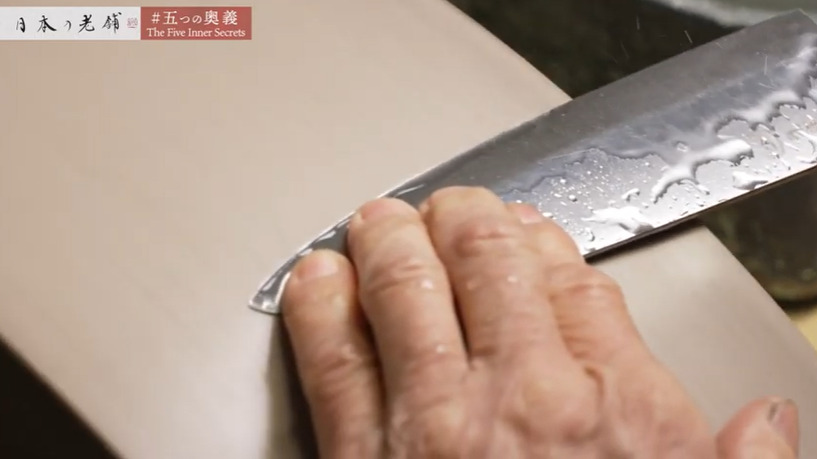
In the knife sharpening area, a large rotary whetstone spins in a circular motion. After “rough grinding” and “medium finishing” are performed here, fine adjustments are made by “hand sharpening.

The work being performed on this day was maintenance of kitchen knives for general household use. First of all, the knives with rough and rough edges are “Rough Grinding”. Rough grinding” adjusts for minor roughness and spills.

Mr. Yazaki places a kitchen knife on the spinning whetstone and sharpen it by holding the edge of the blade with the tip of his finger, making a jolting sound. He uses a lot of nerve to hold and grip the sharp blade directly with his fingers.

The next process is “medium finishing. Using only the feel of the fingertips, the surface grain is finished finely and neatly. The fingertips are touched repeatedly to straighten the edge of the blade.

Old shop Five profound secrets #2: Hair is the final check of sharpness

Finishing is done more carefully by “hand sharpening”. At this stage, we concentrate on sharpening the cutting edge more finely.

The double-edged blade is sharpened evenly on both sides by changing hands, a method that has been handed down at UBUKEYA from generation to generation. Although there are many companies that use only one hand for sharpening, it is said that the bite of the blade is different when the sharpening hand is changed.

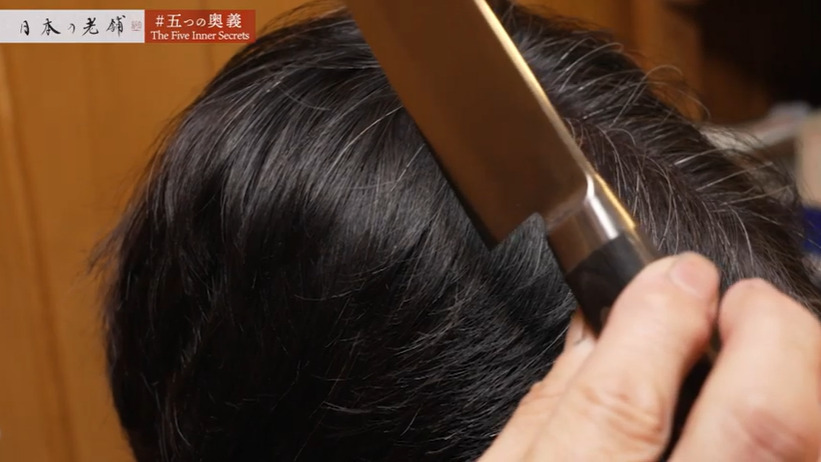
Finally, the sharpness of the blade is checked. Mr. Yazaki lightly touches the sharpened blade against his own hair. If the weight of the knife itself allows the blade to rest perfectly on the hair, it is proof that the blade has been sharpened properly. If the blade tip is not perfectly sharpened, it will not ride on the hair well. At this point, if you press down too hard, the hair will be cut, so it is important to “feel” the weight of the knife alone. This is the way to check the sharpness of a knife, which has been used at Ubukeya for about 230 years.

The five secrets of the long-established shop Part 3: Cutting scissors that can be cut only by the weight of the blade.

Western-style scissors are widely purchased by both the general public and tailors.

It is a matter of course that any scissors can be cut to a certain degree if you move the scissors with force. However, UBUKEYA’s scissors are different from other scissors in that they can be easily cut with just the weight of the blade.

An oddity is the “special paper-cutting scissors” used by paper-cutting performers at yoses.

It’s so sharp, it can cut a piece of paper one millimeter wide into five or six more pieces. It’s so sharp that it really cuts too much.

The sharpness that makes masters awestruck is born from expert skill. The part where two blades rub against each other is thoroughly fine-tuned by eye contact and fingertip touch.

Long-established shop, 5 profound secrets, part 4: The technique of grinding 3mm wide hairpins with exquisite degree of precision.

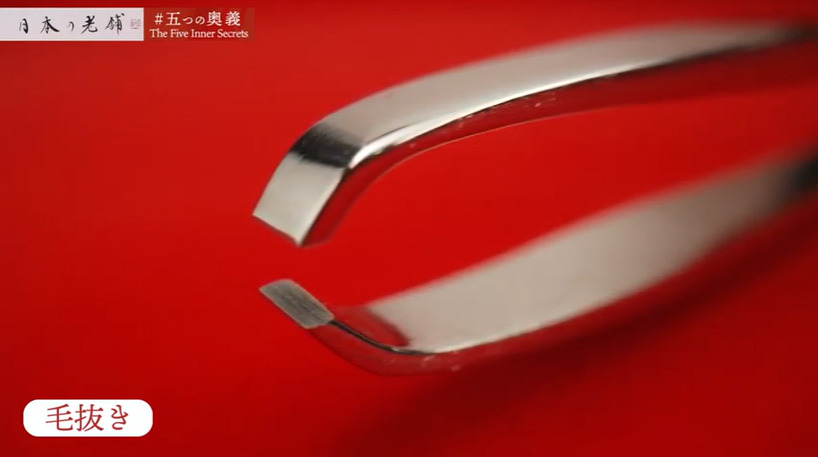
This 3mm wide hair plunger is ideal for trimming eyebrows. The tip must be sharpened to the perfect degree so that it does not slip and break when fine hairs are pinched.

The abrasive is sandwiched between the hair pluckers and rubbed together with fingers to make it flat. Mr. Yazaki rubs the hair pluckers together while watching with his eyes and feeling with his fingers. He also uses a whetstone to make fine adjustments.

Shine the sharpened tip under a light and polish until no light leaks through. When no light leaks out, it is proof that the tip is properly aligned.

The Five Secret Secrets of Long-established Businesses #5: Keep doing what you do best, every day.

Mr. Yazaki says that the reason for the longevity of long-established shops is that they have been doing things properly and diligently day in and day out.

I don’t really feel that I am obsessed with it, because I take it for granted. I know that many things happen in each era, but if you work hard and diligently every day, you will find that history follows before you know it. That’s what I tell my sons and daughters.

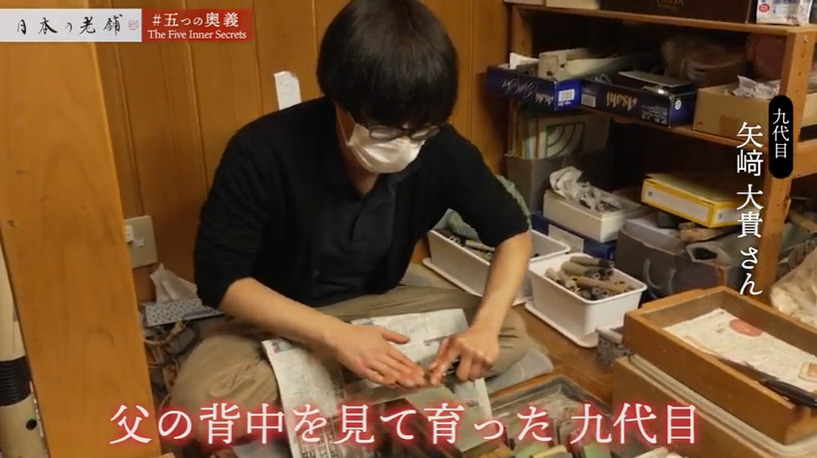
The ninth generation, Hirotaka Yazaki, who grew up watching his father’s back, also works quietly sharpening blades at the same place, carrying on the tradition of “diligence and hard work.

What is the mission of a long-established company?

Mr. Yazaki said that the mission of a long-established company is to “always be a cutlery shop and an artisan merchant, no matter how society changes in the future.

Mr. Yazaki’s words, “We will continue to provide products that can be purchased with confidence,” are an unwavering promise to customers, made possible by the trust he has built up over the years.


Starmark Corporation

Bringing the best of Japan to the world Bringing the best of the world to Japan Bringing the best of tradition to the present Bringing the best of the present to tradition

The video of “The Five Deep Secrets: Ubukeya Edition” can be viewed athere (place close to the speaker or where the speaker is)from (e.g. time, place, numerical quantity)

新着・おすすめ情報

  1. small coloured sugar candy covered in bulges

  2. Hakata doll

  3. Manners for Late-Summer Greeting Cards in 2023: Common Sense to Know and Sample Cards for Different Recipients

  4. Inari-zushi

  5. Imado Shrine (Asakusa, Tokyo)

  6. Edo-style Confectioner Nihonbashi Nagato

  7. Ikegamihonmonji Temple

  8. Funabashiya Kameido Tenjin-mae Honten

  9. 【第22回】お寺とお蕎麦の切っても切れぬ関係

  10. black formal kimono with designs along the bottom of the skirt worn by married women on ceremonial occasions

  11. short sword

  12. Inari Onio Shrine (Shinjuku, Tokyo)

  13. Kuroeya (department store)

  14. November was the month in the Edo period when the ban on monkfish was lifted.

  15. Atago Shrine