

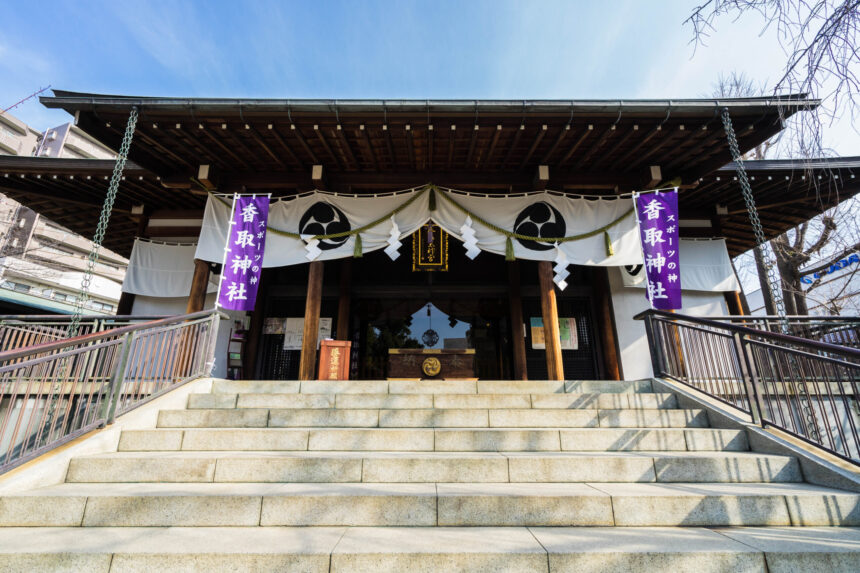
Katori Shrine, Kameido, Tokyo(Kameido Katori Jinja Shurine)
god of sportsarrow with feathers that curve to the left (the first of two arrows to be fired)walkFujiwara no Kamatari
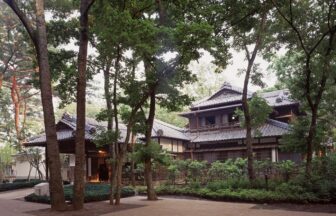
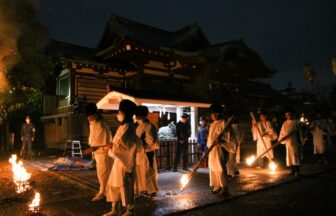
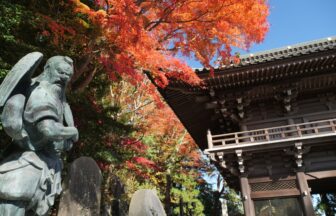
It is one of about 400 Katori shrines, with Katori Jingu Shrine in Chiba Prefecture as its head shrine. The origin of this shrine is that Kamatari Fujiwara prayed for peace on his journey to the east and sought divine blessings at this place. The deity is Kyotsunushi, who, together with Takemikazuchi Ookami, is the ancestral deity of the warlords of the Izumo region, as he was the one who accomplished the handing over of the Izumo Kingdom to the Japanese. During the Taira-no-Masakado rebellion, Tawara Touda Hidesato, an envoy of the rebellion, prayed for victory in the war and successfully ended the rebellion, so he dedicated a bow and arrow as an offering of gratitude to the gods. The bow and arrow were named “Kacho-ya,” and the Kacho-ya Festival is still held on May 5. Later, the deity was revered by military commanders and martial artists alike, and through derivation from this, the deity has come to be worshipped by those who wish for victory in games and competitions, and is now widely known as the “God of Sports”.
Spot OutlineOutline
| address (e.g. of house) | 3-57-22 Kameido, Koto-ku, Tokyo |
|---|---|
| Access | 10 minutes from JR Kameido Station, 10 minutes from Komurai Station on the Tobu Line |
| phone | 03-3684-2813 |
| Business Hours | 9:00~17:00 |
| External Links | |
| Founding and opening of business | 665 (4th year of Emperor Tenchi’s reign) |