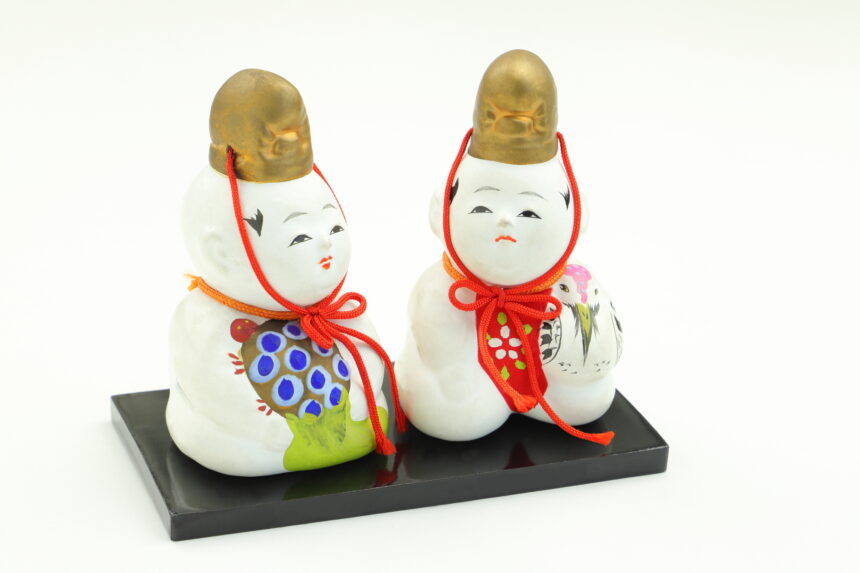
Gosho Ningyo” was a gift to the Imperial Palace. Also known as “Hai Hai” and “White Meat Dolls.

puppet

The “Gosho doll” was a gift to the Imperial Palace. Also known as “Hai Hai” and “White Meat Dolls.(Goshoningyo)

traditional craft

The dolls were produced in Kyoto in the mid-Edo period as ornamental dolls, and are characterized by their white skin, large heads, and rounded bodies. They are characterized by their white skin, large heads, and rounded bodies. They are usually dressed naked, and wear a belly girdle or a straw robe (warawa-no-shi, a garment usually worn by underage court nobles). They often wear a belly girdle, a straw robe, or an eboshi (a hat worn by underage boys of the nobility). The name “hiragana” comes from the fact that hiragana were used as gifts for courtly celebrations, as gifts from the imperial family or court nobles to feudal lords, or as offerings to the imperial palace. They are also known as “hai hai,” “souvenir dolls,” “Ouchi dolls,” “white meat dolls,” “Izukura dolls,” and so on.


新着・おすすめ情報

  1. What is kaiseki ryori? What is the difference between kaiseki ryori and kaiseki cuisine, and which is eaten at a tea ceremony?

  2. 吉原神社(東京・三ノ輪)

  3. lined kimono

  4. Seppuku monaka” and “Keikyuu monaka” …… “Shinshodou” produces wagashi that are both humorous and delicious.

  5. Ruins of Suzugamori Penitentiary (Omori, Tokyo)

  6. Eating Doze soup every day to check the taste. The current owner of Komagata Dozeu, a famous restaurant that has been in business since the Edo period, demonstrates his commitment to preserving the taste of his products.

  7. Meaning of “Unaju” and “Unadon”. What’s the difference?

  8. single pattern on the entirety of a garment

  9. colored kimono

  10. underskirt (half-slip), worn under kimono

  11. one-piece sash

  12. Bodhi yeast mash starter

  13. sake brewed without addition of saccharides and no more than 120 litres of seed alcohol per tonne

  14. Atago Shrine

  15. Oiwa Inari Tamiya Shrine