

Adult Manners CourseSeasonal way of life
What is Dragon Boat Festival?
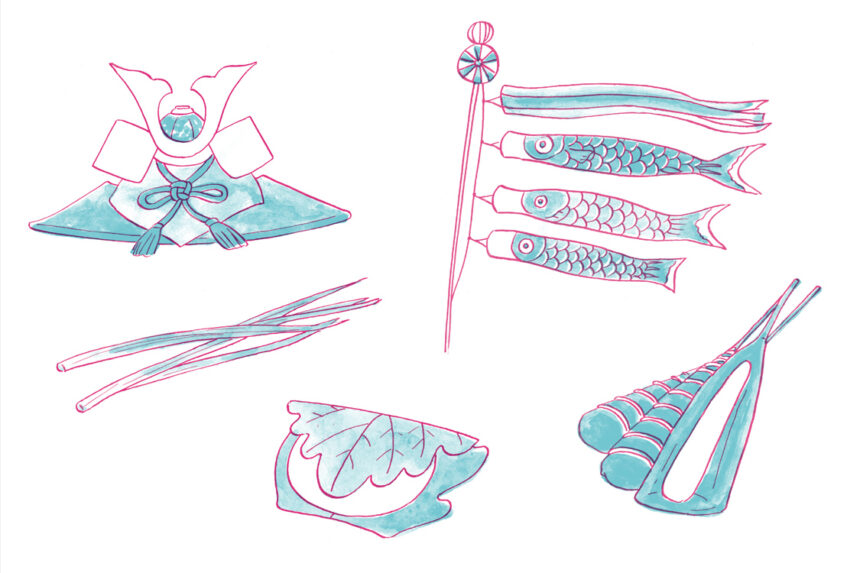
Children’s Day (national holiday; May 5th)bathwater with iris petalscake wrapped in bamboo leavesBoys’ May Festival dollsbaby’s first annual festivalrice cakes wrapped in oak leavesBoy’s Day celebration (May 5th)carp streamerMay 5
May 5 is now a national holiday called Children’s Day, but it was originally Tango-no Sekku. Knowing the origin and meaning of Tango-no Sekku, you will be able to spend Tango-no Sekku with a more appreciative feeling. In addition, we asked manner consultant Ms. Hiroko Nishide to elaborate on the manners when celebrating the first Boys’ Festival and when invited to a celebration.
What is the origin of Dragon Boat Festival?
May 5, Dragon Boat Festival, is now also known as Children’s Day. What is the meaning of Dragon Boat Festival?
The character for “Tango” means “beginning. The first day of the month is called “Tango,” and it is one of the five seasonal festivals. In ancient China, May was considered to be the month of abstinence, and events were held to ward off evil spirits and evil spirits on May 5th, which is the month of the number 5. To ward off evil spirits, “shobuyu” or “shobu-shu” was used.
Incidentally, Sekku is a day that marks a seasonal turning point in traditional annual events, based on a calendar that originated from the ancient Chinese theory of Yin-Yang and the five elements and took root in Japan. There are the following five seasonal festivals in a year.
Why did Tango-no Sekku, which came from China, become a day for boys in Japan?
In the Kamakura period (1185-1333), it was called “Shobu no Sekku” (“Boys’ Day”) because the sound of “Shobu” is the same as “Shobu,” which means to honor the martial arts, and because the leaves of the iris resemble a sword. The leaves of the iris resemble swords, and so it is said that the festival became a time to celebrate the growth of boys and pray for their health. On the other hand, Children’s Day is also on May 5, but it is a holiday designated by the Law Concerning Japanese Holidays. While Tango-no Sekku is an event to celebrate boys, the purpose of Children’s Day is to “respect children’s character, promote their happiness, and give thanks to their mothers. It is good to remember this as a day to thank not only children but also their mothers.
The meaning of decorating Koinobori and May dolls, and points to keep in mind when decorating them
Families with boys often put up carp streamers and decorate them with armor and helmets on Boys’ Day, but what are the meanings of these decorations?
There are various theories, but the carp streamer is named after the legend “Noborinmon,” which tells that a carp that climbs up a rapid waterfall called “Longmen” in the upper reaches of the Yellow River in China will become a dragon. It is said that the carp streamers were first erected by townspeople in Edo (Tokyo) to pray that boys would grow up to be as strong and vigorous as the carp, and that they would succeed in life. The custom of displaying armor and helmets for May dolls originated in samurai society. Armor helmets are a symbol of protection for life and are meant to protect boys from accidents and disasters”.
There are also some things you should know about how to display them.
Koinobori and Gogatsu Ningyo should be displayed from the first half of April to the middle of April on Oyasu or Tomohiki, so that they will not be displayed overnight. Then, leave them as they are during the month of May and enjoy decorating them. However, the way of decorating and the types of Gogatsu dolls vary from region to region, so please follow the rules of your region.
By the way, who presents the Koinobori and Gogatsu dolls on Hatsukusetsu?
It depends on the region and the customs among relatives, but it seems that Koinobori and Gogatsu Ningyo are often prepared by the mother’s side of the family on the occasion of Hatsusekku. It is said that this is because in the old days, the parents on the bride’s side visited their daughters and granddaughters with congratulatory gifts, since they did not have many opportunities to see their daughters and granddaughters after they got married. These days, however, it is a case-by-case basis, with both grandparents giving gifts or preparing their own gifts. What is important to note is to make sure that the same items are not battered. Since there are also size and doll preferences, it is important to consult with both parents in advance to share and confirm information and communicate with each other.”
Why do we take a shobuyu on Dragon Boat Festival?
On Dragon Boat Festival, there is also the custom of soaking in shobuyu (iris bath).
Dragon Boat Festival is the season when irises are in bloom. Iris has a strong detoxifying effect, stimulates blood circulation, and relieves lumbago and neuralgia. Iris also have a pleasant fragrance, which is said to dispel evil spirits and remove bad luck. For this reason, people used to bathe their children with irises in the bathtub to pray for their good health and well-being.
Not only for children, it is also recommended to enjoy a shobuyu (iris bath) on May 5 to pray for good health for yourself and your family.
What are the origins of Kashiwa Mochi and Chimaki, foods for Dragon Boat Festival?
Speaking of foods for Dragon Boat Festival, the most common foods are Kashiwa Mochi (rice cake with sweetened oak leaves) in eastern Japan and Chimaki (sweetened rice cake with sweetened oak leaves) in western Japan. What is the origin of each?
Kashiwa Mochi was born in the Edo period (1603-1867), and its leaves grow young and then the old leaves fall off. In other words, the old leaves do not fall off until new leaves emerge, which means that the parents exist in the world until a child is born, and it is considered a good omen that “there will be no successor. Therefore, it is eaten on Dragon Boat Festival to wish for the prosperity of one’s offspring. Chimaki, on the other hand, is said to have originated as an offering on May 5, the anniversary of the death of the Chinese poet Kusuhara.
Since chimaki is a good-luck food, why not try both during Tango no Sekku?
Who do you invite to the first Doll’s Festival celebration? What about food and returns?
Who should be invited to the first Doll’s Festival celebration and what kind of food should be prepared?
Many people invite grandparents and others to a festive meal for the first Doll’s Festival. The dishes include Kashiwa Mochi in the Kanto region and Chimaki in the Kansai region, as well as yellowtail and tuna, which are known as “fish of success,” and eel and bonito, which is pronounced “Katsuo” (meaning “winner” in Japanese), to “make your life go up the eel ladder, Bamboo shoots, which are characterized by their “straight growth,” are also considered auspicious foods. Cakes and chirashizushi shaped like kabuto (samurai helmets) and koinobori (carp streamers) also add to the festive atmosphere. Of course, carp streamers and May dolls should also be displayed.
Another concern is how to return the congratulatory gifts received.
When you receive a gift of congratulatory gifts, you should express your gratitude within three days if possible. Writing a thank-you note is the most polite way to do so, but these days, a phone call, e-mail, or SNS message will do. It is important to express your gratitude as soon as possible. Then, send the gift within one month after the festive season. The gift should be wrapped with a bow-tied mizuhiki (a traditional Japanese paper wrapper), with the inscription “uchishukui” (a gift for the child’s birthday) and the child’s name. The amount of the gift should be about half to one-third of the value of the gift received. Since there are regional differences and preferences in the amount of gifts for a private celebration, it is important to consider the recipient when choosing a gift. Practical items such as red and white towels are popular as a way to celebrate. A plate or clock with the year printed on it is also a nice commemorative gift. It is best to refrain from giving food as there may be dietary restrictions or allergies. Of course, this does not apply if you know the recipient’s preferences.
We would like everyone to enjoy the celebration together, but there must be times when it is not possible to hold the celebration on May 5 due to conflicts.
The Dragon Boat Festival is generally celebrated on the day of May 5. However, there may be times when it is not possible to hold the celebration because the family is not able to be together on that day. In such cases, it is fine to celebrate on a day that is convenient for everyone.
Manners of the celebrant: What is the gift and market price for the celebration?
So what should you do if you are in a position to celebrate the first festive season? If you are celebrating your grandchild’s first Dolls’ Festival from the grandparents’ point of view, it is important to discuss and decide between both families these days.
In the past, it was common for the mother’s side of the family to provide the carp streamers and May dolls, but recently there are more and more cases where both sides of the family split the cost 50-50, so it is important to talk about it and make a decision.
In addition, when purchasing Koi Noboris and May dolls, it is common to prepare them so that they arrive at home by early March to mid-April, he says.
What about celebrating your own nephew or niece’s first Dolls’ Festival?
In the case of nephews, nieces, or relatives, it is customary to wrap a congratulatory gift of 5,000 to 10,000 yen. If you wish to put a noshi (gift wrapping paper) on the gift, it should be red and white with a bow knot, and the inscription on the front should read “Goshu (congratulations) on the first Doll’s Festival”. However, there are no detailed rules, since the celebration should be based on feelings first and foremost.
The most important thing is to communicate with the recipient. Since it is a celebration, we want to make it an opportunity for both parties to enjoy the celebration in a pleasant way.
Enjoy the customs handed down in the season of dazzling fresh greenery.
This is the time of year when young leaves are growing rapidly, and it is the perfect time to pray for the growth of children. It is a time to think about the future, of course, but it is also an easy way to take in the pleasures of soaking in a shoubu bath and tasting kashiwa-mochi and chimaki, and seeing carp streamers in the sky will bring a sense of peacefulness to your heart. It would be wonderful if we could enjoy our daily life with such a relaxed mind.
Interview and text by Yoshiko Tezuka
Illustrations by Tomoko Shinozuka
Hiroko Nishidethree
We spoke with…
Manner consultant. He has taught manners to actors, athletes, and celebrities for NHK historical dramas, movies, and commercials, and has also covered the manners of the Imperial Family. She has also supervised and written more than 100 books, which have sold more than 1 million copies. The know-how that Ms. Nishide imparts can be easily incorporated into daily life and work, and is popular for its highly convincing content.
For more information about Ms. Hiroko Nishide, please visitOfficial Siteand,InstagramThe information is updated as needed on the following website.