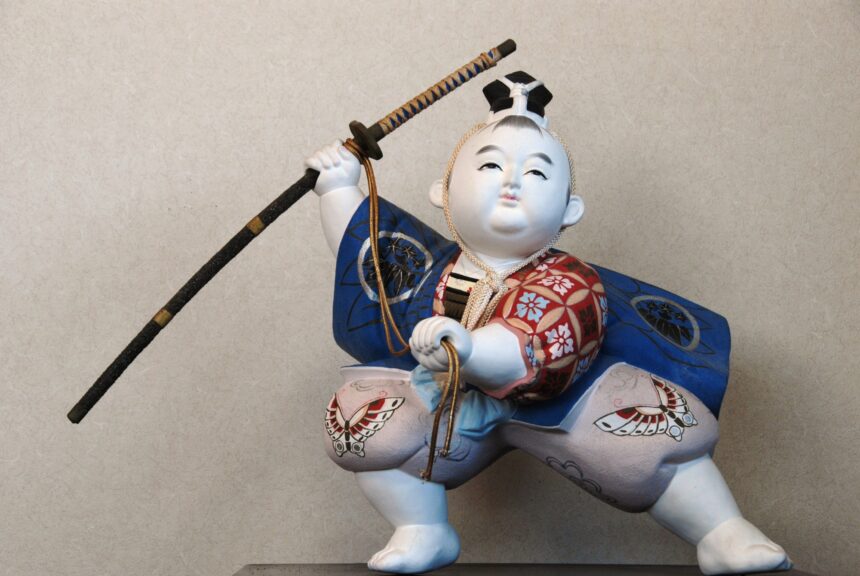
Hakata doll

puppet

Hakata doll(Hakata Ningyo / hakataningyo)

traditional craft

These dolls are made in the Hakata area of Fukuoka Prefecture and are finished by coloring unglazed clay. Their subjects range from Ukiyoe, Noh, and Kabuki to modern customs. They originated in the Warring States Period. In 1600, after the Battle of Sekigahara, many craftsmen accompanied Nagamasa Kuroda, the first lord of the Fukuoka domain, to Chikuzen, where the foundation of the current Hakata dolls is said to have been laid. In the latter half of the Edo period, many master craftsmen were born, and their graceful craftsmanship was distributed throughout the country. Even today, if you walk through the streets of Hakata, you can feel the skills and thoughts of Hakata doll makers everywhere. Hakata doll makers are also responsible for making the crafted dolls made of wood, bamboo, Japanese paper, and cloth that decorate the decorative and ascending mountains of the Hakata Gion Yamakasa festival, another summer tradition in Hakata, and another important job of Hakata doll makers.

新着・おすすめ情報

  1. Odai-ningyo” is a doll made of paulownia wood with a Gosho doll on top.

  2. What innovations have been made at Nimben, a 321-year-old dried bonito flakes business?

  3. Edo Bekko-ya” continues to deal with rare materials. Craftsmanship and another thing we cherish

  4. Meaning of “Unaju” and “Unadon”. What’s the difference?

  5. Chimaki” eaten on Dragon Boat Festival. What is the origin of the name?

  6. 【第11回】江戸時代に生まれた「かけそば」の起源

  7. Chinzan Villa

  8. Long-established Tabi Shoes supported by all generations. Ohnoya Fuso-Honten” continues to make Tabi Shoes with all our hearts.

  9. Honshiba Park (Tamachi, Tokyo)

  10. What is the origin of the name “Yamato Doll”? What kinds of dolls are there?

  11. part of the palace where important ceremonies were held

  12. Shimonotani Ruins Park (Higashifushimi, Tokyo)

  13. Types of “Hina Dolls.” What are the characteristics of their costumes?

  14. Zoshigaya Kishimojin Hall

  15. half-width obi (kimono sash)