Meaning of “buckwheat cutter

Soba/Udon

Meaning of “buckwheat cutter(Sobakiri)

old name of Tokyo

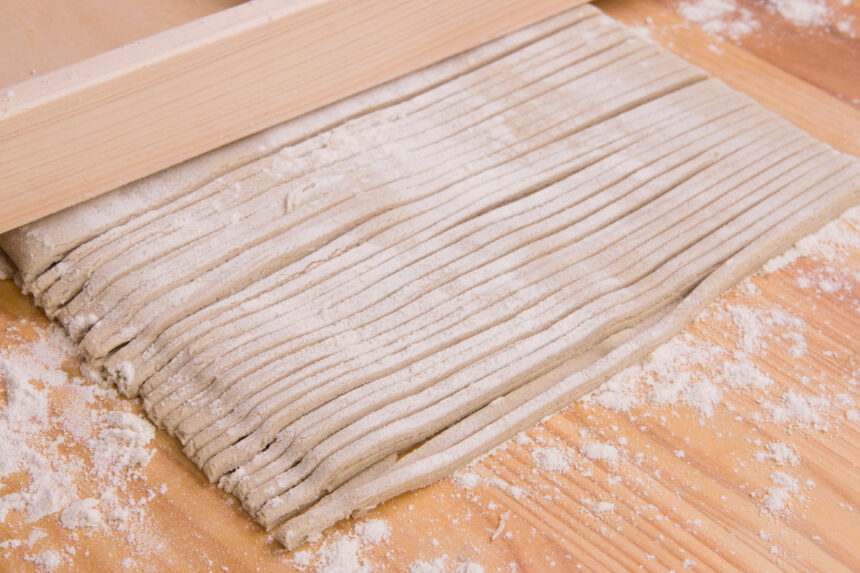
In modern times, soba in its common noodle form is called “soba-kiri” (buckwheat noodles). Originally, soba was eaten in the form of buckwheat dumplings or buckwheat dumplings made from kneaded buckwheat flour. In contrast to these existing ways of eating soba, the term “soba-kiri” is said to have come to be used to refer to the thinly stretched dough that is cut into long, thin strips with a knife. There are various theories as to the origin of soba-kiri, but by the middle of the Edo period (1603-1868), soba-kiri had spread among the townspeople with the advent of nihachi-soba, an easy-to-handle and easy-to-eat type of buckwheat noodle, and by the late Edo period (1800s) there were said to be over 3,700 soba shops in Edo.

新着・おすすめ情報

  1. Because they are used on a daily basis, they should not be neglected. Ubukeya tells you how to maintain your knives.

  2. Expressing a unique taste using ingredients that can be found anywhere. The long-established Kimuraya Honten Ningyo-yaki store’s commitment to quality

  3. Ningyocho Shinota Sushi Head Office, a long-established sushi restaurant serving inari sushi. What changes with the times, and what never changes.

  4. Kaga Yuzen

  5. Nitta Shrine (Musashishinden, Tokyo)

  6. Why is the oak in “Kashiwa-mochi” said to symbolize the prosperity of descendants?

  7. An arrow wheel is a windmill attached to the pole of a carp streamer. What is the meaning of the sound of its spinning?

  8. Ichigaya Kameoka Hachiman Shrine (Ichigaya, Tokyo)

  9. Virudhaka (Buddhist deity)

  10. Tokyo Literature Walk] No. 1: Walking around Asakusa, a treasure house of modern literature

  11. What is meant by “santai zorai” offered for the May dolls?

  12. pure silk

  13. What vegetables should not be used in “vegetarian cooking” without animal products?

  14. sand pit

  15. The same manufacturing method since the establishment of the company. Interview with Satoru Nakamura, 7th generation owner of Shirokiya Nakamura Denbei Shoten, who weaves Edo brooms using craftsmanship passed down from generation to generation .