

Nihonbashi (bridge)cleaning utensilsEdo broombroom
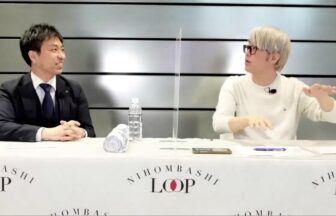
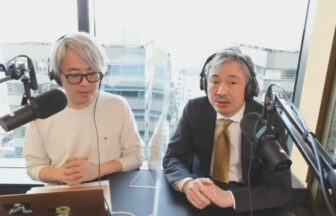
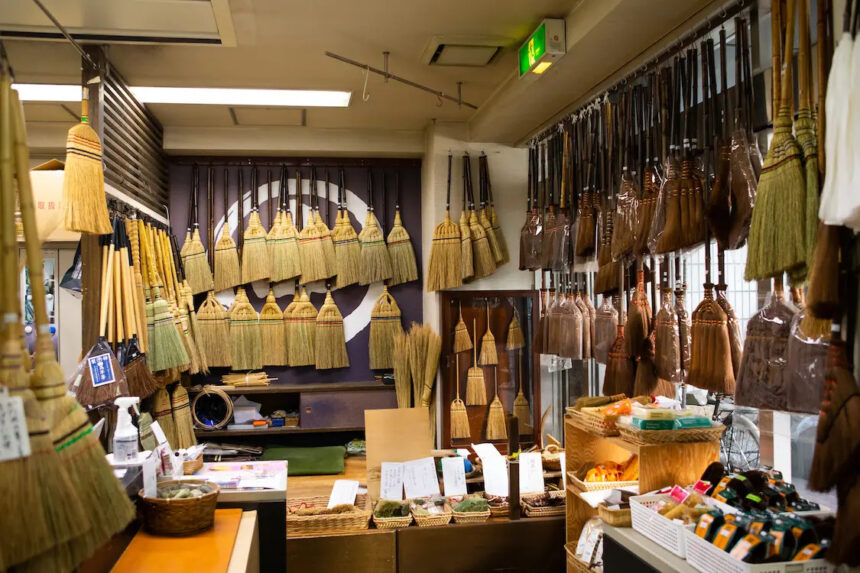
Shirokiya Nakamura Denbei Shoten, founded in 1830, is a long-established manufacturer of Edo brooms, which are made by weaving grass by hand. These old-fashioned cleaning tools, which do not require electricity and do not use plastic, are items that are attracting renewed attention in this age of SDGs. Masakatsu Hayashi, representative of Starmark Corporation, which operates “agataJapan tokyo,” interviewed Mr. Satoru Nakamura, the seventh generation of “Shirokiya Nakamura Denbei Shoten,” which has been making Edo brooms for generations.
〜first partContinued from
Domestic broomweed cultivation has also stabilized.
Hayashi: In the second half, I would like to ask you about materials. How then about domestic broom grass cultivation?
Mr. Nakamura:This is the fifth year since we started growing broom grass in Higashine City, Yamagata Prefecture, and we now have much more grass that can be used as a product. It does not take much time and effort to cultivate it, and the harvest time is just at the edge of the fruit season, which seems to be convenient for the people who grow it. Another good thing is that the grass is harvested before it goes to seed to prevent it from hardening, so there is no animal damage.
Hayashi: You have broken through some of the problems that farmers are facing now. Would you still be happier if there were more places to make it?
Mr. Nakamura:Yes, that’s right. Because of the number of craftsmen we have, the amount of brooms we can make is not that much, about 2,000 brooms per year. However, brooms are environmentally friendly products that “save electricity,” “do not emit CO2,” and “do not make noise. We would like to increase the number of people in the world who use them. In order to increase the number of stores that make quality products, we first need a supply of materials. In that sense, I believe we must lead the way.
How long does it take to become a full-fledged Edo broom craftsman?
Hayashi: You say that it is necessary for craftsmen to grow up to be able to tell the difference between grasses by touch.
Mr. Nakamura:One becomes proficient in one type after spending from one to three years making it, but there is a big difference between those who work hard and those who don’t. But talent is not really necessary. It is important to keep working hard all the time. Also, there is no air conditioning at the production site to keep the grass from drying out. So it is hot in the summer and cold in the winter. The only thing that is OK is a small fan in the summer to keep the wind off the grass, and an electric cushion in the winter.
Hayashi: Does it still take about 10 years for everyone to go through such hardships?
Mr. Nakamura: Yes, that’s right. At least 10 years. That’s how long it takes to learn a job, though.
Hayashi: Another photo you have prepared for us is this one of Shuro.
Mr. Nakamura:I don’t think many people in the Kanto area know about shuro brooms. Until the mid to late Edo period, there were basically no grass brooms, only shuro brooms. Shuro is a palm-like tree with a hairy bark that grows in the trunk. The bark is peeled, rolled up and made into parts. It is soft, so it removes fine dust well, and it has a strong woody acridity that gives the wood a luster.
Mr. Nakamura:However, although it was very good for use in the tatami room, it had a drawback that brownish powder stuck in the bark of the wood kept coming out for about a year after the first year of use. In the late Edo period (1603-1868), the number of economically affluent people increased, and people began to use tatami, which had been expensive until then, in their houses, but it was impossible to use tatami because the powder would get inside. In contrast to Kansai and Kyushu, where lifestyles did not change drastically, Edo (Tokyo) developed rapidly, and people began to demand brooms made of grass as “brooms that can be used immediately for tatami mats. Therefore, the grass broom is still a product about 200 years old.
How should brooms be maintained?
Hayashi: How do I maintain my broom when I use it at home?
Ms. Nakamura:The first absolute requirement is to hang it and store it. If the tips start to become stiff, spray them with plenty of water using a misting spray, and then trim them by hand to bring them back to their original shape. As it gets shorter and shorter, fine dust bounces around and becomes difficult to remove, so please trim just the tips with scissors. When it is time to leave it alone, trim it one more time and take it down for sweeping the yard. If you treat it in this way, you can use it for about 10 years.
Hayashi: As you mentioned earlier, you have a very low environmental impact. I think this is also connected to the topic of brands. What is the brand that you have in mind?
Mr. Nakamura:I believe it is our job to provide the world with as many products as possible that will satisfy our customers 100%. You can buy brooms online, but since the elasticity and weight vary depending on the rank of the broom, we prefer that you come directly to the store and choose the broom that is most comfortable for you to use. For this reason, we have many kinds of brooms available, so we would appreciate it if you could just try them on at the store.
Hayashi: We actually hold the broom in our hands and talk to the customer about what the broom is like, so that the customer is convinced of the product before making a purchase. So, the brand is a product that has gained trust through such an accumulation of experiences. Could you tell us about the “Edo Tokyo Brand Association”?
Ms. Nakamura: There is an “Edo Tokyo Brand Association” that2021The company was launched in 2006. We started the company in 2006 with the idea of creating a better Tokyo, a better Japan, and a more affluent world with a variety of choices, by working together to maintain and develop technologies and products. We started this organization with the hope of working together to maintain and develop these technologies and products, to further improve Tokyo and Japan, and to make the world a more affluent place with a variety of options.
Hayashi: Any last words?
Mr. Nakamura:Brooms are cleaning tools with very low environmental impact. It is an ideal SDG and an environmentally friendly product: no plastic, no noise, no electricity, and no CO2 emissions. Although environmental issues are now being considered mainly by corporations, I believe that if we start with what we can do as individuals and have the mindset of contributing to society, we can connect to a better society for our children’s generation. We hope that you will pick up an Edo Broomstick as a starting point for such a way of thinking.
In this day and age when the SDGs are being promoted, the Edo broom, which has been made using the same manufacturing method since its establishment in 1830, is a product that truly contributes to the SDGs. This may have made you rethink your current lifestyle a little. Thank you very much, Satoru Nakamura.
*If you would like to see this dialogue on video.here (place close to the speaker or where the speaker is)