

Nihonbashi (bridge)yukata (light cotton kimono worn in the summer or used as a bathrobe)
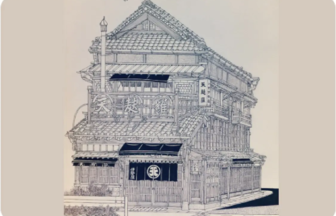
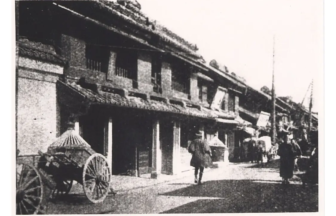
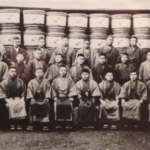
Founded in 1842, Shukusen is a long-established yukata manufacturer with 180 years of history. The company has been developing and producing yukata from raw materials with a commitment to “make it yourself and sell it yourself. The elegant yukata, which were popularized by Kabuki actors who were fashion leaders in the Edo period, are still loved by many people today for their high quality. How are such yukata of “Shukusen” produced?I’d like to talk to Shigeyuki Ogawa, the sixth generation.We visited.
〜first partContinued from …
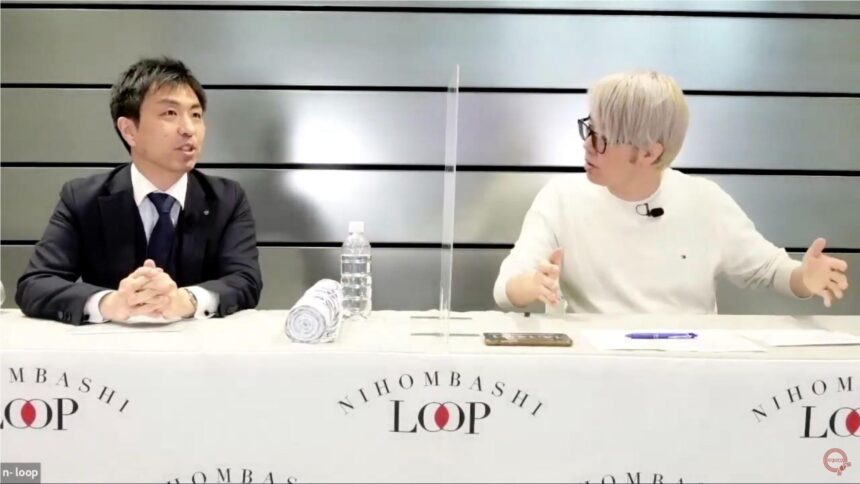
Hayashi: I will continue to ask about materials and production methods.
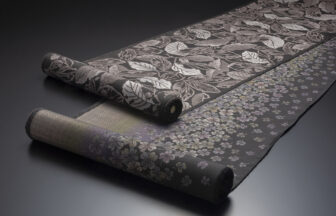
Ms. Ogawa: Jersey Shokusen pursues dyeing and dyeing, and we put a lot of thought into our fabrics. In addition to the “combed fabric” mentioned earlier, we also have a fabric called “cotton rosacea,” which has a translucent feel. And here is “cotton basho,” which has a different tactile feel. Since it is for summer, it is very important to have a cool appearance, and this material has a different tactile feeling from “cotton rosacea.
Forest:There are many kinds of materials.
Mr. Ogawa:This is cotton pongee. Compared to “combed fabric,” it has a slightly thicker texture with a gentle touch. Many people wear it from early summer to early autumn around September. It is not a thick fabric, so of course it can be worn in summer as well. There is also a material called “kagero,” which is woven vertically to create a transparent effect and induce a cooler feeling.
Now, we will ask you to further introduce the technique.
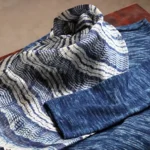
There are many other yukata that we make as well as pour-dyeing. This is “nagaita honzome” (long board dyeing). There are much fewer of them now, but they are dyed with real indigo. The pattern is a little too detailed for the viewer to understand.
It’s really wonderful already. Everyone, please go to Jersey Shirasen. I want you to see this pattern in person.
I think it is best to see it in person. Normally, dyed goods are only dyed on one side, but in the case of this indigo dyeing, the pattern is applied to both the front and back. In other words, the process is twice as long, and if the front and back sides do not match exactly, the product will not be made. That is how difficult it is.
This is really great, because if you look at the back of a yukata that is in the cheaper price range, you see that it is pure white. Only the front side is printed. This is very hard work, because both the front and back are carefully dyed to match perfectly.
Yes, it is. It really is a product that depends on the craftsman. The other products are those using the “Hikizome” technique. There are three variations: “Oshu komon,” “Kohai komon,” and “Matsumoke-zome komon. As for “Koume komon,” a highly transparent lattice-like material is used, and the area that touches the wearer’s skin is small, so that the wearer feels cooler.
So it’s not just cool to look at, it’s cool to function.
Yes, that is exactly right. And also “Oshu komon”. At first glance, this may seem plain, but it blends in surprisingly well with the skin. It is woven with several kinds of brown threads with subtle differences in color, and it is a very difficult material to produce. It is a material that you should actually hold in your hands and feel against your skin.
I think it gives you a sense of ownership, or perhaps a feeling that you are happy to have a yukata. I think that when you tailor your own yukata with good materials, you become very attached to it.
These are “Silk Red Plum” and “Hemp Komon” made by a technique called “shigokizome”. Actually, this “hemp komon” is not always available because of the difficulty in arranging the materials. As for “Silk Red Plum”, we are preparing to make it every year as much as possible. Like the “BENI-UME KOMON” mentioned earlier, it is made of a lattice-like material, but the lightness is definitely different because it is made of 85% silk. In terms of lightness and coolness when you put it on, I think you will feel even more exquisite comfort. This is also an original material.
The more I study it, the deeper and more interesting it becomes.
We hope that you will use both the fabric and the pattern according to the season.
Everyone at Jersey Shokusen has a lot of knowledge about yukata, and I really enjoy listening to their stories. I am sure that you will find something unique to you if you listen to what they have to say and look for something that suits you.
Ms. Ogawa: Even among such a large variety of products, there are some products that can no longer be produced because the technique has been discontinued. This is a yukata made with a technique called “basket dyeing,” which is no longer made. In the past, this kind of yukata was also available. Different patterns can be dyed on the front and back.
I understand that you are now also reproducing the “basket dyeing” stencils as andon lanterns.
Yes, we do. Even though the yukata industry has ceased to exist, there are products in which basket-dyed patterns are reproduced as andon (lanterns) in an effort to preserve even a small record of the industry.
I actually have this and it is a very nice andon. It goes well with both Japanese and Western-style rooms. You cannot get a yukata dyed with baskets, but you can get an andon, so why don’t you pick one up? This may be related to the basket-dyeing story, but what about the issue of succession of craftsmen? Aren’t many of the craftsmen getting older?
A brand is the accumulation of exceeding customers’ expectations and impressing them.
There was a time when I worried about the succession issue, but there are quite a few young people who are interested in this kind of thing and come knocking on our door. I also have many family members who are craftsmen. Rather than joining some other company and working there, some of them are making things while learning the techniques from their father, because they saw him and felt they had to leave this work behind. So, in that respect, we are doing this with peace of mind.
If there are people who want to take on this challenge, I would like to encourage them to jump in. I would like to ask you about your brand.
When I serve customers myself, I think it is the accumulation of exceeding their expectations and impressing them. I feel that the accumulation of these efforts leads to a connection.
Finally, please introduce the Edo Tokyo Brand Association.
Although it has only just been established, the association is made up of stores that are all making things that are full of their own specialties. Since there are many such stores, especially in Tokyo, I believe that the number of members will continue to increase. I am looking forward to working together with them in the hope that we can increase the number of friends who will work hard together.
Now, could you give us a few words to summarize?
Ms. Ogawa:You may not have had many opportunities to wear a yukata in the past couple of years, but I would be very happy if you could change your mind and think, “Let’s wear a yukata this year! I would be very happy if you could change your mind and think, “Let’s wear a yukata this year!
I encourage everyone to visit the store before summer. Thank you very much for your time today.
Shukusen yukata are made by highly skilled craftsmen. I would like to find my own favorite yukata by actually seeing and holding the fabric made by craftsmen with great care.
*If you would like to see this dialogue on video.here (place close to the speaker or where the speaker is)