

What is the origin of the name “Kintsuba”? How is it written in kanji?(Kintsuba)
red bean pastepresent (brought by a visitor)
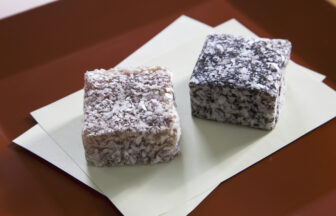
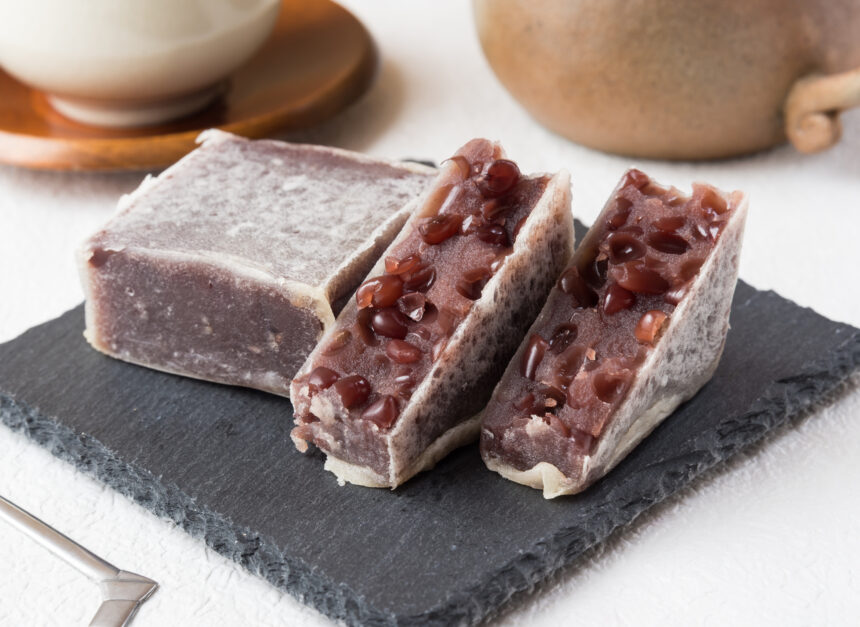
Kintsuba is a Japanese confectionery made by dipping red bean paste in melted flour dough or wrapping it in a thin flour crust and baking it on a griddle.
Kintsuba is written in kanji (Chinese characters) as “kintsuba,” and was originally called “ginzubaku,” a confection produced in Kyoto during the Edo period (1603-1868). Ginzubaku was wrapped in a rice flour skin and baked, but in the process of being introduced to Edo (present-day Tokyo), it was changed to wheat flour, and the name was changed to “Kinzubaku” because “gold is more economical than silver”. The shape is round and flat like the brim of a sword, thus the name. The size is easy to eat in one bite, and although koshi-an is the most common, there are variations depending on the region and store, and some stores offer it with various types of an (sweet) bean paste depending on the season.
They are popular as gifts and among foreign tourists, and are made according to traditional methods that require skill and care. Recently, they have been attracting attention overseas as well, and are a representative of Japan’s traditional Japanese confectionery culture.