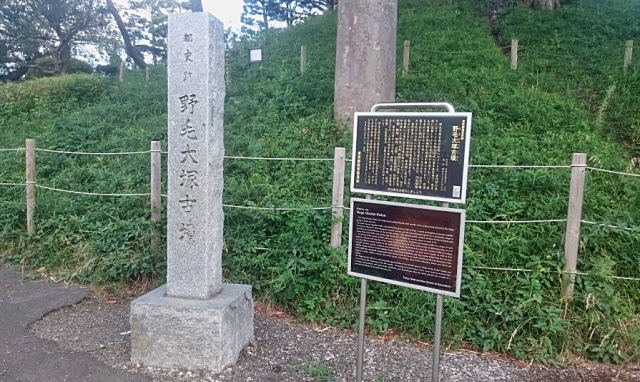
Noge-Otsuka Tomb (Setagaya, Tokyo)

historic siteMeguro, Setagaya

Noge-Otsuka Tomb (Setagaya, Tokyo)(Noge Ootsuka Ancient Tomb)

ancient (mound) tombTokyo Metropolitan Government-designated Historic Siteimportant cultural property

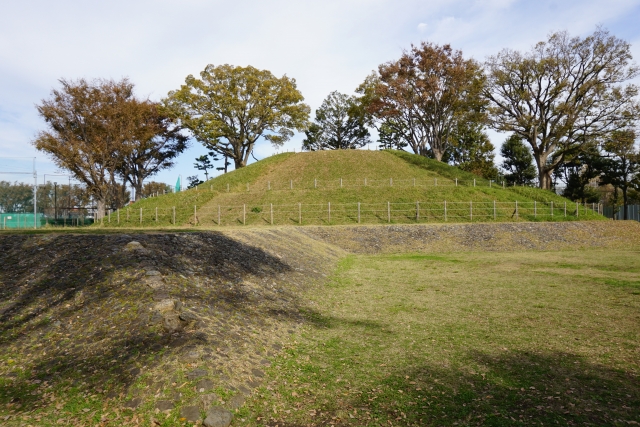
The Noge-Otsuka burial mound, located in Tamagawa Noge-cho Park, which is crowded with families in the neighborhood, is thought to have been built about 1,600 years ago. It is the largest of the Noge tumulus cluster, which stretches from Uenoge to Oyamadai, and is designated as a historic site by the Tokyo Metropolitan Government. It is an 82m long, 67m in diameter and 11m in height, and is surrounded by a horseshoe-shaped moat. Scientific research has revealed that it has four burial facilities, leading to the theory that it was the tomb of a powerful chief of Musashi Province. A coffin, short armor, armor, and an iron sword were also found, and these artifacts have been designated as national important cultural properties. There is also a burial site in nearby Todoroki Gorge, which was dug into the cliff, so it is recommended to visit the site in combination with this site.

Spot OutlineOutline

address (e.g. of house) In Tamagawa Noge-cho Park, 1-25 Noge, Setagaya-ku, Tokyo
Access 10-minute walk from Todoroki Station on the Tokyu Oimachi Line

External Links

Official Web Site

Founding and opening of business Around 5th century

新着・おすすめ情報

  1. Shinobazunoike Pond Oratory, Kan-eiji Temple

  2. To preserve traditional culture, we also consider the treatment of craftsmen. What does the long-established “Edoya” think of “succession”?

  3. 【第14回】江戸蕎麦の流儀〜道具立て編〜

  4. Shinjuku Suehirotei (Shinjuku, Tokyo)

  5. They also restore ancient musical instruments used in traditional performing arts. Okadaya Fuse’s Struggle to Preserve Traditional Japanese Culture

  6. Togenuki Jizoson Takaiwanji Temple (Sugamo, Tokyo)

  7. The difference between a yukata used as pajamas and a yukata worn to a fireworks display, which only a Japanese person can understand.

  8. Honmyoji Temple (Sugamo, Tokyo)

  9. soup served at the end of a traditional Japanese dinner

  10. Anyone can do it by themselves! How to Tie a Yukata Obi – Kai no Kuchi

  11. mixture of boiled beans, jelly cubes, fruit pieces and molasses

  12. The name “Mokumegome doll” comes from the fact that the fabric is pressed into the shape of a doll.

  13. sweet yuzu-flavoured steamed dumpling

  14. Otakanomichi and Masashino-ike Spring Group

  15. colored kimono