Bunkyo Hydrangea Festival

Holding period

2022.06.11 〜 2022.06.19

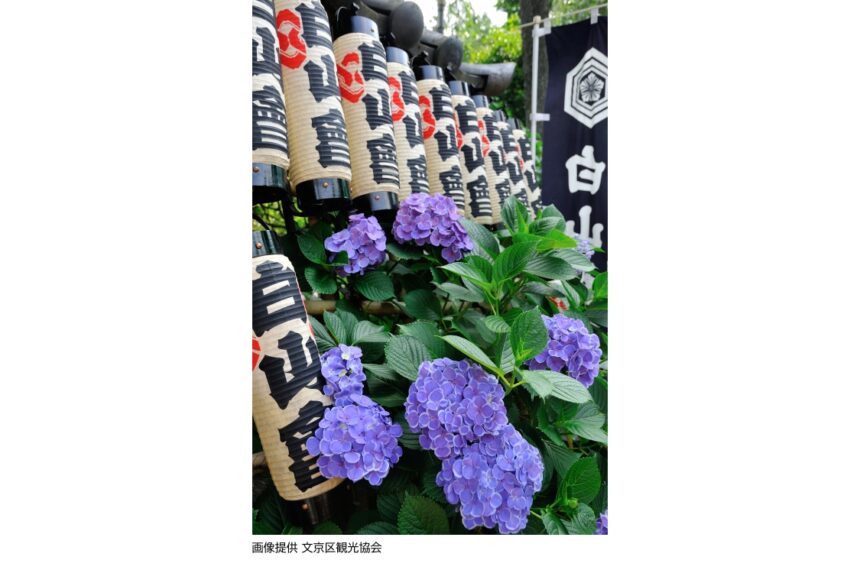
About 3,000 diverse hydrangeas are in full bloom.

Hakusan Shrine is well known for having been worshipped by Tsunayoshi, the fifth Tokugawa Shogun, and his birth mother, Keishoin, and is well known as the town-keeper of the Koishikawa area. The “Bunkyo Hydrangea Festival” will be held again this year in the shrine grounds and the adjacent Hakusan Park.
Every year during the rainy season in June, about 3,000 hydrangeas are in full bloom. There is a diverse selection of hydrangeas, including gaku hydrangea and uzu hydrangea. During the festival, booths will be set up on Saturdays and Sundays, and on Sunday the 19th, a “Hydrangea Concert” will be held with a variety of unique events such as a dental health festival, a performance by an elementary school drum and fife team, and a dance performance by volunteers.

Event SummaryOutline

Location Hakusan Shrine 5-31-26 Hakusan, Bunkyo-ku, Tokyo
Access 2 minutes from Hakusan Station on the Toei Subway Mita Line, 6 minutes from Honkomagome Station on the Tokyo Metro Nanboku Line

Holding period Saturday, June 11 – Sunday, June 19, 2022
Opening Hours Bake sale is open on Saturdays and Sundays during the festival period from 10:00~16:00
Contact Us 03-3811-3321
Related Links Official Site

新着・おすすめ情報

  1. Rikugien weeping cherry tree

  2. 2023 Tokyo Metropolitan Art Festival

  3. 【人形町志乃多寿司總本店】恵方巻引換券のご案内

  4. Featured Exhibit: Tea Bowls, Utensils of the Tea Ceremony

  5. Yumeji’s favorite you go! The secret of Yumeji’s beauty

  6. Meat Fest 2023 The Carnival TOKYO

  7. Hybrid Bon Dance in Real and Metaverse!

  8. Haneda Festival (held at the Tokyo International Airport on May 15)

  9. SHIBUYA MIYASHITA PARK BON DANCE 2023″ will be held on Sunday, September 10.

  10. festival held as viewed from afar

  11. Katazome ~ Japanese Beauty

  12. Kabuki-za Makuhari Market in Haneda Airport Garden” will be held!

  13. 下町文化祭 2024(浅草会場)

  14. Nihonbashi Ebisu Kou “Bettara Ichiba”, a traditional event that has continued since the Edo period

  15. From the Genpei Wars to Kamakura – Kiyomori, Yoshitsune, and Yoritomo