

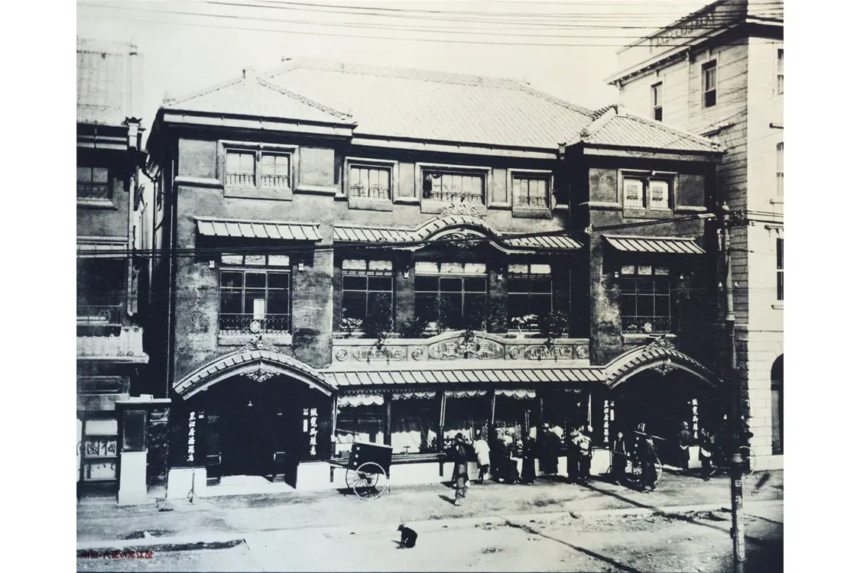
Founded in Genroku 2 (1689)
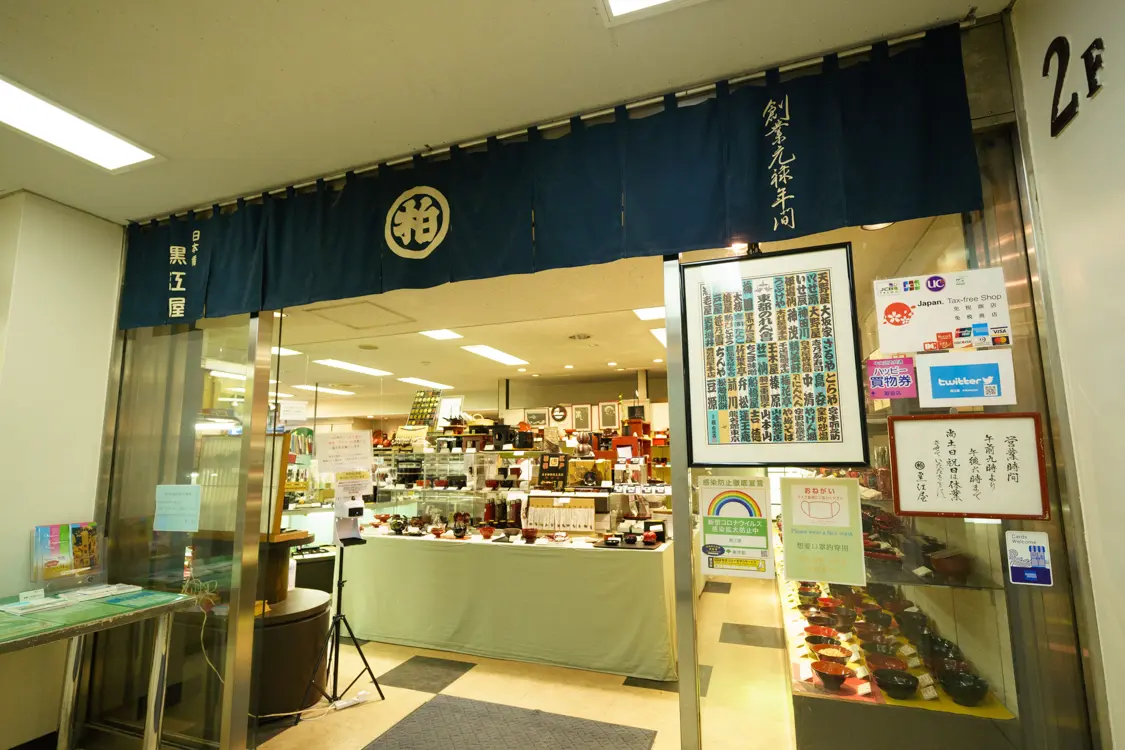
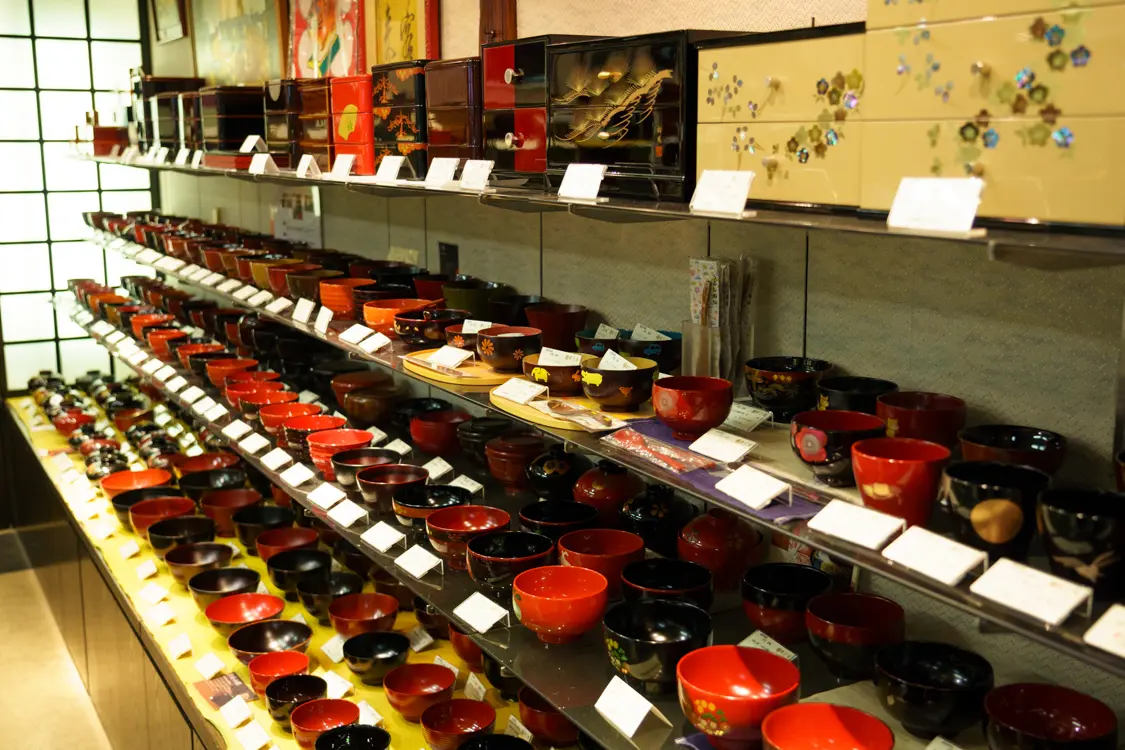
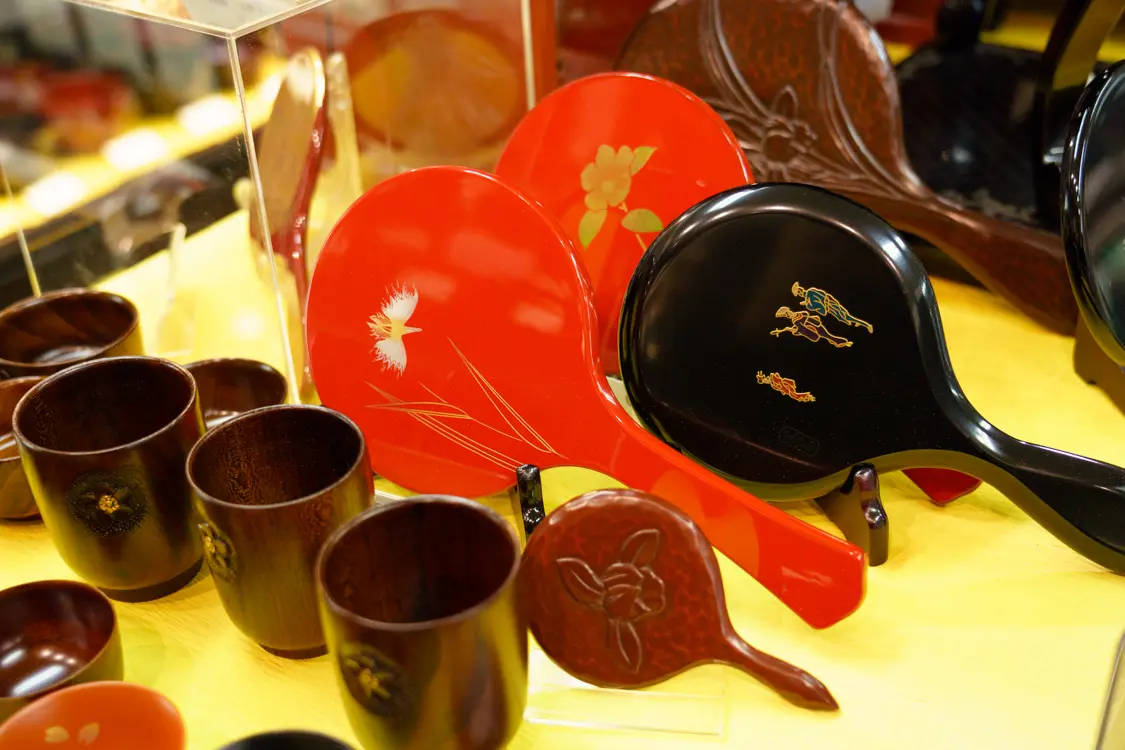
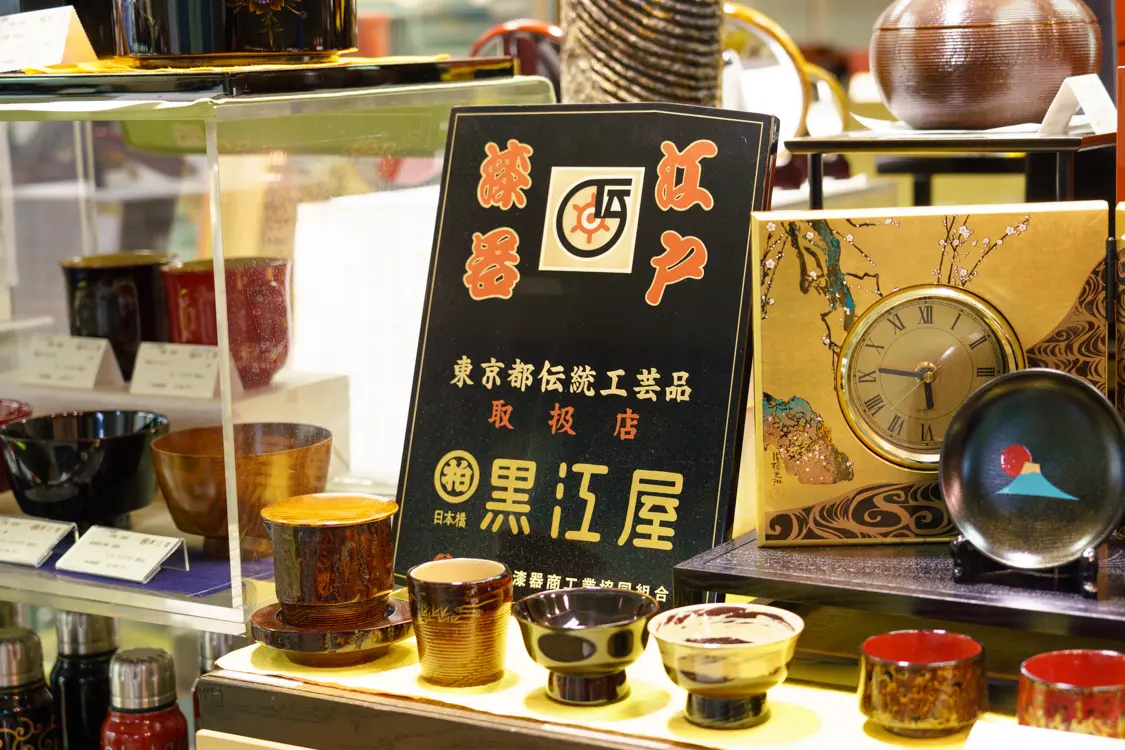
A specialty shop where outstanding lacquerware from all over Japan is collected, from tableware to stationery.
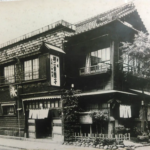
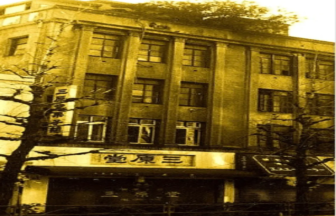
Kuroeya is located in a building right in front of the Nihonbashi Bridge, in the Nihonbashi area filled with historic buildings.Long ago, there were three lacquerware stores in Nihonbashi Tori-machi, and they were known as the “Three Shops of the Street.”As one of those shops, Kuroeya supplied lacquerware to feudal lords during the Edo period and to the Imperial Household Agency after the Meiji era.Inside Kuroeya, beautiful lacquerware carefully crafted by artisans from all over Japan lines the shelves.From Tsugaru-nuri of Aomori in the north to Miyazaki lacquerware in the south, visitors can encounter lacquerware from all regions of Japan.
According to the 12th-generation owner, Mr. Magosaemon Kashiwabara, the charm of lacquerware lies in “gaining more character and depth the more it is used over time” and “being harder to break than other tableware, lasting long with proper care.”As a traditional Japanese craft, lacquerware is often seen as a luxury item, but it holds unique qualities that other materials cannot offer.
At Kuroeya, not only tableware and cutlery are sold, but also desk items such as lacquered card holders, photo frames, and ballpoint pens.Every item is something you would want to add to your everyday belongings or interior décor.They continue to adopt new lacquer products based on the times, trends, and customers’ needs.
History
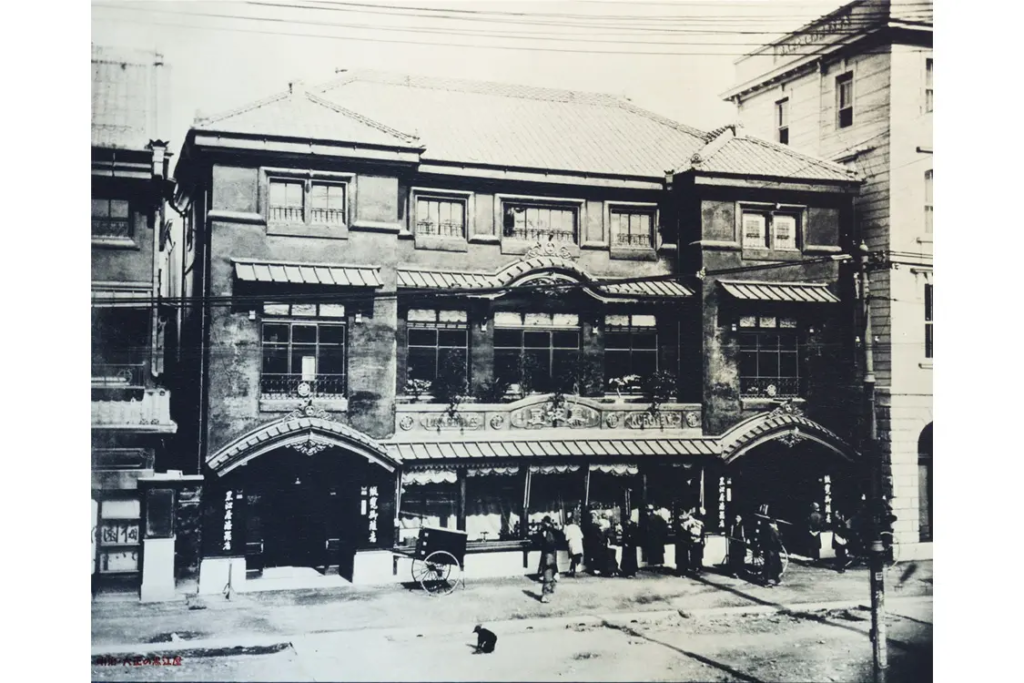
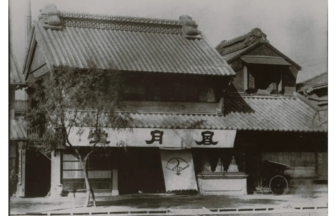
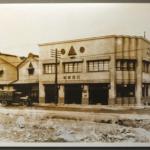
Kuroeya’s history began in Genroku 2 (1689), when a man from Kuroe Village in Nagusa District, Kii Province (now Kainan City, Wakayama Prefecture), a famous lacquerware-producing region, moved to Edo and opened a lacquerware shop in Nihonbashi Honcho 4-chome.Later, in An’ei 3 (1774), management was passed on to Kashiwaya (today’s Kashiwabara family), a Kyoto merchant dealing in fabrics and accessories,and in Ansei 3 (1856), the shop was relocated from Nihonbashi Honcho 4-chome to its present location.Today, in addition to lacquerware sales, the business also operates real estate and paper product divisions.
The charm of lacquerware is that it develops richer character the more it is used.
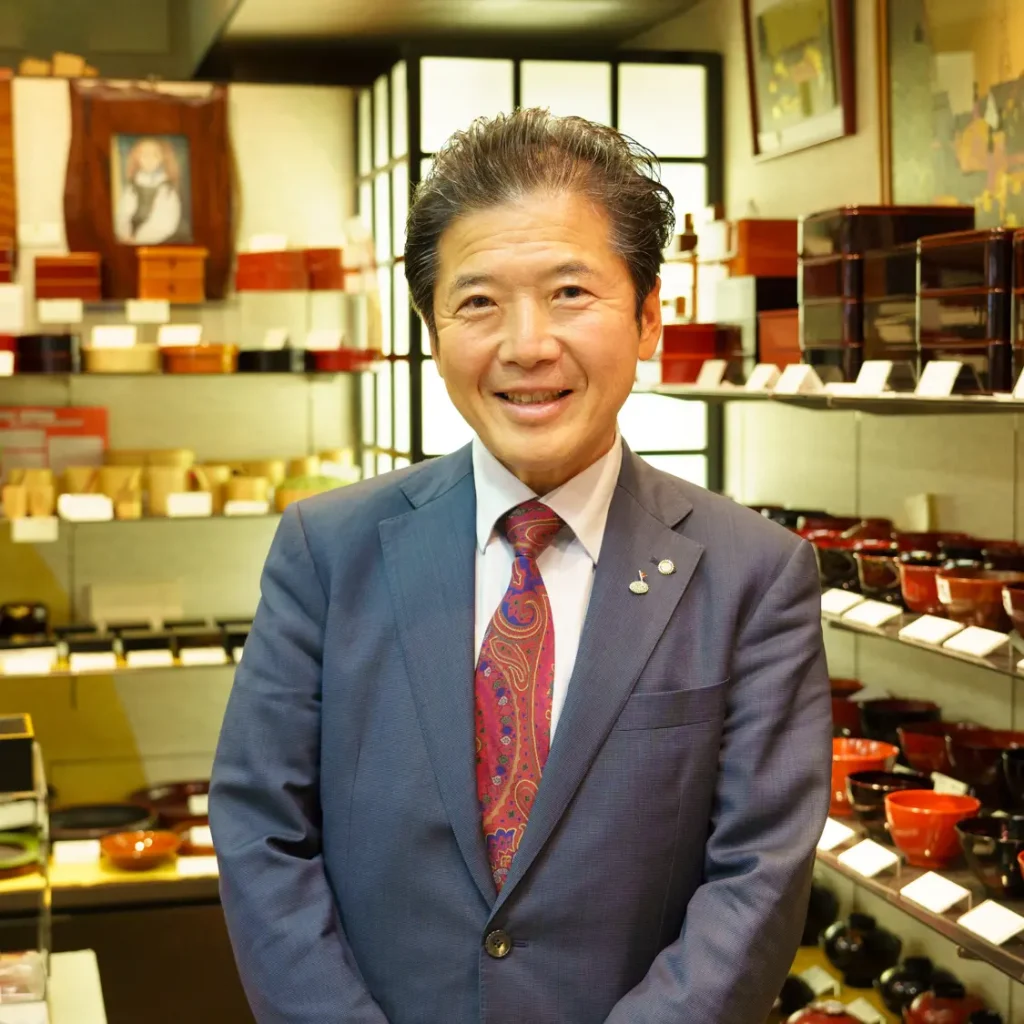
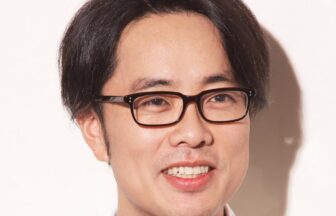
Mr. Magosaemon Kashiwabara
12th-generation head of Kuroeya
The more lacquerware is used—over 3 or 5 years—the more its true beauty and depth appear. This is a charm unique to lacquerware.We will continue to deliver lacquer products full of this charm to our customers.
This Notable Item
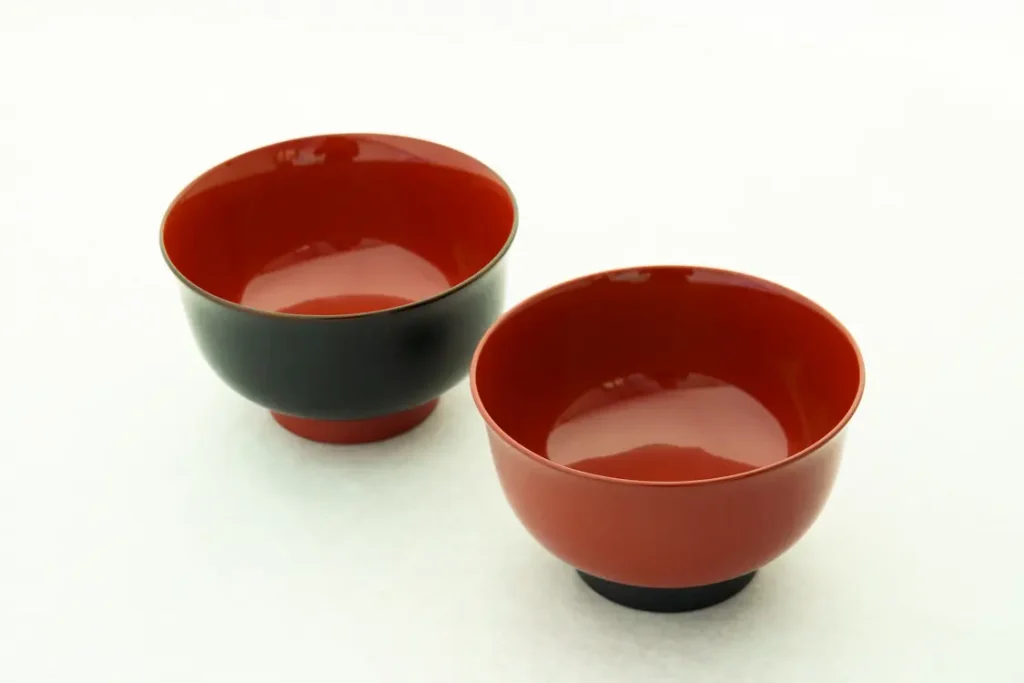
Lacquerware Soup Bowl
8,580 yen per bowl
This is a classic soup bowl sold at Kuroeya. You can enjoy its color and texture while warming your body with miso soup or broth.
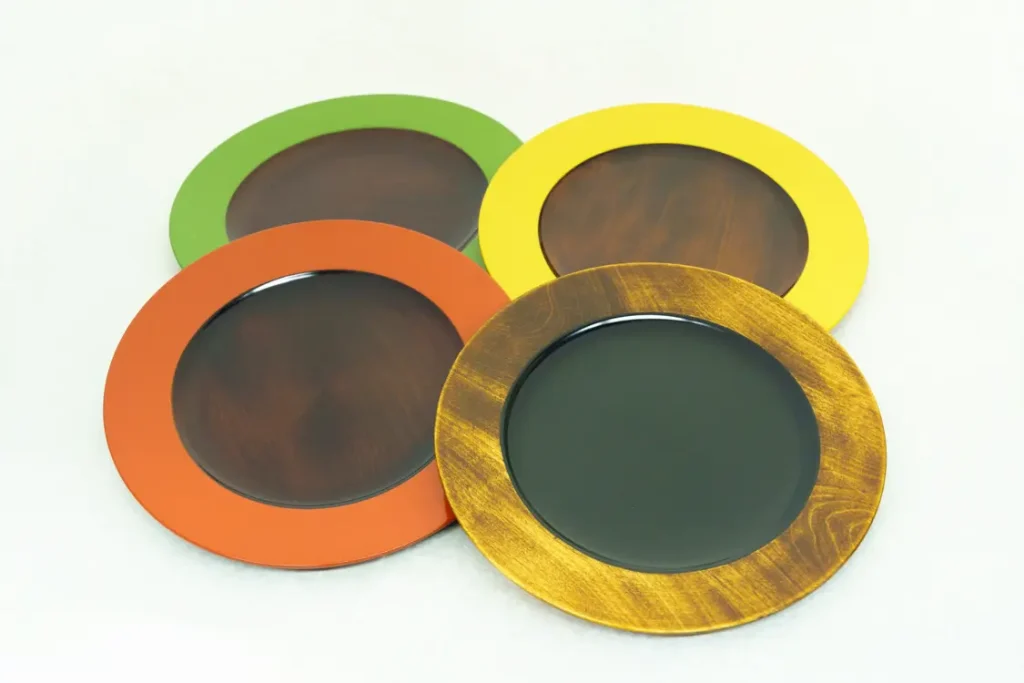
Kagawa Lacquerware — Wooden Lacquered Color Dish
8,800 yen per dish
These dishes feature colorful and casual lacquer—red, yellow, olive, and black—making you want to collect every color.A highlight is the amber lacquer (clear lacquer) applied to the inner surface, enhancing the wood grain—a beauty possible only with wooden lacquerware.Its highly versatile design makes it suitable for both Japanese and Western cuisine.Since it is lightweight and hard to break, it is also recommended as tableware for children.
Spot Overview
| address (e.g. of house) | |
|---|---|
| phone | |
| Business Hours | |
| regular closing day | |
| Payment Method | |
| External Links |