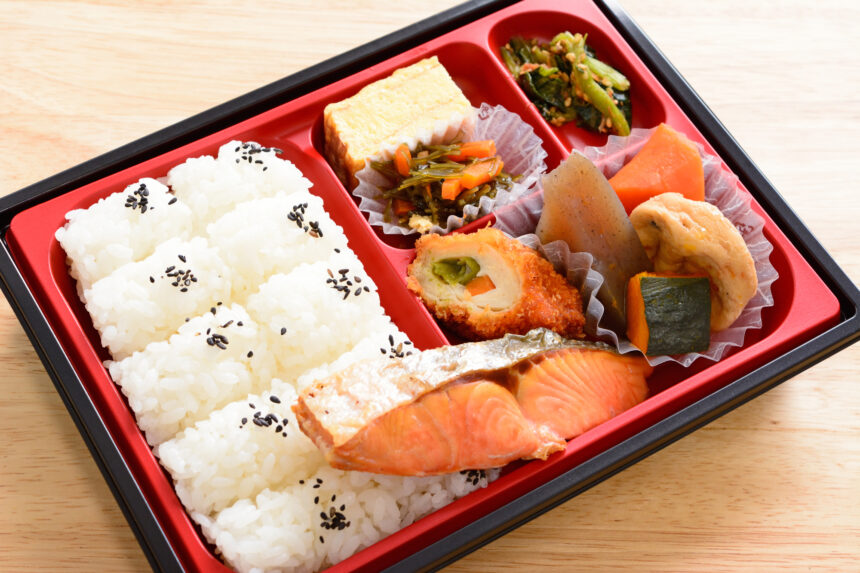
box lunch (containing rice and 10-15 small portions of fish, meat, and vegetables)

Japanese-style meal

box lunch (containing rice and 10-15 small portions of fish, meat, and vegetables)(Makunouchibentou)

Originally, it was a bento consisting of a rice ball shaped like a bale and sprinkled with sesame seeds, accompanied by a side dish with little liquid. Today, it is usually made of white rice sprinkled with sesame seeds and topped with pickled plums, and stuffed with fried food, grilled fish, omelet, or other items. There are various theories as to the origin of the name. Some say that it was a lunch box eaten between acts by theater-goers or by actors behind the stage (makunouchi), while others say that it originated as a lunch box eaten inside the curtain of a battlefield. By the late Edo period (1603-1867), when theatrical culture was spreading, a form similar to today’s makunouchi bento was in place.

新着・おすすめ情報

  1. Meaning of “Unaju” and “Unadon”. What’s the difference?

  2. The important thing is to build a steady network. Nakazawa Nyugyo Co., Ltd. is expanding its business with the spirit of “Be with each other and do business with each other.

  3. triangles of sweet rice jelly topped with adzuki beans (eaten in the sixth month)

  4. Manners for visiting shrines and temples: money offering, how to pray, how to get a red seal, etc.

  5. Responding to customer requests leads to innovation. Leading dairy products company “Nakazawa Dairy Co.

  6. Namikaze Shrine (Tsukiji, Tokyo)

  7. ridges on a blade (sword, knife, etc.)

  8. Suddenly, at the age of 25, he became the president of the company. Steps of the 8th generation of “Nihonbashi Benmatsu Sohonten,” Japan’s oldest bento shop.

  9. Kamiya Bar, the oldest bar in Japan, well-known for its Denki Bran, and its innovations through the ages.

  10. Anyone can do it by themselves! How to Tie a Yukata Obi – Kai no Kuchi

  11. What is the difference between kaiseki ryori and kaiseki cuisine? Explanation of the origin and manners you should know!

  12. Aoyama Cemetery (Minami Aoyama, Tokyo)

  13. 【第25回】七十五という数字にまつわる蕎麦の話

  14. Japanese dessert consisting of two slices of kasutera (sponge cake) with red bean jam in between

  15. What is the difference between “Ginjo-shu” and “Junmai Ginjo-shu”? Words related to sake