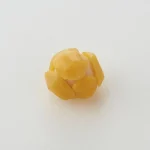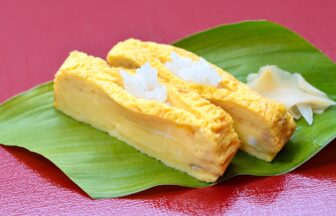
Shinbashi, Shinagawa, OdaibaharakiriIn the midst of economic upswingJintaiko Dorayaki
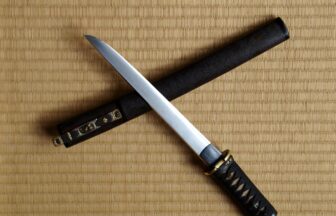
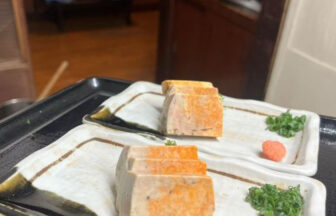
Seppuku monaka” for greetings and apologies, “Keikatsukyo monaka” and “Jintaiko dorayaki” for commemorating a public listing. Shinshodoh Shinbashi, founded in 1912, is a 100-year-old company that produces a variety of wagashi that bring humor and “deliciousness” to various business and personal occasions. How were the company’s unique products born and evolved? We asked Mr. Hitohisa Watanabe, the third generation head of the company, who has a unique background as a graduate of the prestigious Kuwasawa Design School and has a bright personality that embodies the individuality of Shinshodo.
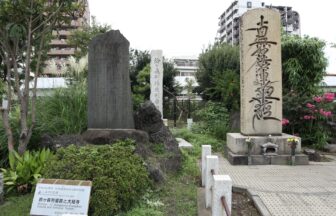
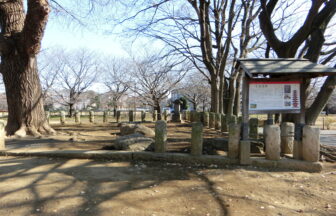
Shinshodo’s specialty, “Seppuku”, a specialty of Shinshodo, a place associated with Asano Takumogashira in “Chushingura”.
Hayashi: Could you quickly introduce “Shinseido”?
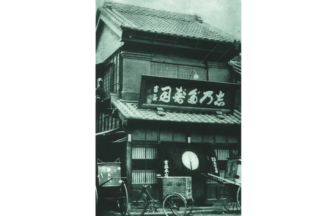
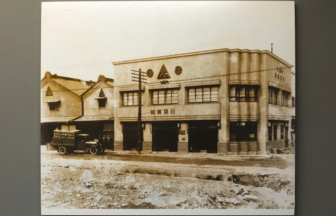
Mr. Watanabe:Founded in Shimbashi in the first year of Taisho era (1912), we are a confectionary shop called “Shinsho-do”, which stands for “Shin” in Shimbashi and “Sho” in Taisho. My grandfather, the first generation, came to Tokyo from Osaka to Edo to run the confectionery. The second generation was my father-in-law who was an aspiring lawyer. He created the “tsubu-an” mame daifuku, which became very popular. The third generation, I, started a product called “Seppuku Monaka” because our company is located at the site of the Tamura mansion where Asano Naishokudo, the master of the Chushingura story, committed seppuku (ritual suicide).
Forest:Shinseido” has such a strong connection with history.
This year (2022 at the time of the interview) is exactly 110 years. On the banner hanging in the store, we wrote, “Thanks to you, we are celebrating our 110th anniversary,” to express the depth and humility of wagashi. This is a slogan that we struggled with for a year in order to express the depth and humility of wagashi.
In fact, it is only a five-minute walk from “CIC Tokyo,” the location of the interview, to Shinseido’s store.
I have short legs, so it might take me 10 minutes (laughs).
You also have an adorable display of “Seppuku-makusa” on display in your store (laughs).
An encounter at a prestigious design school led Mr. Watanabe to the world of Japanese confectionery
Hayashi: Next, please introduce yourself, Mr. Watanabe.
I will be 70 years old this year. I joined “Shinseido” as a son-in-law. I originally studied dress design at the Kuwasawa Design Institute and was the last student of Yoko Kuwasawa.
That’s amazing. Kuwasawa Design School is a very prestigious name in the design world.
There I met my wife, the eldest daughter of the previous generation. The lesson that Mr. Kuwasawa gave me to create a drawer to design fashions for any situation, such as while going to school or work, listening to jazz music, or at work, remains with me to this day.
Did you get married after graduating from the Kuwasawa Design School?
After graduation, I returned to my hometown once, and after a long-distance relationship, we got married. I lived with my parents for a while, but when I heard that “Shinshodo” might be closing its doors, I went directly to the previous owner, who asked me, “Why don’t you try your hand at a confectionery shop? At the time, I knew nothing about Japanese confectionery, so I went to the night school of Tokyo Confectionery School for 6 years.
So that is how you entered the world of confectionery. By the way, does “Shinshodo” have a family motto?
So you were able to keep going without giving up until you succeeded.
I had the uncertain certainty that if I kept at it, I would hit on something (laughs). (Laughs.) My late mother-in-law was initially against it, crying, “If my father were still alive, there is no way I would have put out something like this,” but I convinced her that I “had to. However, once we started selling the product in stores, she encouraged us to put it in a more prominent place, and when we succeeded, she proudly said, “It’s thanks to me.
We are good friends (laughs).
Shinshodo’s innovation that changed the way of making anko (sweet bean paste) since the Kamakura period
Can you tell us more about the innovations that have supported the history of “Shinseido” so far?
The method of making anko (sweet red bean paste), which has been handed down since the Kamakura period (1185-1333), has been improved in my generation. Originally, red bean paste was made by soaking azuki beans in water overnight to remove the scum before boiling the next day. However, as part of my apprenticeship, I noticed that the azuki beans were more uniform in size and had less scum. When I asked an azuki farmer in Tokachi, he told me that this was the result of improved breeding.
I see.
There, I attended a lecture by Kajiwara Kogyo, a food processing machinery manufacturer, on a “new way to cook azuki beans,” and I was shocked. Even though azuki beans were simply thrown into the boiling water, the sample azuki beans gave me had an aromatic flavor, like that of delicious buckwheat noodles. So I consulted with the then head of the company, but at first he was dismissive. However, I secretly tried a somewhat aggressive strategy of trying azuki made with a new method. The head of the bakery said, “It’s good, isn’t it? Then I switched to a new way of making daifuku and dorayaki bean jam, and sales went up dramatically. Even without clearly stating that the taste of the bean paste has changed, customers can sense when the taste is better.
It is truly an innovation.
The principal of the Tokyo Confectionery School asked me to give a lecture on this subject at an event called “Confectionery Day. When I accepted, I found that the people who came to listen to the lecture were all Japanese confectioners in the same industry. I had expected students to come, so when I inquired about the circumstances, he told me that he was inundated with requests from his peers who had come to study as members of society, and that this was what happened when he responded to their requests.
At one point, I thought about leaving, but then I clarified everything about “seppuku monaka,” from the red bean paste mixture to the method of cooking it. Some said, “There is no way azuki beans can absorb water with such a cooking method,” but I was happy to hear one thing. The factory manager of Toraya’s Gotemba factory said, “I would like to try that method. I am still very proud of the fact that he was able to try out this new method.
It’s amazing.
This way of cooking may clash with the pride of tradition, and fortunately or unfortunately, it has not yet become widespread. However, it seems to have been a shocking event for many in the industry.
I think that traditional stereotypes can be a barrier to keeping up with the changing times.
It takes about three years for breed improvement to bear fruit. I had the thought, “Young producers are working on such improvements, so why don’t Japanese confectioners devise new ways? However, when I first saw the new boiling method at Kajiwara Kogyo, I thought, “Oh no, this is no good,” but my desire to do it gradually won out over it, and it worked.
The third generation has changed the method of making anko (red bean paste), which has been practiced since the Kamakura period. This attitude of not being afraid of change is what brings innovation to a long-established business.
latter part(temporal or logical sense) follow …
*If you would like to see this dialogue on video.here (place close to the speaker or where the speaker is)