Ginza (shopping district in Tokyo)Japanese Accessoriestabi
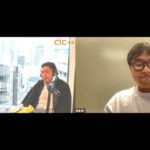
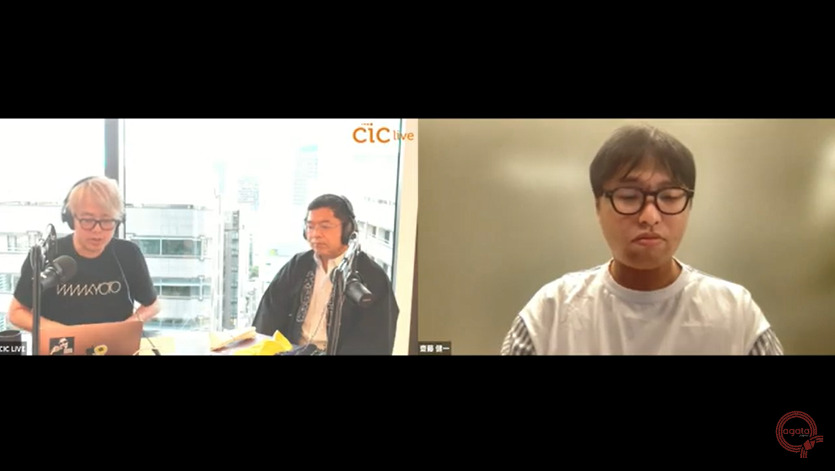
Founded in the An’ei era (1772-1780) and relocated to its current location in Shintomi-machi in 1849, “Ohnoya So Honten” has been making Tabi Shoes for generations. The company still produces Tabi Shoes by taking the mold of each individual’s foot, and also produces handkerchiefs, yugari (Japanese bathrobes), and other Japanese accessories. For this interview, we spoke with Shigeo Fukushima, the seventh generation of Ohnoya Sohonten, together with Kenichi Saito, a cultural entrepreneur.
Forest:First of all, please introduce yourself and your restaurant.
Mr. Fukushima:The company was founded around 1770, during the An’ei era. Fukushima, the first generationbeautiful ageWe are told that Yoshi came out from the countryside of Shinshu and first started a tailoring shop for costumes in Sanda. In 1849, he moved to what is now Shintomi-cho, and since then has been manufacturing and selling tabi (split-toed socks), kimono underwear, and accessories.
Please also introduce yourself.
My name is Shigeo Fukushima, the seventh generation. After graduating from university, I studied at a graduate school in the U.S. After graduation, I worked for a general trading company for about three years, and then I started my family business, theI entered the Onoya General Store. My father is stillI am still alive and well, but I am the president of the company, and I work with the craftsmen on everything from manufacturing Tabi Shoes.
Other long-establishedI hear that you have been thinking about following in your father’s footsteps since you were a child.
Mr. Fukushima: Yes, I lived next door to the company for a long time, so I had the feeling that I might do it in the future. However, when I was a student, I had a very strong inclination to work overseas, so I found a job at a trading company. But then my father got sick and collapsed on a business trip. I wondered what kind of work I was really suited for and what kind of work I would be able to do for the rest of my life, and I vaguely thought, “Maybe I am suited for something like business. The trading company was also very rewarding, but I wondered if this was really a job I would do for the rest of my life. So I took over the company, or rather, I joined it.
Did you have many opportunities to touch or wear tabi socks from when you were little?
No, no, not at all. I only wear them at festivals. I was mostly dressed in western clothes, and I only wore tabi socks when I wore a kimono. However, I did help pack sacks when the shop was busy or go along with deliveries, so I was familiar with them. My sons would come home from the store and say, “I’m home.” They would come upstairs to the sewing and finishing area where the craftsmen worked and greet them before going home. I was somewhat familiar with their daily routine.It may be that the
「I often hear stories like “I didn’t stop by the store that much” or “I didn’t help out directly,” but I guess just having it in one’s daily life transmits a sense of it before you know it. It’s not like “the boy at the gate. Do you have a family motto?
There is no particular family motto. In the past, there is no record of “the previous generation wrote this” or anything like that.No, I don’t.
Saito-san, it’s a regular thing (laughs). It is said that the more established a company is, the more it does not have a family motto.
Mr. Saito:I guess I will inherit what I can feel. Are there any other words you often use besides the family motto?
It is simple, but I always try to do each and every thing carefully. As with my work, I try not to cut corners and do things exactly as they should be done. I make Tabi Shoes as if they were my own “work of art.
A 200-year-old sewing machine is used to produce tabi socks.
Then, please tell us about the innovations you have made from the first generation to the seventh generation.
There have been wars, and each generation has faced various obstacles, but the biggest change has been mechanization. In the Taisho era (1912-1926), imported sewing machines came from Germany and the United States. For example, German sewing machines for sewing shoes were improved to make tabi socks. It is said that during the Taisho era, the production of tabi socks increased greatly throughout Japan. They still use those sewing machines to make tabi socks. Sewing machines that are about 200 years old.
It’s moving!
It moves, it moves! While maintaining it. It’s pretty solid. The threads are firm, too.
Oh~! that isAmazing. Two.Generationthreeindicates a representative of another’s organization, organisation, etc.in those daysIs it?
fiveThe Generation.It was my grandfather’s time, probably in the 1920s. Sales were good, and they used English-made motorcycles for deliveries. It is said that during the Edo period, most people were barefoot, and only those of high rank and during the winter were allowed to wear tabi.Originally, Tabi Shoes were,They were introduced from China during the Heian period (794-1185) and were made of deerskin. They were worn by people of high rank to protect their feet from injuries and to keep them warm. It was not until the end of the Edo period and the Taisho and Showa periods that ordinary people began to wear them.
Did Onoya introduce sewing machines and popularize tabi socks?
That’s right. Also, there is a theater called Shintomi-za nearby. The actors there and at the Kabuki-za Theater patronized our tabi. The man who introduced the sewing machine, Fukutaro Fukushima, was the first person to make Tabi Shoes.Ha,He is very good at advertising. He was very good at publicity.
Hayashi: Wow.
This shin-tomi-shape means that the bottom is made narrower and wraps around the top, making the legs look thinner.
I see. So you are saying that the design is ingenious and distinctive.
Then, until thenYou created ready-made, or so-called ready-made tabi socks in 5mm increments of sentences, which were mostly made to order. We subdivided them again into four types. We call them “Hoso,” “Yanagi,” “Ume,” and “Peony. Hoso” is thin, “Yanagi” is a little slimmer, “Ume” is a little higher in the instep, and “Botan” has an extra high instep and a thicker ankle.
It is difficult to say to someone with a thick ankle and a high instep, “This shape is wide and high instep. So I would say, “It is a plum shape,” or “It is a peony shape,” or something like that. He must have been a man of ideas.
You are a crazy idea man.。“A.highI don’t care if you say, “You have fat feet, don’t you?
It’s hard to say, especially to a woman.I’m not sure. That kind of thing.I am told that it was the previous generation that came up with the idea.
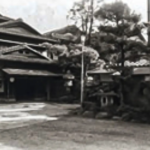
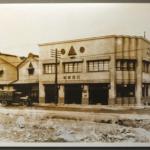
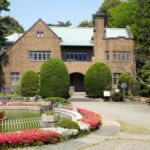
The current building was built by the fifth and fourth generations, and it seems that they were particular about the materials used, with tiles from Nagoya Mikawa, pillars from Kyoto, and other good materials from all over Japan.
the bestYou collected the
Sometimes the fitter would say to me, “It’s not easy to do something like this nowadays. …… We who live in the house don’t understand it at all!is,It was also designated as a tangible cultural property.
Was that so?
such (about the actions of the listener, or about ideas expressed or understood by the listener)alsoowing to、I hope to preserve as much as possible of the old things as they were. I would like to preserve the careful craftsmanship without changing the way we do our work too much. I always tell my employees this, and I try to keep it in mind as well.
However, lifestyles are changing, and the average height is getting taller, so there are changes. People are becoming taller and taller, and their legs are becoming thinner and longer. Recently, many Kabuki actors are also very slender.
I may have to create a fifth form.
Ms. Fukushima: It varies from one person to another, but as a general trend, I feel that the average height of the population has increased, and so have the number of shapely people.
Yes, it is. You can see how times have changed.
Ms. Fukushima: But thankfully, there are people who have been using Onoya for three generations, from grandmothers to daughters and grandchildren. When I look at the patterns, there are quite a few customers who have been using Onoya for more than 50 years. I would like to continue to produce quality products so that people will not say that our products are worse than those made in the past, but rather that they were very good.
That’s right. There are things that can be passed down from generation to generation, like kimonos. My grandmother.I,I bought my tabi socks at Ohnoya when I was young,” he said.Your grandchildren.If you bring him to me.I’m so happy for you. By the way, do your family members have the same foot shape?
shugo (Kamakura or Muromachi period military governor)section (i.e. of text)Sometimes the patterns are similar, and sometimes they are completely different.
but threeused after a phone number to indicate that it is a switchboard numberI like the idea of going above and beyond. Since there are people who have been working here for generations, even if customers haven’t been here for a while, they can still feel that the business is still going strong.
Some of them have been working for us for 60 years, since before I was born. The connection with our customers is different.
Ohnoya Fusohonten” Tabi Shoes have been loved by people of all ages. The reason for this is the meticulous workmanship that goes into the making of each item. The store has a sewing machine that has been in use for 200 years. The shop has a sewing machine that has been in use for 200 years. This attitude seems to symbolize everything.
latter part(temporal or logical sense) follow …
*If you would like to see this dialogue on video.here (place close to the speaker or where the speaker is)