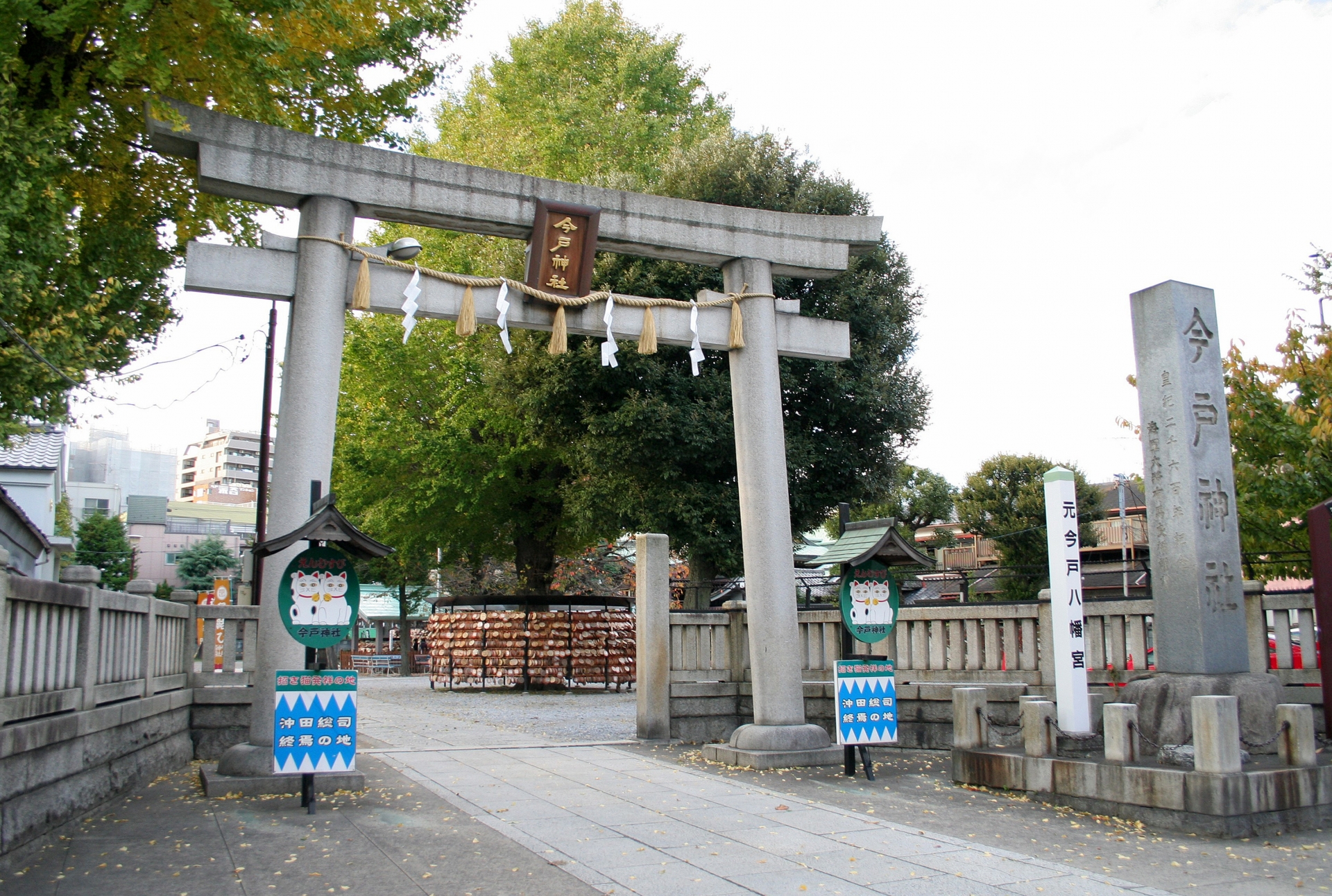
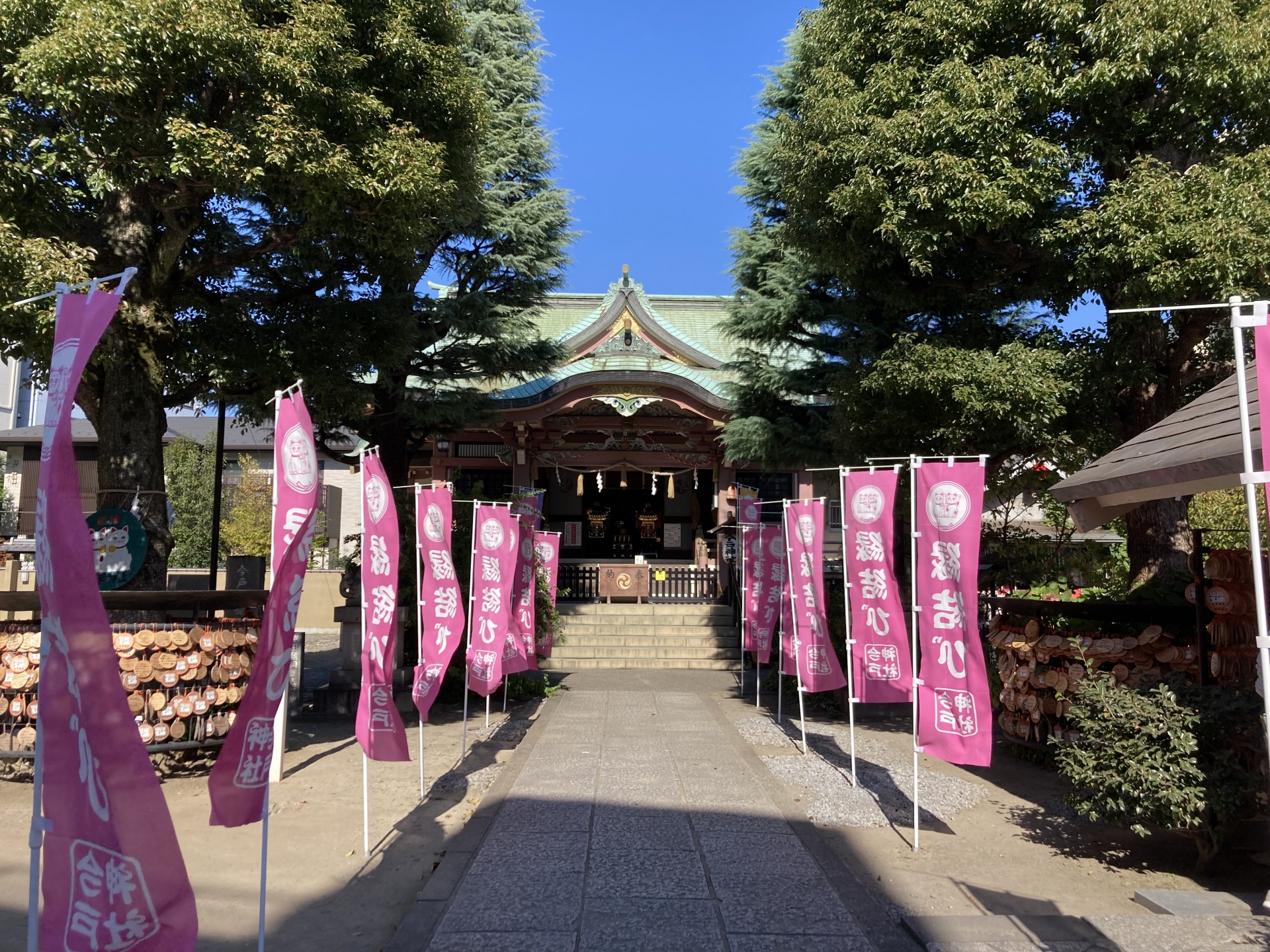
Imado Shrine (Asakusa, Tokyo)

Shinto shrineAsakusa (department store)

Imado Shrine (Asakusa, Tokyo)(Imado Jinjya)

Imado (part of Edo) unglazed porcelainfigure of a cat with one paw raised (usu. white porcelain)catmarriage

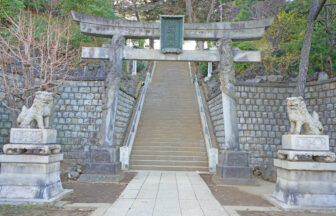
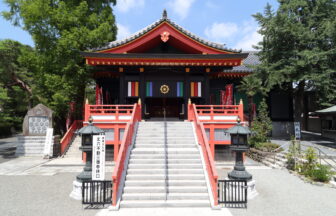
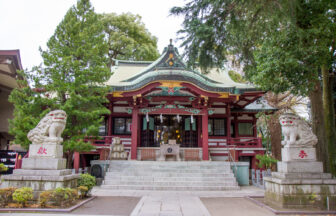
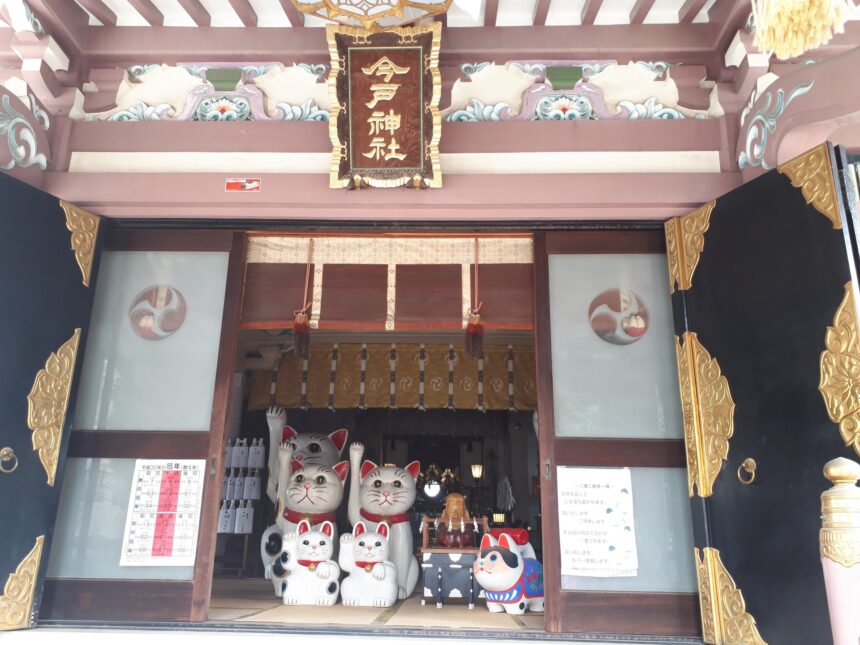
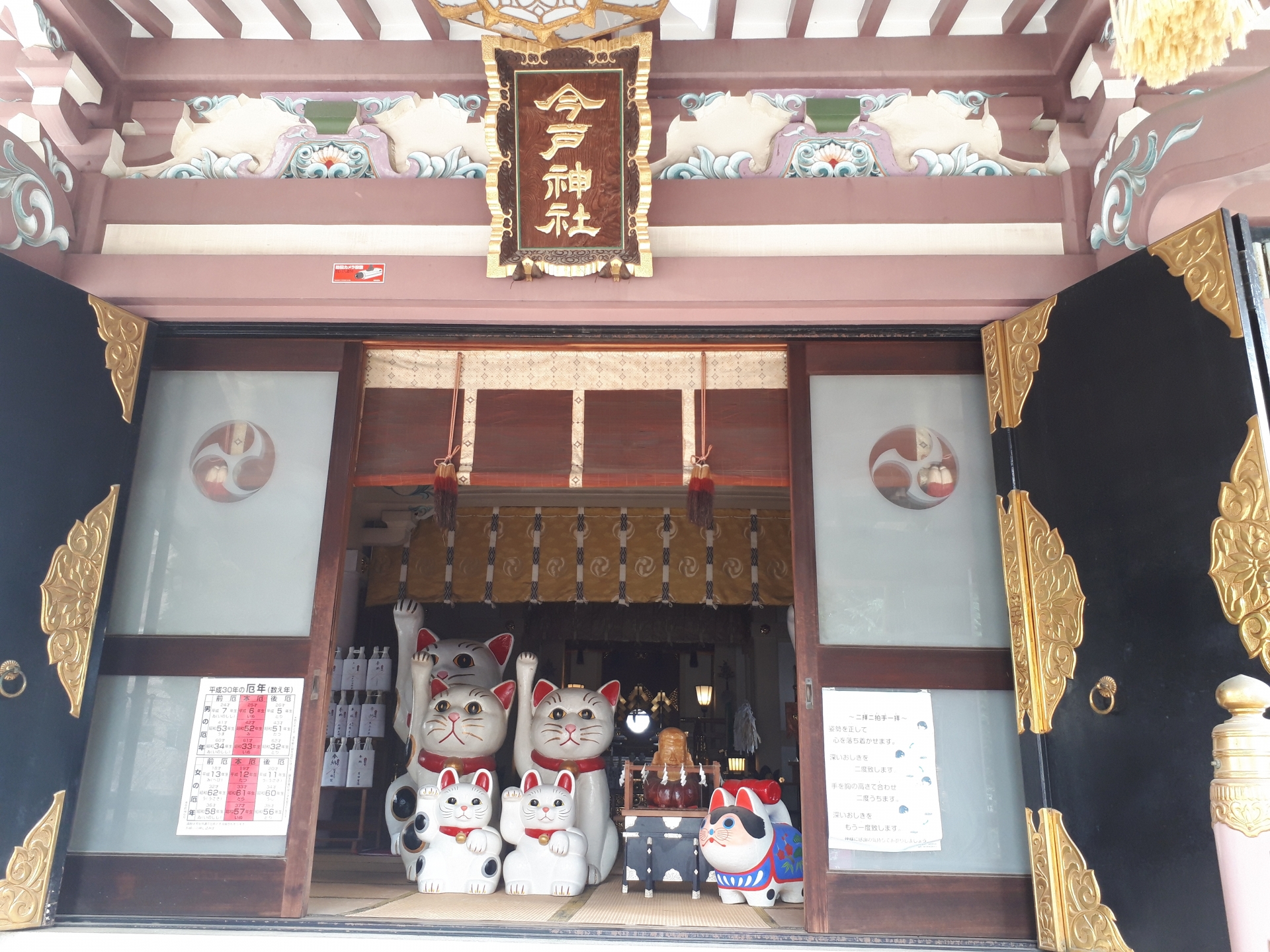
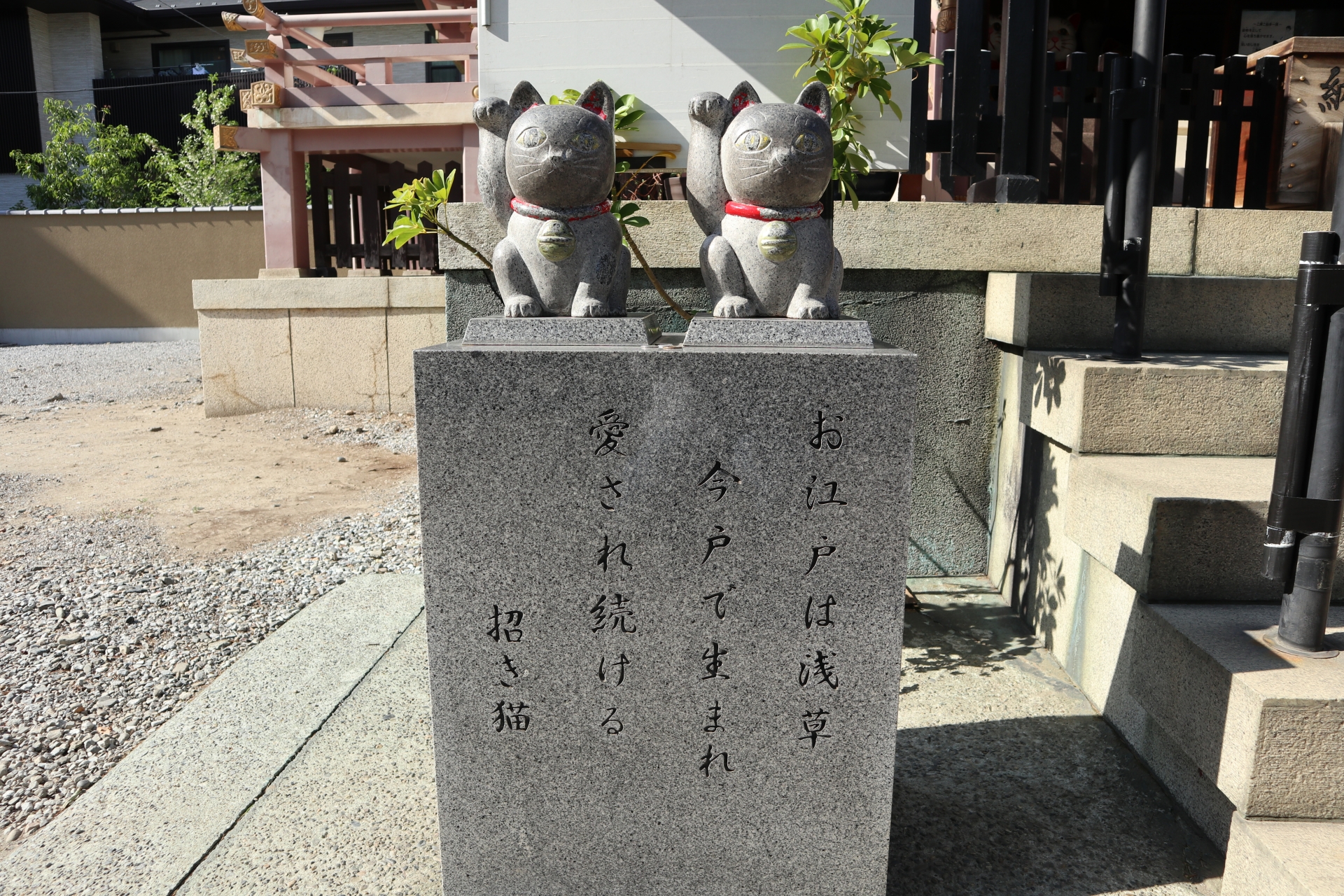
The shrine is dedicated to Izanagi no Mikoto and Izanami no Mikoto, the first married couple in Japan, and is famous for marriage. It is said that if you stroke the two “stone cats” next to the main shrine, you will receive good fortune. In the past, Imado-yaki pottery was widely produced in the area, and many beckoning cats were also produced. For this reason, Imado Shrine is said to be the birthplace of beckoning cats, and many beckoning cats can be seen on the shrine grounds. If you are lucky, you may be able to meet “Nami,” a white cat that is a “living beckoning cat” that lives nearby. Cat charms and red seal books are also available for purchase, making the shrine a popular destination for cat lovers.

Spot OutlineOutline

address (e.g. of house) 1-5-22 Imado, Taito-ku, Tokyo
Access 15 minutes from Asakusa Subway Station

phone 03-3872-2703
Business Hours 9:00~16:00
External Links

Official Web Site

Founding and opening of business 1063 (Kouhei 66)

新着・おすすめ情報

  1. grilled eel

  2. Musashino Central Park (Musashino, Tokyo)

  3. Preserving Kimono Culture through Tabi Shoes. What is the goal of the long-established Tabi Shoes shop “Ohnoya Fuso-Honten”?

  4. piece placed to block opponent’s check (shogi)

  5. Namikaze Shrine (Tsukiji, Tokyo)

  6. 浅草

  7. What is the “rank of kimono” that kimono beginners have trouble thinking about?

  8. What does “Sarashina (soba)” mean and where did it originate?

  9. Nara Ningyo” is characterized by the powerful touch of a single sword digging. What is the meaning behind it?

  10. What are the characteristics of “Yamada-Nishiki” rice for sake brewing? Words related to sake

  11. Why is “Koinobori” carp? The reason is said to be based on Chinese folklore.

  12. just after fall

  13. Manners Related to Tea: How to Make and Serve Delicious Tea, and Manners for Receiving Tea

  14. soup served at the end of a traditional Japanese dinner

  15. 【第23回】蕎麦屋店主が考える真の蕎麦「通」の定義