

Adult Manners CourseSeasonal way of life
Manners Related to Tea: How to Make and Serve Delicious Tea, and Manners for Receiving Tea
serving tea (esp. at a company)Manners for serving teaServing tea in business situationseighty-eighth day from the beginning of springfirst tea of the seasonJapanese teaJapanese Tea Manners
As in the song “Chatsumi” (meaning “picking tea” in Japanese), which is known as “88 Nights of Summer Approaching,” 88 Nights is the season of freshly brewed tea. In this issue, we would like to introduce some manners related to Japanese tea, as told to us by Ms. Hiroko Nishide, a manner consultant, during the season of freshly brewed tea. Why don’t you enjoy Japanese green tea with a newfound knowledge of the manners of serving and receiving tea?
88 nights means the 88th day after the first day of spring
Many people may have heard of the term “88 Nights,” but may not know exactly what it means.
Eighty-eight nights” is one of the miscellaneous festivals, meaning the 88th day after Risshun (the first day of spring). In a normal year, it falls on May 2, and in a leap year, it falls on May 1. The character for “rice” is divided into “88,” which has been used as a guide for beginning farm work since ancient times,” says Nishide.
Incidentally, “Zosetsu” is a supplementary calendar date created in Japan as a guide to grasp the changes of the seasons. “Setsubun,” “Higan,” “Shahi,” “88 Nights,” “Iriume, “Han-natsu-sho,” “Doyo,” “200 days,” and “220 days.” The following nine are commonly referred to as the miscellaneous festivals.
After 88 nights, it’s time to pick tea
So what does 88 Nights have to do with tea?
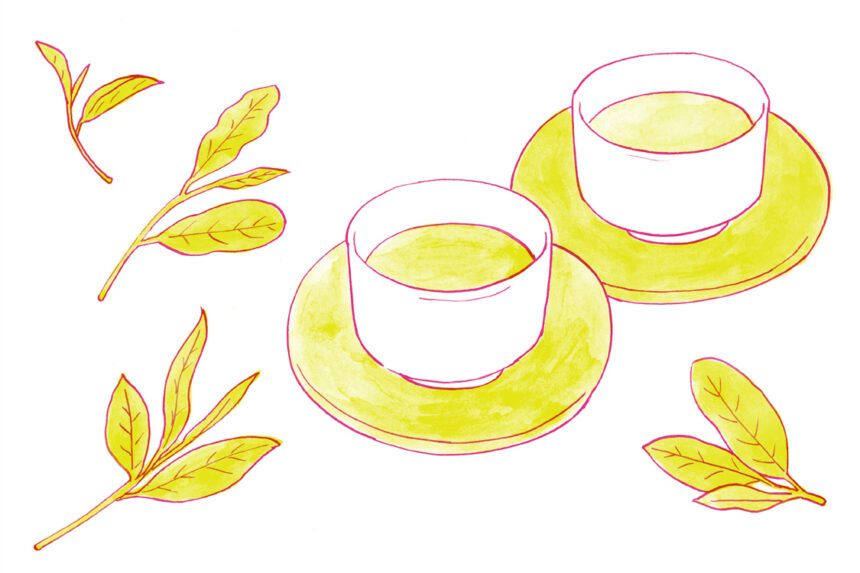
Since ancient times, the eighty-eighth night has been regarded as the time for sowing seeds and picking tea, because after the eighty-eighth night, there is no more frost. The tea picked on the 88th night has been valued as a good omen for longevity and longevity. It is called “shincha” or “ichibancha” (first tea), and it is said that drinking it will bring you a year without misfortune.
Shincha (ichiban-cha), made by plucking the first sprouts of the year, is low in catechins, which cause astringency, and high in the amino acid theanine, which gives it sweetness and flavor, and is characterized by the fresh aroma of its young leaves. Incidentally, Niban-cha is a catechin-rich tea made by plucking the buds that sprouted after the plucking of Ichiban-cha. Then, about one month after the picking of Niban-cha, San-ban-cha is plucked, and another month after that, it is called Autumn-Winter-ban-cha (Yon-ban-cha).
A little ingenuity goes a long way in deepening the flavor of Japanese tea.
Manners for serving tea when receiving guests at home
For visitors to a meeting or reception room. Manners for serving tea in business situations.
Next, we will discuss the etiquette of serving tea at a company meeting or at a guest in a reception room. Is there anything different in this case than for guests at home?
The basics are the same. The basic principle is the same. Business is the original purpose, but there is a slight difference depending on whether you serve tea in a meeting room or in a reception room. Since the reception room is a place for entertaining important guests, if you have a teacup with a lid, you should serve it. Tea service is not mandatory, but it may be served to guests in the reception room. Also, do not pour more. It is smart to replace it with a newly prepared one.” Now, let’s move on to the next step of serving tea.
The following is a step-by-step explanation of the flow of serving tea.
Manners and Etiquette for Drinking Japanese Tea and Teacups
So, what should we keep in mind when we are serving Japanese tea as a guest, not as a host?
If the tea container has a lid, open the lid by holding the lid knob with your right hand and tilting it from the front to the back. Hold the lid with both hands, turn it over and place it in the upper right corner of the saucer. This will hold the lid in place and prevent it from rolling around on the saucer. When you have finished drinking, hold the lid with both hands and put it back on top of the teacup.
Another point to consider is the order in which tea and teacakes are served.
Some people say that tea should be served first, but tea is hard on the stomach, so it is OK to eat the ochamochi first. However, if the host or companion drinks tea first, it is good manners to follow suit. Even if you think that is not the case ……, it is also good manners to follow their example. Manners are there to build a good relationship with the people in the room by communicating with them comfortably and smoothly. I feel that consideration to match the other party is beautiful. The guests are very careful not to be rude, so it is important for the host to be aware of that and guide the guests accordingly,” he says.
Manners when serving in plastic bottles and when served
If you are serving in a plastic bottle, it is a good idea to serve with a paper napkin and a paper cup. If you spill something when pouring, the paper napkin will help the recipient. If paper cups are not available, women will appreciate having straws. Paper straws are a good way to show that you care about the environment. Also, if you offer a cold bottle, you can place it on a coaster to prevent water droplets from falling on the table and staining documents and other items.
The host is supposed to say, “Please take the bottle home with you if you like. It would be difficult for them to say so themselves. Of course, the visitor has no problem taking the food home without being asked to do so by the host. At this time, it is smooth communication if you ask, “May I take it home with me? On the other hand, if you are the one visiting and you want to leave the bottle behind, do not touch it from the beginning.
Deepen communication around tea.
Serving tea is an important communication tool that conveys a sense of hospitality to the other party and serves as an opportunity to deepen the friendship. If you prepare and serve tea with the intention of making your guests feel comfortable and happy, you will be able to convey your concern and deepen your relationship with them. Why don’t you take this opportunity to master the art of serving tea in a fun way?
Interview and text by Yoshiko Tezuka
Illustrations by Tomoko Shinozuka
Hiroko Nishidethree
We spoke with…
Manner consultant. With the motto of “Sincerity in Manners®”, he has taught manners to actors, athletes, and celebrities for NHK historical dramas, movies, and commercials, and has also covered the manners of the Imperial Family. She has also supervised and written more than 100 books, which have sold more than 1 million copies. The know-how that Ms. Nishide imparts can be easily incorporated into daily life and work, and is popular for its highly convincing content.
For more information about Ms. Hiroko Nishide, please visitOfficial Siteand,InstagramThe information is updated as needed on the following website.