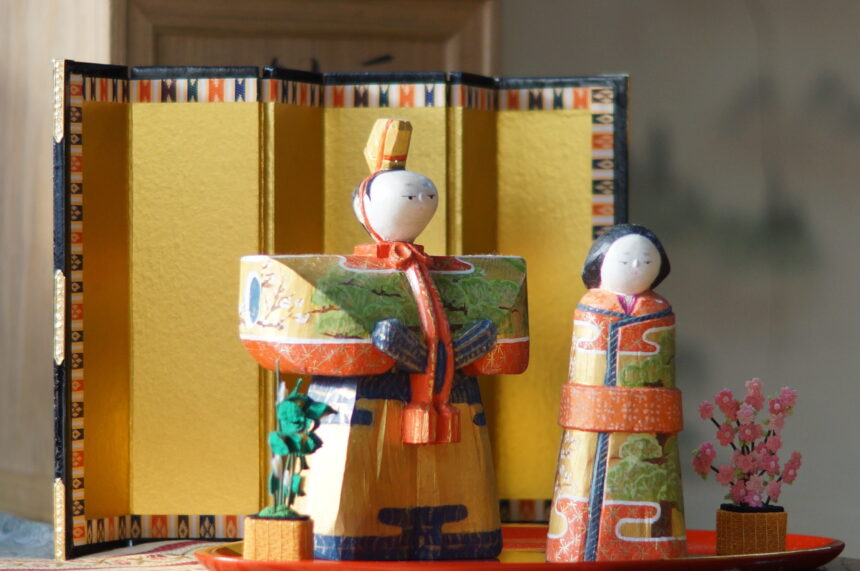
Nara Ningyo” is characterized by the powerful touch of a single sword digging. What is the meaning behind it?

puppet

Nara Ningyo” is characterized by the powerful touch of a single sword digging. What is the meaning behind it?(Naraningyo)

Nara prefecture (Kinki area)

Dolls carved and painted from wood such as hiba, camphor tree, katsura, and hinoki (cypress). They have been made mainly in Nara and are also called “Nara Itto-bori” (Nara Itto-bori carving) because of the powerful touch of the carving with a single sword. They are decorated with gold leaf and gofun (a kind of shellfish shell made from clam or oyster shells). The coloring is delicate and gorgeous, using gold leaf, gofun (white paint made from powdered shells of clams, oysters, etc.) and iwa-enogu (rock paint). It is said that the dolls were originally used in the ritual of dengaku, a type of rice dance dedicated at the Onmatsuri festival of Kasuga Taisha, and their history can be traced back to the Heian period (794-1185). Since these dolls were dedicated to the gods, they were carved with a single sword to keep them as clean as possible. Hina dolls and Chinese zodiac dolls were made and are still popular today.
新着・おすすめ情報

  1. Sekiguchi Bashoan (Waseda, Tokyo)

  2. Shortcakes, pancakes and afternoon tea. A beautiful way to eat sweets.

  3. Changing flavors and characteristics from generation to generation: the management strategy of the long-established “Tokiwando Thunder Stirrers’ Okoshi Honpo,” founded in 1816.

  4. 【第26回】三色や五色といった色にまつわる蕎麦の話

  5. yeast starter

  6. What does “Namida (sushi)” mean?

  7. 日本橋

  8. The soul of the craftsman resides in the old-fashioned production method. The long-established comb shop “Juso Yakushi Ten” that produces the one and only boxwood comb.

  9. What innovations have been made at Nimben, a 321-year-old dried bonito flakes business?

  10. When is “new sake” made? Words related to sake

  11. Ginza Matsuzaki Senmochi, a long-established shop, depicts tradition and innovation with its signature product “kawara senbei” (tile rice cracker).

  12. Why is the oak in “Kashiwa-mochi” said to symbolize the prosperity of descendants?

  13. long sword

  14. What is the origin of the term “chilled sake”? Words related to sake

  15. When do we display the “Akumayumi” outside of Children’s Day? Explanation of its origin