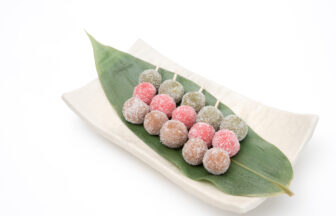
sweet dumpling made with mochi flour and (sometimes) millet flour (famous product of Okayama)

Japanese confectionery

sweet dumpling made with mochi flour and (sometimes) millet flour (famous product of Okayama)(Kibidango/kibidango)

dangoOkayama prefecture (Chuugoku area)

A specialty confectionery of Okayama Prefecture. It is also known as the confection that appears in the old tale Momotaro. Glutinous rice flour is mixed with white sugar and starch syrup, and a small amount of kibi flour is added for flavor. The dumplings are then rolled into dumplings and covered with potato starch. The surface is sometimes covered with soybean flour.
Dumplings made from steamed millet flour have been an everyday food since ancient times, but it was not until the Edo period (1603-1868) that the millet dumpling as we know it today was born. At the suggestion of a feudal lord of the Okayama domain, a local confectioner made millet dumplings with gyuhi for tea ceremonies.

新着・おすすめ情報

  1. Hikarimono (sushi)

  2. What does “Oyako” mean? Hina Dolls

  3. large sword

  4. 大塚天祖神社(東京・大塚)

  5. Shofukuji Temple (Higashimurayama, Tokyo)

  6. I was a junior high school student when I made up my mind. The determination of the fifth generation to run Japan’s oldest bar, Kamiya Bar.

  7. What is the origin of the name “Kintsuba”? How is it written in kanji?

  8. Smoked Saikyo pickles have evolved into a snack for alcoholic beverages. The insatiable spirit of challenge at the long-established “Tsuta-no-ie

  9. What nutrients are contained in “buckwheat tea” that are good for the body?

  10. ratio indicating the quantity of polished rice gained from a given quantity of brown rice (nowadays usually expressed as a percent)

  11. Ningyocho Shinota Sushi Head Office, a long-established sushi restaurant serving inari sushi. What changes with the times, and what never changes.

  12. Changing flavors and characteristics from generation to generation: the management strategy of the long-established “Tokiwando Thunder Stirrers’ Okoshi Honpo,” founded in 1816.

  13. arms

  14. Preserving Kimono Culture through Tabi Shoes. What is the goal of the long-established Tabi Shoes shop “Ohnoya Fuso-Honten”?

  15. sake brewed without addition of saccharides and no more than 120 litres of seed alcohol per tonne