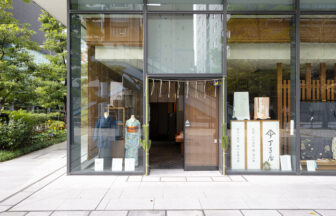
Ningyocho Shinota Sushi Head Office, a long-established sushi restaurant serving inari sushi. What changes with the times, and what never changes.

Nihonbashi (bridge)sushi wrapped in fried tofuvinegared rice rolled in nori (laver)

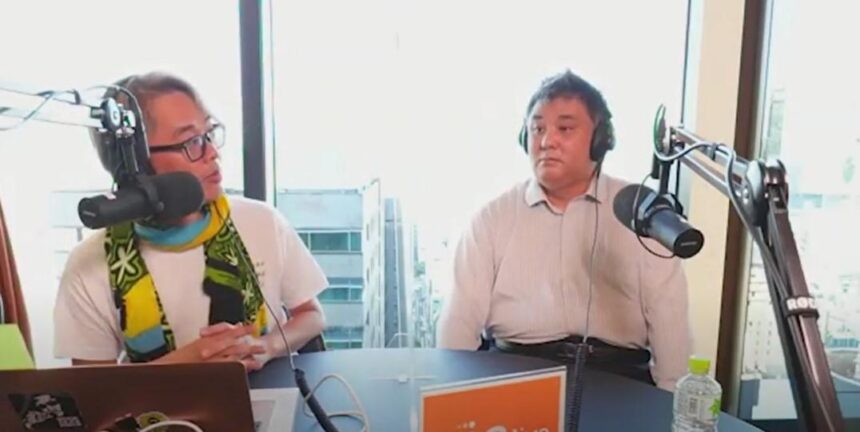
Inarizushi is a “chic” food that can be quickly picked up and eaten with one hand. Founded in 1877, the famous Ningyocho Shinota Sushi General Store has been preserving the taste of inarizushi for many years. While keeping the taste loved by generations, the management policy is flexibly changing with the times. We interviewed the fifth generation owner, Yoshimasu Yoshiyoshi, about the history of the restaurant and its future.

first partContinued from …

We decided to review our overextended business and go back to basics.

After much deliberation, Mr. Yoshimasu made the wise decision to close down the over-expanded business. What did you do when you finally came under the new management after such hardship?

We decided to do the basics well, so we strengthened our delivery service, which was started by the first generation. We created our own website so that customers could order online as well as by phone or fax, and we registered with the delivery center.

You mentioned that at one time you also offered Edomae Sushi and Japanese cuisine, but you stopped such restaurant-style stores and returned to your original form of store sales and delivery. Did you make any changes to your product lineup?

I started thinking about frozen mail order about 15 years ago because I frequently received inquiries asking me to send sushi to the provinces. However, I was very particular about defrosting at room temperature, and it was difficult with the technology available at the time to defrost inari sushi without using a microwave. So first, I started mail-order sales of products that could be vacuum-packed, such as seasoned fried bean curd for inari sushi and kanpyo (dried gourd) for kanpyo maki (dried gourd rolls).

You also focused on mail order to respond to the voices of your local fans. Refrigeration technology has evolved recently; have you made any progress?

Refrigeration technology has evolved enormously, especially in the past few years. However, we decided to start mail-order sales of frozen inari-zushi and bara-chirashi-zushi in February 2022, because it is possible to thaw them by boiling water instead of using a microwave oven.

I understand that products that can be eaten by boiling in hot water are now available, and if they can be defrosted at room temperature, then we will be on our way to what we hope for.

Yes, it is. But it is really difficult to return rice without heat. This is not my field, so I would be happy if the technology could be advanced a little more.

I think it must be very difficult to control the flavor, etc. Is that something you decide on?

As for the flavor of the inari sushi and kanpyo maki, my stance is that I don’t tamper with them either. Other than that, I am free to do as I please.

I think there are some parts that we will protect as a long-established business and some parts that we will change, but there is a talk like “do we keep the same taste or change the recipe? For example, soy sauce has completely changed in terms of salt concentration and soybean quality from the past to today, so even if you follow the same recipe and quantity as in the past, it will not taste the same. It seems that everyone at long-established restaurants is making efforts in how to reproduce the taste they remember from their senses. Do you regularly check such flavors?

Yes, we do. So, I would say that in order to keep the taste of Shinota the same, I have changed the recipe. Of course, what I actually remember eating is from the third generation.

The craftsmen who knew the taste of the previous generation would also join in and check each item one by one, saying, “This one is right,” or “How about this one? They check each item one by one.

Fortunately, when I returned to the family business, there were still quite a few veteran craftsmen in their 60s and 70s, so it was good to hear their stories.

While preserving the unchanged taste, actively adopting employees’ ideas

That’s wonderful. Taste is a very difficult part of the business, but with the cooperation of veteran artisans, you have been able to carry on the business. Except for the inari sushi and kanpyoumaki, do you give your employees the opportunity to freely make suggestions?

We have an internal contest for seasonal products and have various people come up with ideas. If it is selected, we give out a cash prize! It’s fun to have a project like that, and everyone takes it seriously. This one was my wife’s idea.

So your wife comes up with such business promotion ideas?

Yes, we frequently send out information on social networking sites. My wife started that too, and now all the younger employees seem to be doing it.

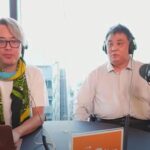
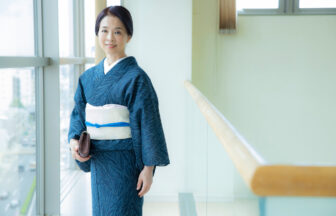
Mr. Yoshimasu is very protective of his wife, and today he was talking about how he wished his wife had come to the restaurant instead of him (laughs). (Laughs.) Has there been any change since your wife joined the restaurant?

That’s right. What used to be a top-down approach is changing to one in which everyone’s opinions are taken into account and decisions are made through meetings.

I think it has always been the norm for long-established shops in Edo to be run top-down by the head of the family, but today’s Shinota Sushi has a style that broadly listens to everyone’s opinions.

All I do is listen to the reports. Of course, I make the final decision, but basically I just say, “I’ll do this,” or “Here you go” (laughs). (Laughs.) It is not good for an old person to meddle too much. However, I will never change inarizushi and kanpyoumaki.

That is important. We must leave everything up to the company except for the things we have decided never to change. I think it is really difficult to find the right balance, but I evaluate employees who develop good products and make decisions based on a close look at sales. So your style has changed quite a bit from before?

I think it has changed 180 degrees. I feel that the company has become more energetic.

After all, it is because all of our employees think of the restaurant as their own business, isn’t it? Lastly, please tell us what you are planning to do in the future.

Frozen sushi has become something of a hobby for me, so I would like to expand my lineup a bit more. Right now, we have yet to create a product using nori seaweed, so in the future I would like to come up with variations such as nori maki and futomaki (thick rolls). It would be nice if we could also mail order prepared products that do not use rice.

In this interview, we talked about the strategy of the famous inari sushi restaurant “Ningyocho Shinota Sushi General Store.Delivery is also available for those in the area, so please try Shinota Sushi’s various products.

*If you would like to see this dialogue on video.here (place close to the speaker or where the speaker is)

新着・おすすめ情報

  1. fried dough cake

  2. Bodhi yeast mash starter

  3. stem

  4. Shimonotani Ruins Park (Higashifushimi, Tokyo)

  5. What is Dragon Boat Festival?

  6. triumvirate

  7. 大塚天祖神社(東京・大塚)

  8. Asakusa Kawamatsu

  9. Mukozuke” is served at the beginning of kaiseki cuisine. What is the origin of its name?

  10. Ruins of Ooka Echizenmamori Tadasada’s villa

  11. Tobifudo Shohoin Temple (Minowa, Tokyo)

  12. Chinzan Villa

  13. light broth made of jellied sweet bean paste

  14. What is the custom of Nagashi Hina? [Words of Hinamatsuri

  15. What is the origin of the name “Yamato Doll”? What kinds of dolls are there?